
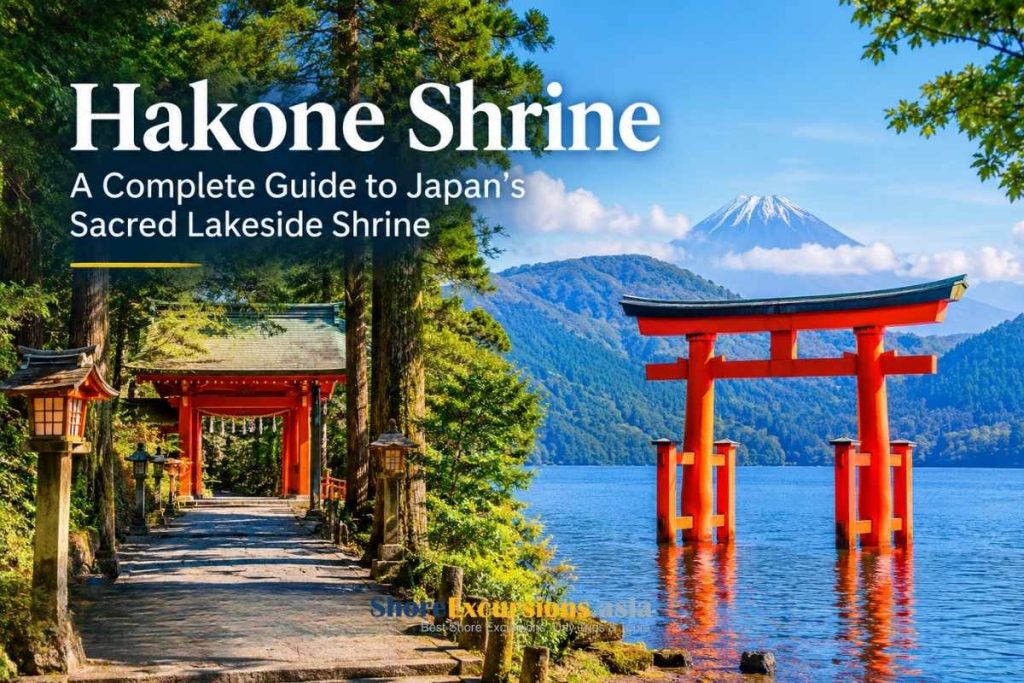
Nestled among towering cedar trees beside Lake Ashi, Hakone Shrine is one of the most memorable cultural attractions in Hakone, Japan. Known for its iconic red torii gate standing in the lake, this historic Shinto shrine offers visitors a peaceful escape surrounded by forested mountains and beautiful natural scenery. Beyond its photogenic setting, the shrine has a history dating back to 757 AD and remains an important place of worship associated with good fortune, protection, and safe travels.
Whether you are exploring Hakone independently or planning a Shimizu shore excursion from cruise port, Hakone Shrine is worth considering. This guide from Japan Shore Excursions covers its highlights, visiting hours, entrance fees, transportation options, and practical tips to help you plan your visit.
What Is Hakone Shrine Known For?
A Historic Shinto Shrine in Hakone
Hakone Shrine, also known as Hakone-jinja, was established in 757 AD by the Buddhist priest Mangan, according to the shrine’s historical tradition. It developed into an important center of mountain worship and gained particular recognition among samurai and military leaders during Japan’s medieval period. Minamoto no Yoritomo and Tokugawa Ieyasu were among the historical figures associated with its patronage.
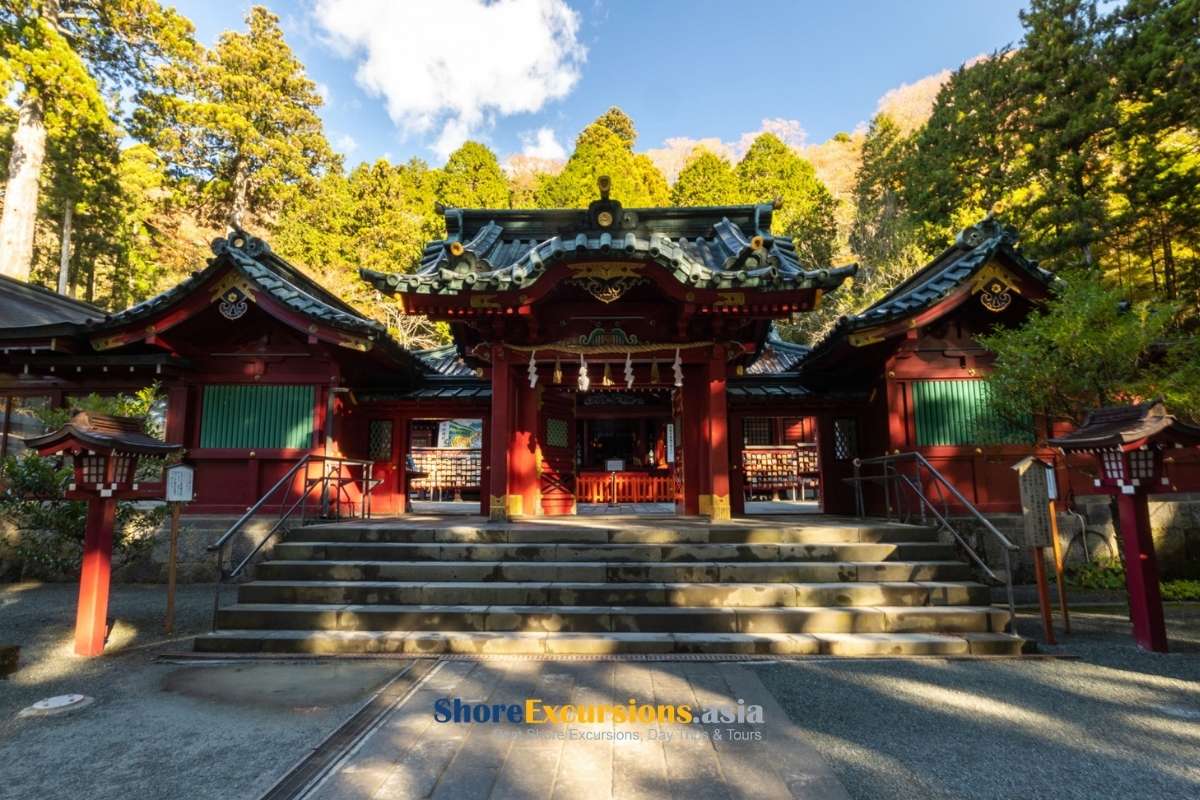
Today, the shrine continues to attract worshippers and travelers seeking a connection with Japanese spiritual traditions. Visitors can explore its traditional architecture, follow a forested approach to the main sanctuary, and experience a quieter side of Hakone beyond its hot springs and sightseeing attractions.
The Famous Heiwa-no-Torii Gate
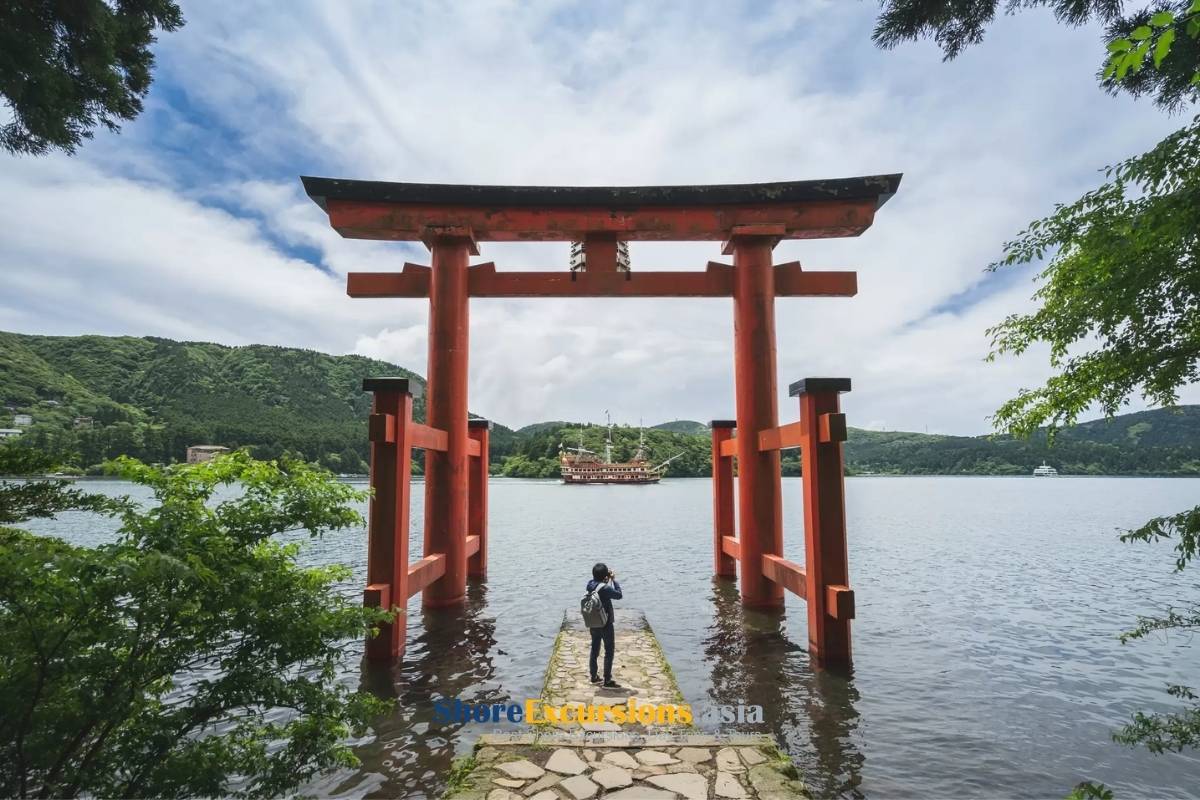
Hakone Shrine’s best-known landmark is the Heiwa-no-Torii, or Peace Torii, which stands at the edge of Lake Ashi. Its bright red structure contrasts beautifully with the deep blue water and surrounding mountains, creating one of Hakone’s most recognizable photographic scenes.
The torii traditionally marks the entrance to sacred space in Shinto practice. At Hakone Shrine, its lakeside position adds to the sense of harmony between nature and spirituality.
Because the gate is popular with visitors, queues for photographs can form during busy periods. Arriving early can help you enjoy the scenery with fewer people around.
A Place for Good Fortune and Safe Travels
Hakone Shrine is traditionally associated with good fortune, protection against misfortune, success, and safe journeys. Its reputation for travel protection makes it particularly meaningful for people setting out on long trips.
The nearby Kuzuryu Shrine is associated with Kuzuryu Okami, a dragon deity linked to Lake Ashi. It is also known for prayers related to prosperity, business success, and relationships. For international visitors, these traditions offer insight into how Japanese religious sites remain connected to everyday hopes and concerns.
Top Things to See at Hakone Shrine [Recommended by Locals]
1. Photograph the Heiwa-no-Torii by Lake Ashi
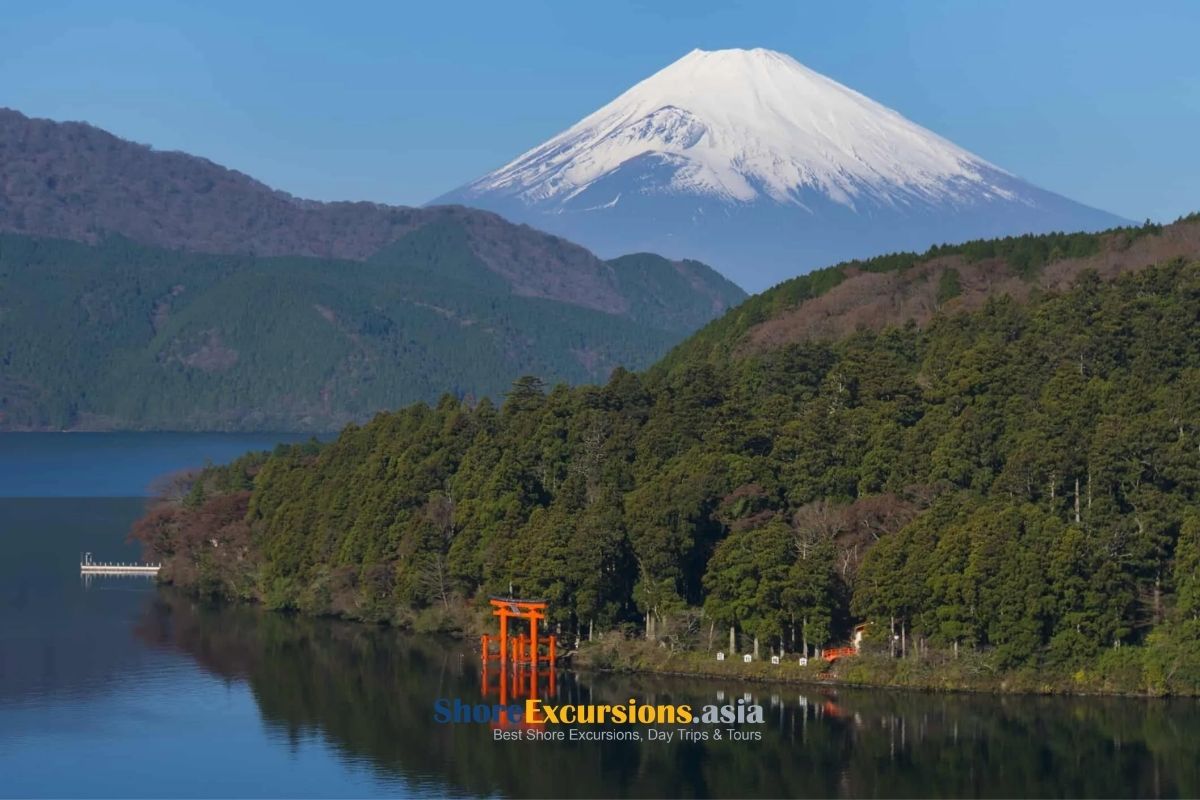
The lakeside torii is the highlight of most visits to Hakone Shrine. From the water’s edge, visitors can admire the red gate against Lake Ashi and the surrounding mountains. On clear days, the broader Hakone area may also offer views toward Mount Fuji, although visibility depends on weather and viewing location.
Early morning is generally a good time to avoid the largest crowds. If you visit during weekends, public holidays, or autumn foliage season, allow extra time for photographs. Follow any posted instructions around the lakeside area, especially when queues form or access is temporarily restricted.
2. Walk Through the Cedar-Lined Shrine Approach
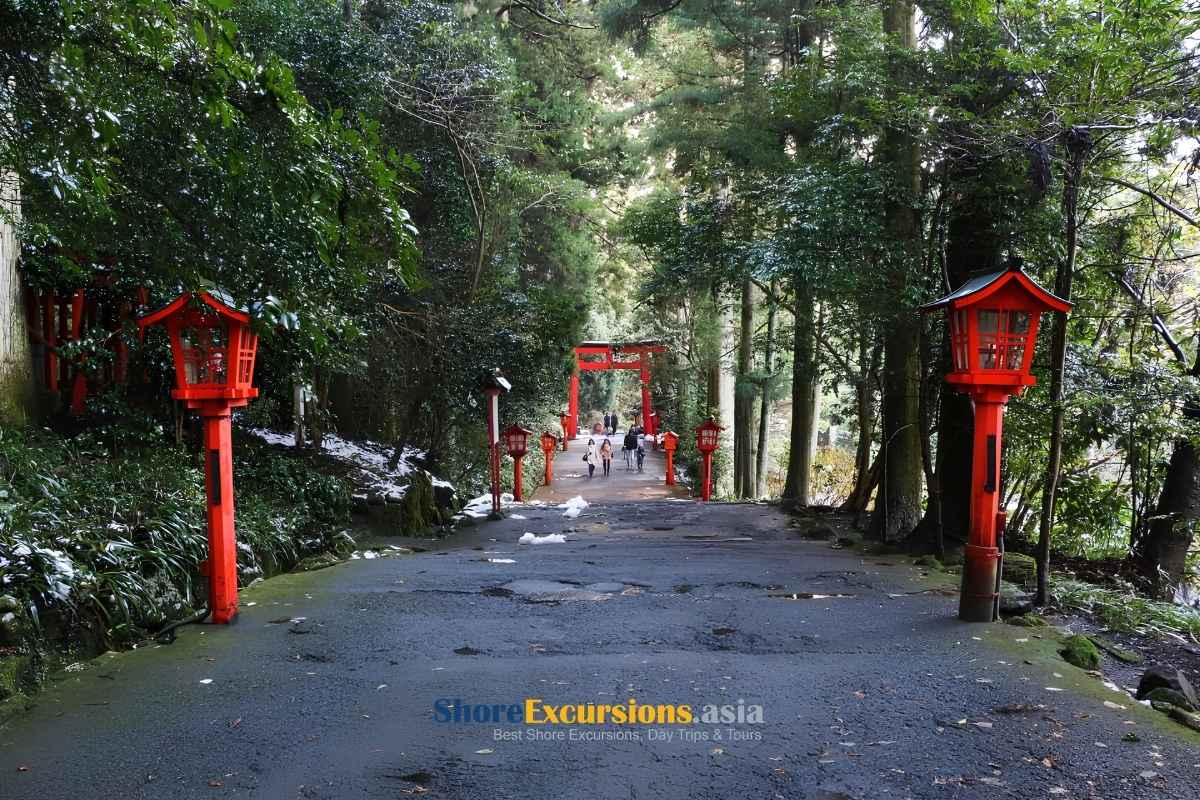
The approach to the main shrine passes through a peaceful forest of tall Japanese cedar trees. Stone lanterns, traditional gates, and long stairways give the route a distinctive atmosphere that contrasts with the busier lakeside photography area.
Take your time along this path rather than treating it simply as a route to the main buildings. The forest setting is one of the reasons Hakone Shrine feels different from many urban shrines in Japan. Wear comfortable walking shoes, as some sections include steps and uneven surfaces.
3. Explore the Main Shrine Buildings
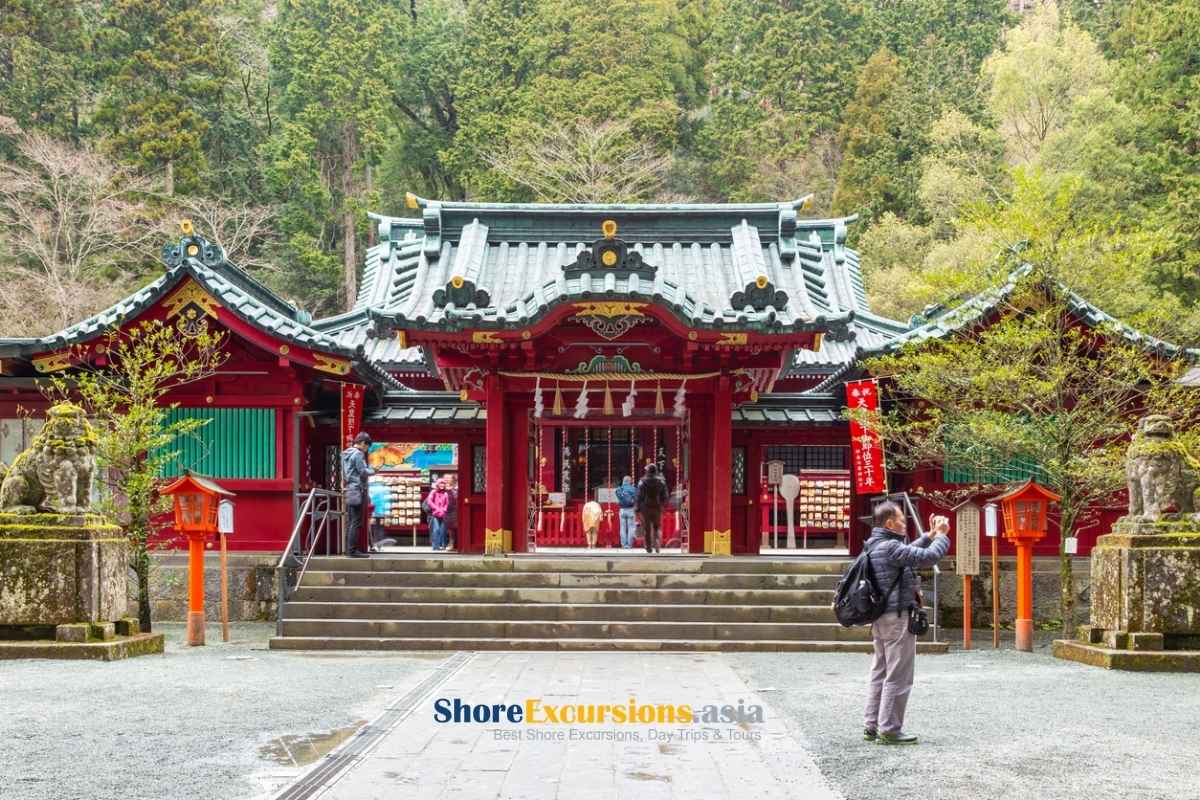
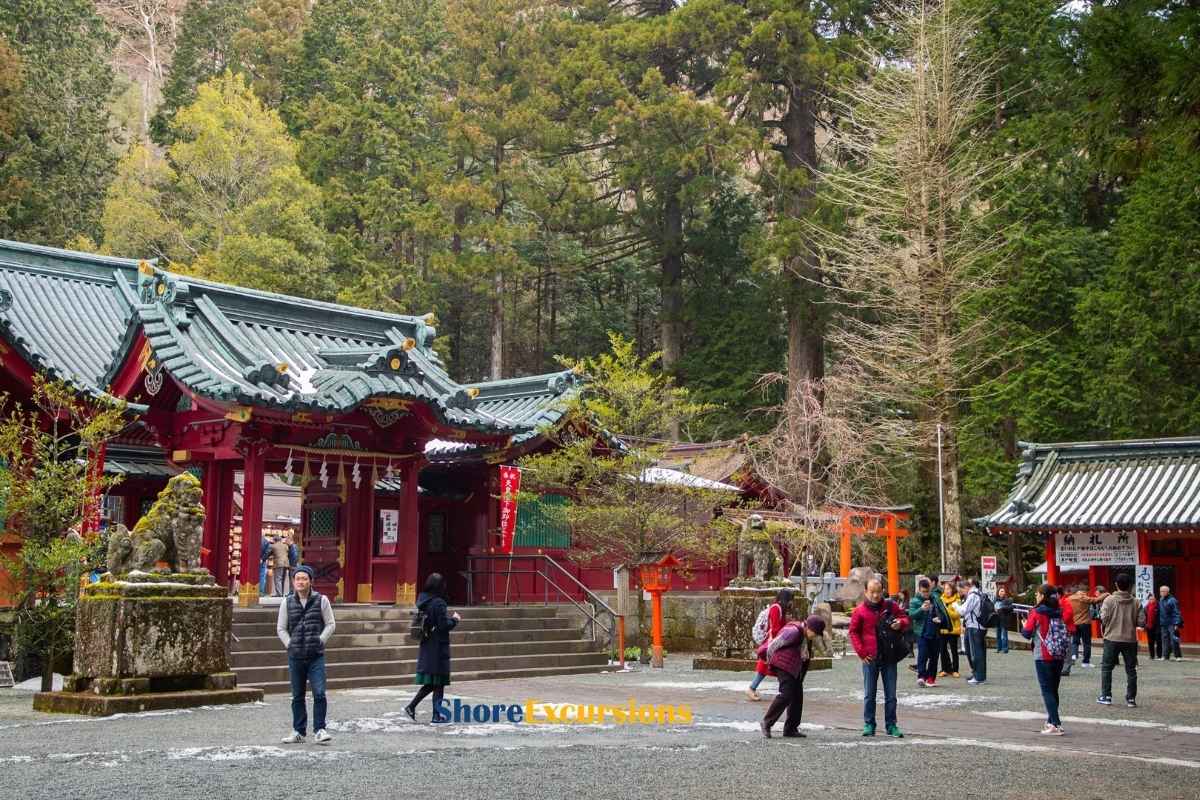
The main sanctuary is the spiritual heart of Hakone Shrine. Its traditional Japanese architecture, decorative details, and surrounding woodland provide an opportunity to learn about Shinto worship. Visitors can observe the grounds respectfully, read the information displays, and learn about the deities worshipped here. If you wish to make an offering, follow the posted guidance on shrine etiquette.
Remember that Hakone Shrine remains an active religious site, not simply a tourist attraction. Avoid blocking worshippers, keep your voice low, and check local rules before photographing buildings or religious ceremonies.
4. Discover Kuzuryu Shrine and the Treasure Hall
Kuzuryu Shrine is closely connected with the spiritual traditions of Lake Ashi. The grounds of Hakone Shrine include a newer Kuzuryu Shrine sanctuary, while the main Kuzuryu Shrine is located elsewhere in the Lake Ashi area and requires additional planning to visit.
The Hakone Shrine Treasure Hall is another option for visitors interested in local history and religious artifacts. Its exhibits include cultural materials associated with the shrine and its long history. Check the official website before visiting, as admission arrangements, opening hours, and temporary closures may affect your plans.
Hakone Shrine Opening Hours, Entrance Fees, and Visitor Information
One advantage of visiting Hakone Shrine is that the main shrine grounds are generally accessible throughout the year, and there is no general admission charge. However, individual services and facilities operate on separate schedules.
<tbody.
| Visitor information | Details |
|---|---|
| Address | Moto-Hakone 80-1, Hakone, Kanagawa, Japan |
| Shrine grounds | Generally open year-round; access may be restricted temporarily |
| Shrine office and amulet counter | Usually 8:15 AM - 5:00 PM |
| Prayer reception | Usually 8:30 AM - 4:00 PM |
| Treasure Hall | Generally 9:00 AM - 4:30 PM; last admission at 4:00 PM |
| Treasure Hall admission | ¥500 for adults and ¥300 for elementary school students |
| General shrine admission | Free |
| Suggested visit duration | Around 1 - 1.5 hours for the main shrine and nearby torii area |
* Good to Know: The shrine office, prayer reception, and Treasure Hall have different operating hours, and special events or exhibition changes may affect access. Check the official Hakone Shrine website before your visit.
Best Time to Visit Hakone Shrine
Hakone Shrine is worth visiting throughout the year, but each season offers a different atmosphere.
- Spring (March - May): It is a good season for combining the shrine with lakeside sightseeing and other outdoor attractions. Cherry blossoms may be seen in parts of Hakone.
- Summer (June - August): Summer offers lush forests and opportunities to explore the lake by sightseeing boat. The cedar-lined approach can feel especially inviting during warm weather.
- Autumn (September - November): Autumn is one of the most attractive periods for exploring Hakone's natural scenery. Trees across the region change color, creating a beautiful backdrop for the shrine and Lake Ashi.
- Winter (December - February): Winter often brings a quieter atmosphere and crisp mountain scenery. On clear days, the wider Hakone region may offer excellent views toward Mount Fuji.
How to Get to Hakone Shrine: Transportation Guide
From Hakone-Yumoto Station
Hakone-Yumoto is a common starting point for travelers exploring the region. From the station, take a Hakone Tozan bus serving Moto-Hakone or the Hakone Shrine area. Depending on the service and traffic, the journey generally takes around 30 - 45 minutes.
From Moto-Hakone, the shrine is approximately a 10-minute walk. Check the current bus route and stopping pattern before departure, as some services do not stop at every nearby bus stop throughout the day.
From Lake Ashi
Hakone Shrine is close to the Moto-Hakone area of Lake Ashi, making it easy to combine the shrine with lakeside walks or a sightseeing cruise. If you are taking a boat, check the departure and arrival piers carefully.
The sightseeing boats serve designated ports around the lake; they do not take passengers directly to the Heiwa-no-Torii gate. Allow enough time between activities, especially during busy seasons when queues and transport delays are possible.
From Shimizu Port
For cruise passengers, reaching Hakone Shrine from Shimizu Port requires more planning than visiting attractions near central Shizuoka. As a preliminary estimate, a private vehicle journey may take around 90 - 120 minutes each way, depending on the route, traffic, and road conditions.
A private transfer or organized Shimizu shore excursion is generally more practical than relying on multiple public transport connections when your return to the ship is time-sensitive. Before committing to the trip, check your ship's departure time, the time needed to return to the port, and a suitable buffer for unexpected delays. If the port call is short, a closer destination may provide a more relaxed experience.
Can You Visit Hakone Shrine on a Shimizu Shore Excursion?
Yes, Hakone Shrine can be included in a shore excursion from Shimizu Port, but it is best suited to cruise passengers with a sufficiently long port call and a carefully planned itinerary.
When a Hakone Shore Excursion Makes Sense
Hakone is a good choice if you want to experience a different side of Japan, combining mountain scenery, traditional religious culture, and Lake Ashi in one outing. With private transportation, you may be able to visit Hakone Shrine and add one nearby attraction, depending on traffic and the time available.
For example, you could explore the shrine in the morning, have lunch in Moto-Hakone, and spend part of the afternoon enjoying the lake. More distant attractions, such as Hakone Ropeway or Owakudani, should be included only when the schedule allows.
When to Choose a Closer Destination Instead
If your ship has a short stay in Shimizu, the round-trip journey to Hakone may consume too much of your available time. A closer destination can offer more sightseeing with less pressure to return to the port. Consider Miho no Matsubara, known for its coastal scenery, or Nihondaira and Kunozan Toshogu Shrine for panoramic views and cultural experiences around Shizuoka.
The best choice is not necessarily the destination with the most famous landmark. It is the one that fits your actual port schedule while leaving enough time to return to your ship comfortably.
Explore our Shimizu Shore Excursions to find a sightseeing route that matches your cruise schedule and interests.


Shimizu Shore Excursions
Cruise Ships: Diamond Princess, NCL Jade
Back-to-Ship Guarantee: Return to Your Ship 90-120 Minutes Before Departure


Shimizu Shore Excursions
Back-to-Ship Guarantee: Return to Your Ship 90-120 Minutes Before Departure


Shimizu Shore Excursions
Back-to-Ship Guarantee: Return to Your Ship 90-120 Minutes Before Departure


Shimizu Shore Excursions
Cruise Ships: Diamond Princess, NCL Jade, HAL-ms Westerdam, Celebrity Millennium
Back-to-Ship Guarantee: Return to Your Ship 90-120 Minutes Before Departure

Shimizu Shore Excursions
Cruise Ships: Celebrity Millennium, Diamond Princess, NCL Jade
Back-to-Ship Guarantee: Return to Your Ship 90-120 Minutes Before Departure


Shimizu Shore Excursions
Back-to-Ship Guarantee: Return to Your Ship 90-120 Minutes Before Departure


Shimizu Shore Excursions
Cruise Ships: NCL Jade
Back-to-Ship Guarantee: Return to Your Ship 90-120 Minutes Before Departure


Shimizu Shore Excursions
Cruise Ships: Diamond Princess, Azamara Pursuit
Back-to-Ship Guarantee: Return to Your Ship 90-120 Minutes Before Departure
Suggested One-Day Itinerary: Shimizu Port to Hakone Shrine
The following itinerary is a planning framework rather than a fixed timetable. Actual departure and arrival times should be adjusted to your ship's schedule and current road conditions.
| Time or stage | Suggested activity |
|---|---|
| Morning | Leave Shimizu Port by pre-arranged private vehicle |
| Late morning | Visit Hakone Shrine, the forested approach, and the lakeside torii |
| Midday | Enjoy lunch around Moto-Hakone |
| Early afternoon | Explore Lake Ashi or add one nearby attraction if time permits |
| Afternoon | Begin the return journey to Shimizu Port with a generous time buffer |
Keep the itinerary flexible. Traffic, weather, queues at the torii, and transport disruptions can affect how much you can comfortably see in a day. For cruise passengers, returning to the port on time should take priority over adding another sightseeing stop. Confirm your return arrangements before leaving the ship and avoid relying on the final available transport connection.
Practical Tips for Visiting Hakone Shrine
A little preparation can make your visit easier and more enjoyable:
- Wear comfortable shoes. The shrine approach includes steps, and you may walk around the lakeside area.
- Arrive early for photographs. The Heiwa-no-Torii can become crowded, especially during peak travel seasons.
- Carry some cash. Cash can be useful for offerings, amulets, and small purchases.
- Respect local customs. Follow posted instructions and avoid disturbing worshippers.
- Check the weather. Fog and rain may affect views, while winter conditions can make walking more difficult.
- Confirm transport schedules. Bus services and sightseeing boats may change with the season or operating conditions.
- Plan for accessibility. If you have limited mobility, check current access arrangements and available facilities in advance.
- Leave a return buffer. If traveling from Shimizu Port, build extra time into your journey rather than planning around the latest possible return.
Frequently Asked Questions about Hakone Shrine
Is Hakone Shrine Worth Visiting?
Hakone Shrine is worth visiting if you appreciate Japanese history, traditional architecture, spiritual culture, and beautiful natural scenery. Its combination of a historic sanctuary, cedar-lined paths, and the famous Heiwa-no-Torii beside Lake Ashi makes it one of Hakone's most distinctive attractions.
Is Hakone Shrine free to visit?
Yes. Entry to the main shrine grounds is free. The Treasure Hall charges a separate admission fee, generally ¥500 for adults and ¥300 for elementary school students.
What is Hakone Shrine famous for?
Hakone Shrine is best known for the red Heiwa-no-Torii gate beside Lake Ashi, its forested approach, and its long history as a Shinto place of worship.
How long should I spend at Hakone Shrine?
Allow around one to one and a half hours to explore the main shrine grounds and nearby torii area. Add more time if you want to visit the Treasure Hall, take photographs during busy periods, or explore Lake Ashi.
Can you see Mount Fuji from Hakone Shrine?
Mount Fuji may be visible from parts of the wider Lake Ashi area on clear days, but visibility is not guaranteed from the shrine itself. Weather and viewing location make a significant difference.
Can I visit Hakone Shrine and Lake Ashi in one day?
Yes. The shrine and Lake Ashi fit naturally into the same itinerary. Allow enough time for transportation, walking, meals, and any planned boat trip.
Hakone Shrine offers a memorable blend of Japanese spiritual heritage, traditional architecture, and beautiful lakeside scenery. For cruise travelers arriving at Shimizu Port, the key is choosing an excursion that fits your port schedule and allows enough time for the return journey. Explore our Shimizu Shore Excursions to discover the best ways to experience Japan’s cultural landmarks and scenic highlights during your time ashore.

 Send Inquiry