
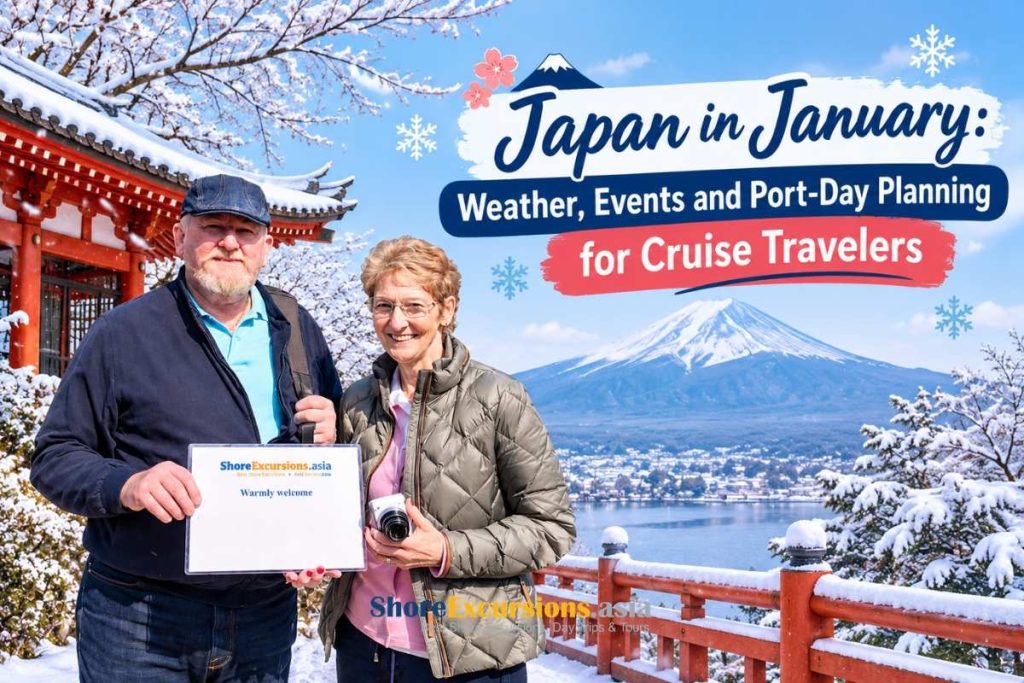
January is Japan's coldest month. Tokyo and Osaka reach about 10°C by day, Sapporo stays below freezing, and Okinawa is a mild 15 - 20°C. The Pacific coast is mostly dry and sunny, while the Sea of Japan side gets snow. Few cruise ships call in winter, so pack layers and confirm your port list.
Japan in January suits travelers who prefer quiet streets, clear air and hot food over cherry blossoms. The month also brings the country's biggest holiday, a major sumo tournament and the deepest cold of the year. This guide from Japan Shore Excursions is written for cruise travelers who may have only one day ashore, so it focuses on weather by region, what is open and how to plan a short winter visit.
What is the weather like in Japan in January?
Climate averages show a wide gap between north and south. Tokyo has an average low near 2°C and a high near 10°C, Osaka is similar, and Sapporo stays below freezing on a typical day. Okinawa sits in a different season altogether, with highs close to 20°C. The Japan Meteorological Agency publishes official 1991-2020 normals if you want to check a specific port city.
| Region (typical ports) | Approximate range | What it feels like |
|---|---|---|
| Hokkaido (Otaru, Hakodate) | −8°C to −1°C | Deep winter, snow cover |
| Tokyo and Yokohama | 2°C to 10°C | Cold, dry, often sunny |
| Osaka and Kobe | 3°C to 10°C | Cold and fairly calm |
| Kyushu (Fukuoka, Nagasaki, Kagoshima) | About 5°C to 12°C | Cool, with some rain |
| Okinawa (Naha, Ishigaki) | 15°C to 20°C | Mild, light jacket |
The Pacific coast, where Yokohama, Shimizu and Kobe sit, gets dry northwesterly winds and plenty of clear days. Mount Fuji is often at its sharpest in winter air, and Shimizu in particular can give good views on a clear morning.
The Sea of Japan coast, including Kanazawa and Niigata, receives heavy snow from cold air crossing the sea. Wind on an open quay can make 5°C feel close to freezing, so judge the cold by the wind as well as the number.
What should you wear in Japan in January?
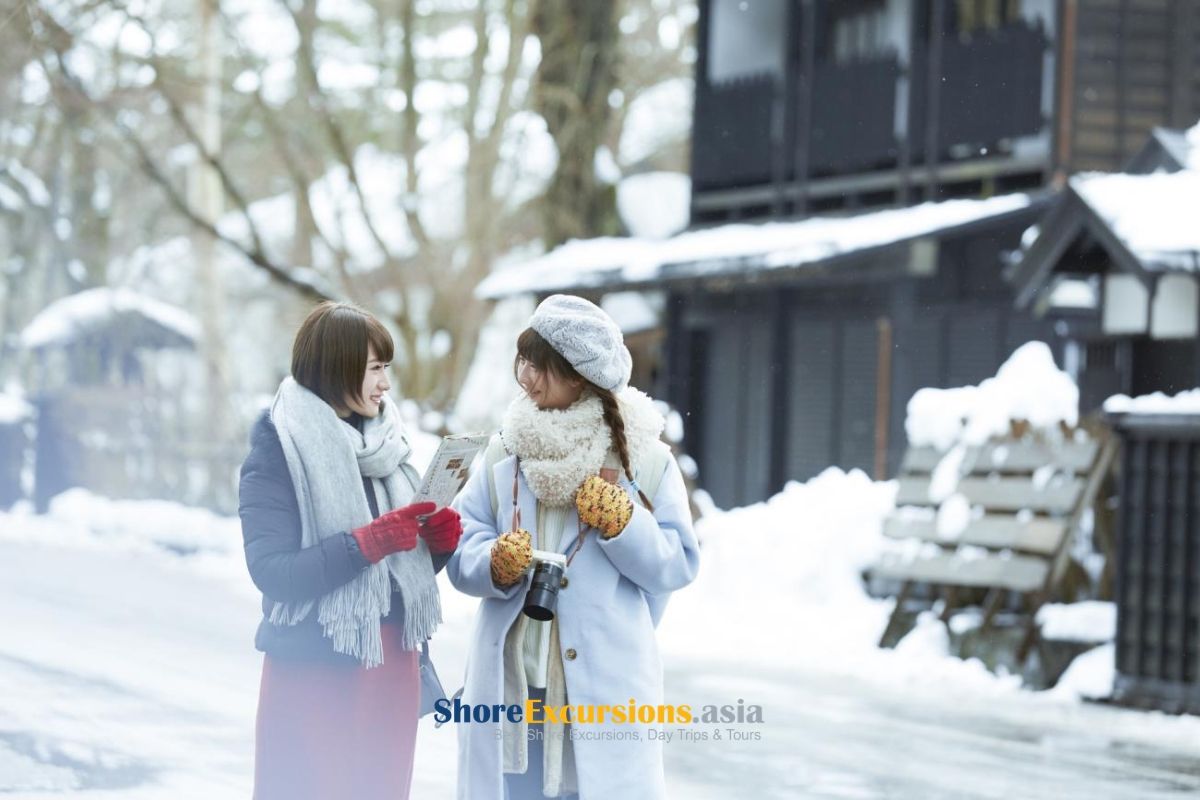
Layers work better than one heavy coat, because trains, shops and restaurants are heated, often strongly. A simple setup covers most conditions on the main islands. Shoes matter as well, since many temples and some restaurants ask you to take them off, and wet stone steps get slippery.
- Base layer: a thin thermal top in merino or synthetic fabric.
- Mid layer: a fleece or light down jacket that is easy to carry indoors.
- Outer layer: a windproof coat, waterproof if your port is on the Sea of Japan side.
- Accessories: hat, gloves and scarf, because quay winds cause most of the discomfort.
- Footwear: waterproof shoes with good grip.
- Extras: disposable heat pads, sold in convenience stores and drugstores.
For Okinawa, a sweater and a light jacket are enough.
Will your cruise stop in Japan in January?
January is the quietest month of the Japan cruise calendar. Many lines redeploy ships in winter, and the sailings that remain lean toward the south. Published itineraries for January 2027 show calls mostly in Naha, Ishigaki, Kagoshima, Fukuoka and Kumamoto, with only a few in Yokohama and Kobe. Itineraries can change, so confirm your ports with your cruise line before relying on a third-party calendar.
Things to do in Japan in January
January is one of the most culturally interesting months to visit Japan. While much of the country experiences cold winter weather, the beginning of the year brings unique traditions, seasonal festivals, and opportunities to experience Japanese culture beyond the usual sightseeing attractions. From visiting centuries-old shrines during New Year celebrations to watching professional sumo wrestling in Tokyo or enjoying the mild climate of Okinawa, there are plenty of ways to make a January trip memorable.
Here are three experiences worth including in your Japan winter itinerary.
Hatsumode and New Year Traditions
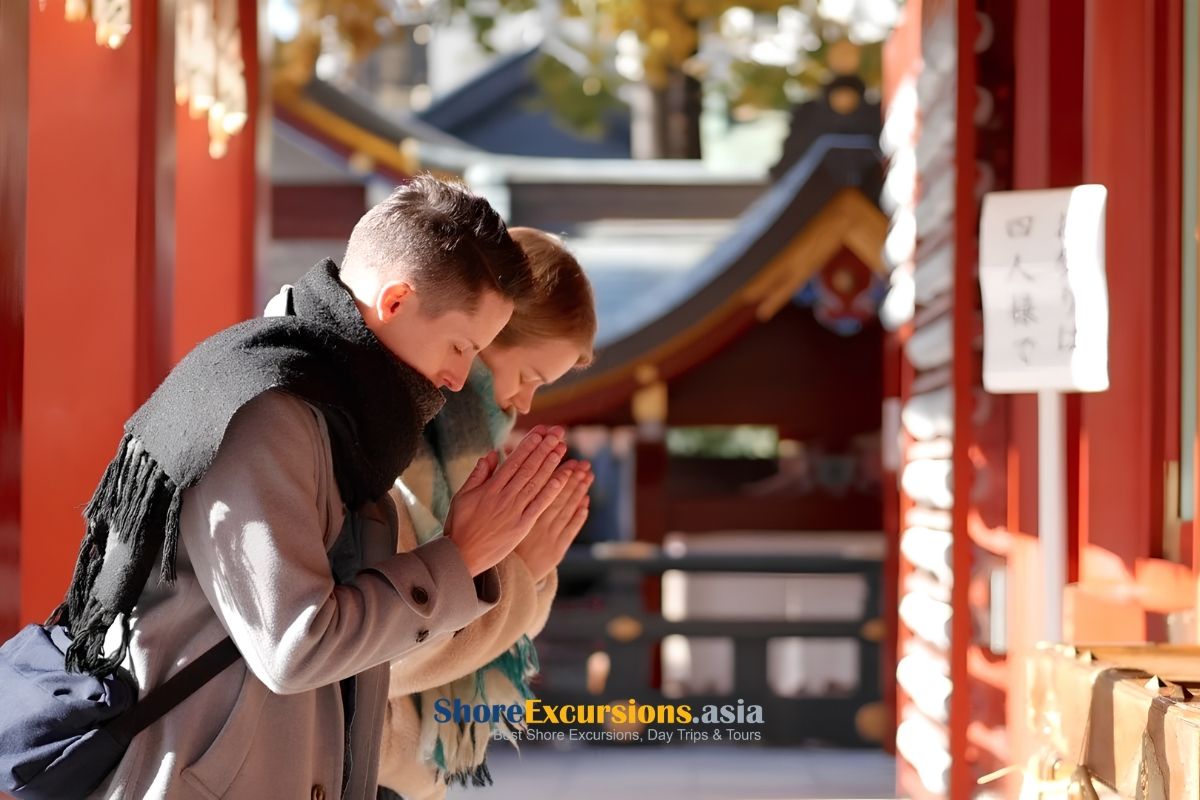
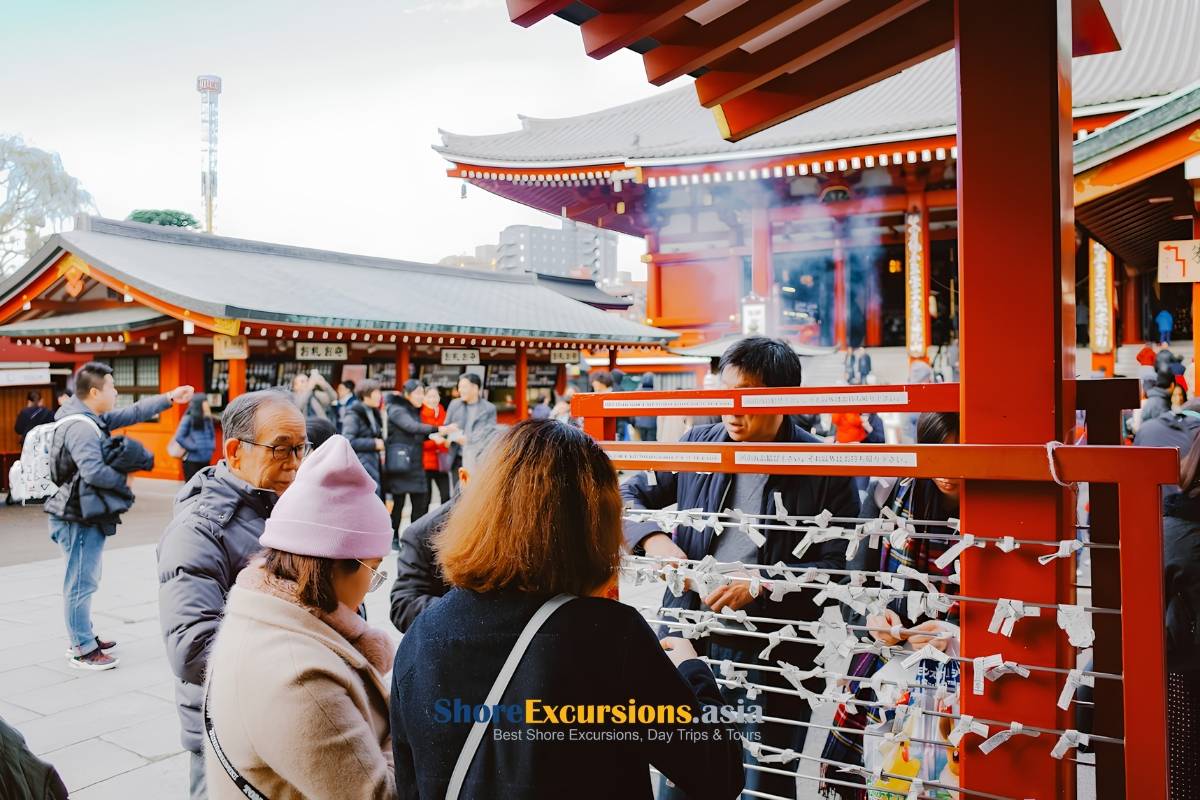
Hatsumode, the first shrine or temple visit of the New Year, is one of Japan's most important seasonal traditions. Millions of people visit Shinto shrines and Buddhist temples during the first days of January to pray for good health, happiness, success, and prosperity in the coming year.
For international visitors, this is an excellent opportunity to experience Japanese spiritual traditions and festive New Year atmosphere. Popular destinations include Meiji Jingu Shrine, Senso-ji Temple, and Fushimi Inari Taisha. These places become particularly lively around January 1-3, with long queues of worshippers, traditional food stalls, and seasonal decorations.
During a hatsumode visit, you can participate in several traditional activities:
- Offer a prayer: Make a small monetary offering at the shrine or temple and pray for good fortune in the year ahead.
- Draw an omikuji: Pick a paper fortune to discover what the coming year may bring. If you receive a bad fortune, you can traditionally tie it to a designated rack or tree at the temple.
- Buy an omamori: These small protective charms are popular souvenirs believed to bring good luck, health, safety, or academic success.
- Explore New Year food stalls: Many major shrines have temporary stalls selling traditional snacks, warm drinks, and local street food.
Hatsu Basho Sumo in Tokyo
January is an exciting time for sumo enthusiasts because Tokyo hosts the first major professional sumo tournament of the year, known as the Hatsu Basho or New Year Grand Sumo Tournament.
Held at Ryogoku Kokugikan, the tournament traditionally takes place over 15 consecutive days in January. It brings together Japan's top-ranked wrestlers, including elite competitors in the makuuchi division, who compete for the championship title.
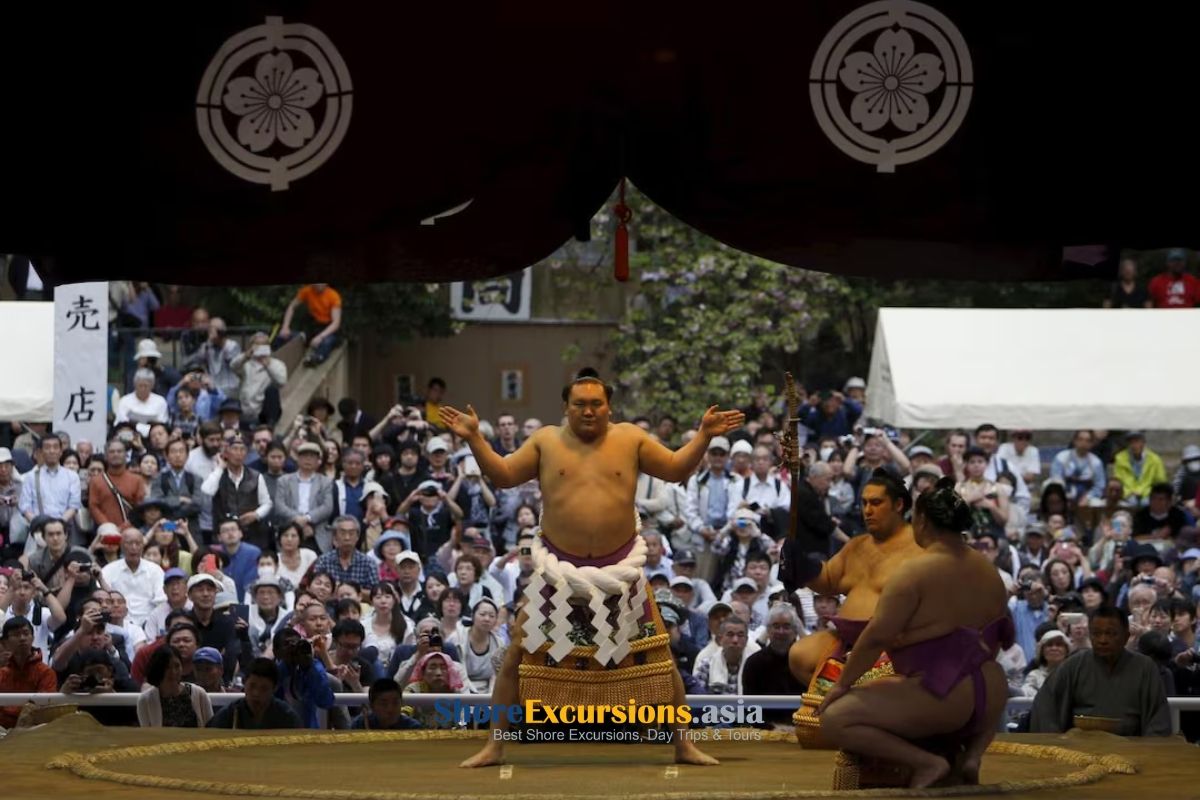
Watching sumo live is a memorable cultural experience, even if you are unfamiliar with the sport. Beyond the matches themselves, visitors can observe traditional rituals such as salt throwing to purify the ring, ceremonial foot stomping, and elaborate ring-entering ceremonies performed by top-ranked wrestlers.
A few practical tips can help you enjoy the event:
- Book tickets early: Weekend sessions and popular competition days can sell out, so check the official Grand Sumo Tournament ticket website in advance.
- Understand the schedule: Lower-division matches generally begin in the morning, while the top-division bouts take place in the afternoon. Arriving earlier allows you to experience more of the tournament.
- Try chanko-nabe: This hearty hot pot, traditionally associated with sumo wrestlers, is a local specialty around the Ryogoku neighborhood.
- Explore sumo culture nearby: Ryogoku has sumo-themed restaurants, museums, and shops where you can learn more about the sport's history and traditions.
The Hatsu Basho is especially appealing to travelers who want to experience something distinctly Japanese rather than simply visit another tourist attraction. Even one afternoon at the tournament can provide a fascinating introduction to the country's national sport.
Okinawa in Winter
If you prefer milder temperatures over Japan's snowy winter landscapes, Okinawa is an excellent destination to consider in January. Located in the southernmost part of Japan, this subtropical island region enjoys considerably warmer weather than Tokyo, Kyoto, or Hokkaido, making it ideal for outdoor exploration and coastal sightseeing.
January temperatures in Okinawa generally range from around 15°C to 20°C (59°F - 68°F). Although it is usually too cool for a typical tropical beach holiday, the relatively mild climate makes it comfortable to explore the islands without the intense summer heat and humidity.
There are several seasonal experiences that make Okinawa particularly appealing in January:
- See Japan's earliest cherry blossoms: Okinawa is among the first places in Japan to welcome cherry blossom season. The distinctive Kanhizakura (Taiwan cherry) typically begins blooming from mid-January, with some of the best viewing opportunities in late January and early February.
- Go humpback whale watching: January marks the beginning of an excellent whale-watching period around Okinawa. Humpback whales migrate to the warmer waters near the Kerama Islands to breed and give birth.
- Explore Okinawa's cultural heritage: Cooler weather is ideal for visiting historical attractions such as Shurijo Castle and traditional Ryukyu villages. These sites provide insight into the distinctive history and culture of the former Ryukyu Kingdom.
- Enjoy Okinawan cuisine: Winter is a good time to explore local comfort foods, including Okinawa soba, goya champuru, rafute (slow-braised pork belly), and warm awamori-based dishes.
What is open and closed around New Year?
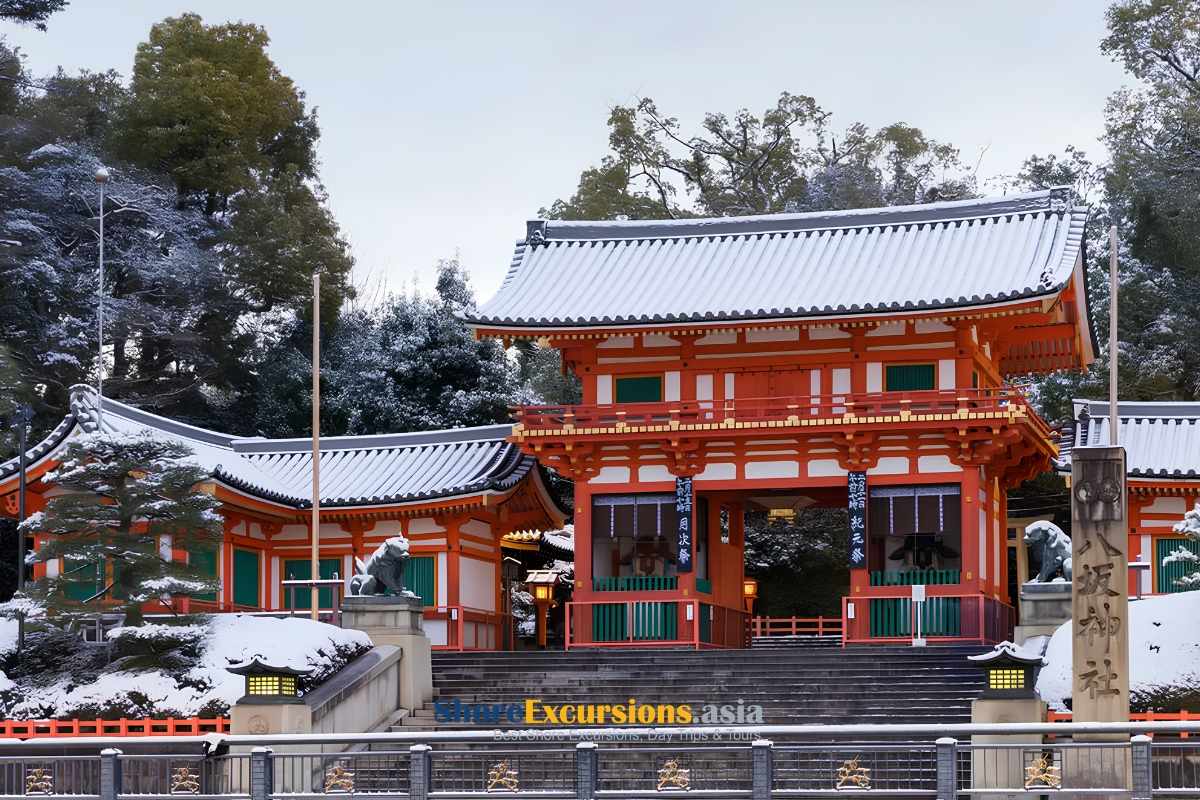
The holiday window runs from about December 29 to January 4, and the deepest closures fall on January 1 to 3. Shops, restaurants and museums follow their own schedules, so dates differ from place to place. The table shows the usual pattern, and any specific attraction is worth confirming on its official website.
| Place | Usual status, Jan 1 - 3 |
|---|---|
| Shrines and temples | Open and crowded |
| Public transport and taxis | Running |
| Convenience stores, fast food, hotel restaurants | Open |
| Large department stores | Closed Jan 1, many reopen Jan 2 |
| Small restaurants and local shops | Often closed |
| Banks and post offices | Closed |
| Museums and castles | Varies, many closed for part of Dec 28 to Jan 4 |
On a port day that falls on January 1 or 2, expect limited lunch choices and carry enough yen in cash. Hotel restaurants and shopping malls in big cities are the most reliable places to eat. Sightseeing built around shrines and outdoor scenery is safer than anything that depends on opening hours.
Pros and Cons of Visiting Japan in January
Visiting Japan in January offers a different travel experience from the popular spring and autumn seasons. The country welcomes the New Year with traditional celebrations, winter festivals, snow activities, and seasonal food. It is also an excellent month for travelers who want to experience Japan's winter scenery or enjoy fewer crowds at certain tourist attractions.
However, cold temperatures, limited daylight, and temporary business closures during the New Year holidays can affect your travel plans. Understanding the advantages and disadvantages will help you decide whether January is the right time for your trip.
| Pros | Cons |
|---|---|
| ✓ Clear Pacific-side skies: Eastern Japan often enjoys dry, sunny weather and excellent visibility. | ✗ Cold temperatures: Winter conditions can be harsh, especially in northern Japan and mountainous regions. |
| ✓ Fewer crowds: Tourist numbers generally decrease after the first week of January. | ✗ Snowfall risk: The Sea of Japan coast experiences heavy snowfall that can disrupt transportation. |
| ✓ Better hotel rates: Accommodation prices often ease after the New Year holiday peak. | ✗ Fewer cruise calls: Cruise ship visits and shore excursion opportunities are generally more limited during winter. |
| ✓ Seasonal events: January offers unique experiences such as the Hatsu Basho sumo tournament in Tokyo. | ✗ Holiday closures: Some shops, restaurants, and attractions close from January 1 to 3. |
Common Mistakes when Visiting Japan During January
Most winter problems come from planning for the wrong conditions rather than from the cold itself. These five show up again and again.
- Packing for one temperature across the whole country.
- Planning a restaurant lunch on January 1 or 2.
- Forgetting how early the light fades.
- Skipping a hat and gloves because the forecast says 8°C.
- Treating a third-party cruise calendar as final.
FAQs about Visiting Japan in January
Is January a good time to visit Japan?
Yes. January is a great time to experience Japan's winter scenery, traditional New Year celebrations, seasonal cuisine, and winter sports. It is particularly appealing to travelers who prefer fewer crowds after the first week of the month.
How cold is Japan in January?
January is generally the coldest month in Japan. Tokyo and Osaka typically experience temperatures around 2–10°C (36–50°F), while Hokkaido and northern regions can drop well below freezing. Okinawa is much milder, with temperatures around 15 - 20°C (59 - 68°F).
Does it snow in Japan in January?
Snow is routine in Hokkaido, Tohoku and along the Sea of Japan coast, and almost unheard of in Okinawa. Tokyo, Osaka and Kobe see light snow now and then, but deep accumulation is unusual in a normal winter. For a cruise traveler the main risk is delay rather than depth, because a few centimeters can slow roads and trains. Add extra buffer time before the all-aboard time whenever snow is in the forecast.
Is January a good time to see Mount Fuji?
Yes. January often brings clear skies and excellent visibility around Mount Fuji, particularly on the Pacific side of Honshu. Winter mornings generally offer some of the best opportunities to photograph the mountain, although visibility still depends on weather conditions.
Can I see cherry blossoms in Japan in January?
Yes, but only in a few warmer regions. Okinawa is one of the earliest places in Japan to see cherry blossoms, with Kanhizakura typically beginning to bloom in mid-January. Most of mainland Japan does not enter cherry blossom season until March or later.
What should I wear in Japan in January?
Pack a warm winter coat, thermal layers, sweaters, scarves, gloves, and comfortable walking shoes. If visiting snowy destinations, waterproof footwear and thermal socks are particularly useful. For Okinawa, lighter layers and a windproof jacket are usually sufficient.
Are tourist attractions open in Japan during January?
Most major tourist attractions operate normally throughout January, but some businesses, museums, and restaurants close temporarily around January 1–3 for New Year celebrations. Check individual opening schedules before visiting.
Is Japan crowded in January?
The first three days of January can be particularly busy around popular shrines, temples, and transportation hubs because of New Year celebrations. After January 4, tourist crowds generally become smaller, making the rest of the month a more comfortable time for sightseeing.

 Send Inquiry