
Japan is one of the easiest countries in the world to travel around, yet its payment culture can surprise first-time visitors. Understanding how money in Japan works before your trip can save time, reduce unnecessary fees, and help you avoid awkward situations at restaurants, transportation hubs, and local shops. This guide from Japan Shore Excursions covers everything you need to know about Japanese currency, payment methods, ATMs, money exchange, and local etiquette.
What is the name of money in Japan - The Yen (JPY)
The official currency of Japan is the Japanese Yen, abbreviated as JPY and represented by the symbol ¥. It is one of the most traded currencies in the global financial market and serves as the foundation of Japan's economy.
For travelers, understanding the value of the yen is essential when budgeting for accommodation, transportation, dining, and shopping. Prices throughout Japan are displayed in yen, and foreign currencies are rarely accepted outside of a few international airports.
A Brief History of the Japanese Yen
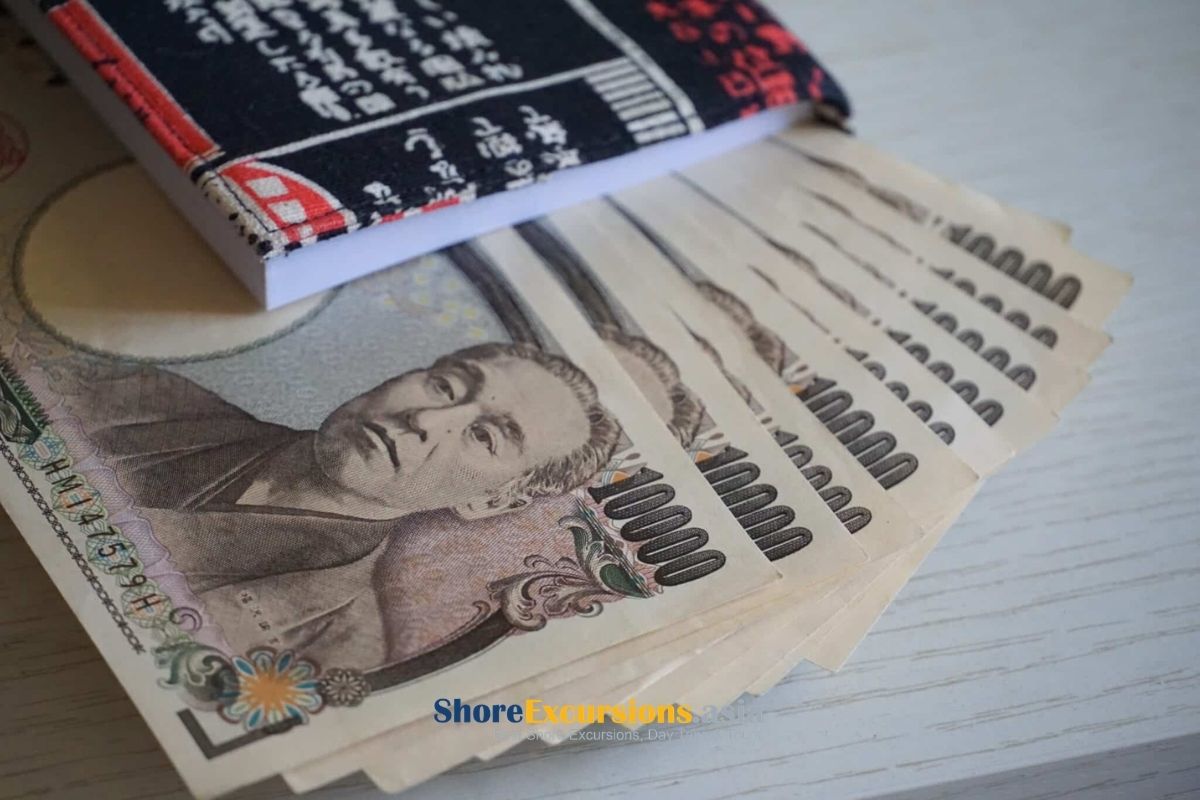
The yen was introduced as money in Japan in 1871 during the Meiji Restoration, a period when Japan modernized its political and economic systems. Prior to that, various feudal domains issued their own currencies, creating a fragmented monetary environment.
The government established a unified national currency to support economic growth and international trade. Over time, the yen became one of the world's most respected and stable currencies. Today, modern Japanese banknotes feature advanced anti-counterfeiting technology and showcase influential figures from Japanese history, education, and culture.
Understanding Japanese Currency Exchange Rates
Japanese currency exchange rates fluctuate daily based on economic conditions, interest rates, and international market activity. Before traveling to Japan, it is helpful to monitor current rates so you can estimate your expenses more accurately.
The table below provides sample exchange rates for some of the most commonly used currencies among international travelers.
| Currency | Approximate Exchange Rate* |
|---|---|
| 1 USD (US Dollar) | ≈ ¥150 |
| 1 EUR (Euro) | ≈ ¥160 |
| 1 GBP (British Pound) | ≈ ¥190 |
| 1 AUD (Australian Dollar) | ≈ ¥100 |
| 1 CAD (Canadian Dollar) | ≈ ¥110 |
| 1 SGD (Singapore Dollar) | ≈ ¥110 |
Note: These rates are provided as examples only and may not reflect current market values. Exchange rates change regularly, you should check the latest rates before making any conversions.
To help put yen values into perspective:
- ¥1,000 may cover a casual meal
- ¥5,000 can pay for a day of sightseeing and transportation
- ¥10,000 is commonly used for larger purchases and hotel payments
How to Pay in Japan?
Understanding the money in Japan and available payment methods before arriving in Japan can make your trip significantly smoother.
Paying with Cash in Japan
Despite the growth of digital payments, cash remains one of the most reliable ways to pay for goods and services throughout Japan. One of the biggest advantages of cash is universal acceptance. Many small businesses continue to prefer cash as it eliminates card processing fees and simplifies transactions. In some family-run establishments, cash may be the only payment option available.
You should always carry cash when visiting:
- Small independent restaurants
- Local food markets
- Street food stalls
- Traditional ryokan inns
- Shrines and temples
- Rural villages and remote destinations
- Coin-operated facilities
- Some local transportation services
Credit and Debit Cards in Japan
Card acceptance has improved dramatically over the past decade, especially in areas that receive significant numbers of international visitors. For many travelers, credit and debit cards provide convenience, security, and favorable exchange rates.
Most major merchants accept internationally recognized card networks, including:
- Visa
- Mastercard
- American Express
- JCB
- Discover
Travelers can typically use cards at:
- Hotels and resorts
- Department stores
- Shopping centers
- Theme parks
- Museums
- Major tourist attractions
- Chain restaurants
- Airports
- High-speed rail ticket offices
Card acceptance is particularly strong in Tokyo, Osaka, Kyoto, Nagoya, and other major urban centers.
IC Travel Cards in Japan
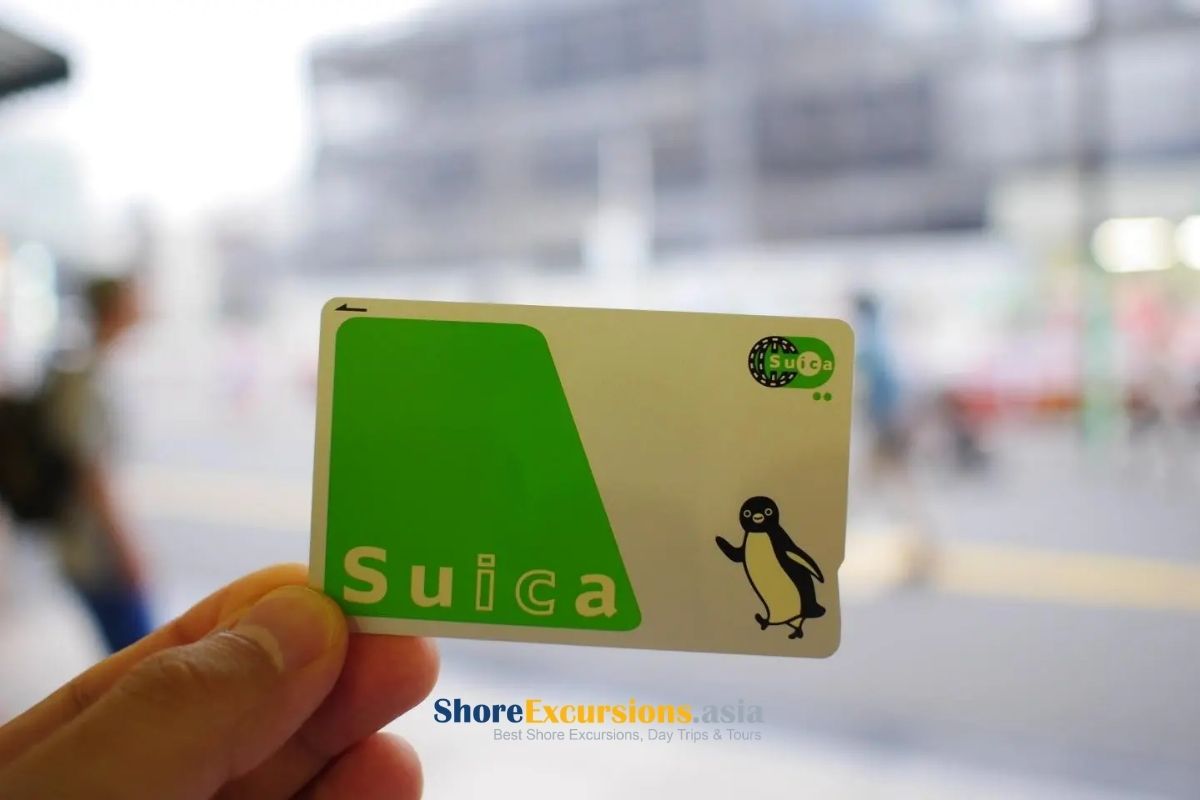
One of the most useful tools for paying money in Japan available to visitors is the IC card system. These rechargeable smart cards simplify transportation and small purchases throughout Japan.
IC cards are contactless prepaid cards that allow users to tap through train stations, subway gates, and buses without purchasing individual tickets. They function similarly to transit cards found in cities such as London, Hong Kong, or Singapore. Travelers can add funds to their card and use the balance for transportation and many everyday purchases.
Several IC cards are available throughout Japan, such as:
- Suica - the most recognizable IC card: It is accepted on trains, subways, buses, and at thousands of retail locations.
- Pasmo: It serves a similar purpose and is commonly used on private railway networks in the Tokyo region.
- ICOCA - primary IC card used in western Japan: It provides the same convenience for transportation and retail purchases.
Additional IC cards to pay money in Japan include:
- TOICA
- Kitaca
- SUGOCA
- nimoca
- Hayakaken
Many first-time visitors assume IC cards are only for trains and buses. In reality, they can be used for a wide variety of purchases. Common uses of IC Card for travelers in Japan include:
- Trains
- Subways
- Buses
- Convenience stores
- Vending machines
- Coin lockers
- Drugstores
- Supermarkets
- Selected restaurants
Cashless Payments in Japan
Cashless payments have expanded rapidly throughout Japan as alternative to money in Japan in recent years. Many businesses now support contactless transactions, QR-code payments, and mobile wallets. While local residents frequently use domestic payment apps, international travelers have access to several convenient alternatives.
Among Japanese residents, the most popular cashless payment platforms include:
- PayPay
- Rakuten Pay
- d Barai (d払い)
- au PAY
These services are widely accepted throughout Japan. However, many require Japanese bank accounts, local phone numbers, or residency registration, making them less practical for short-term visitors. Foreign travelers generally have more success using internationally supported digital payment systems, include:
- Apple Pay
- Google Pay
- Contactless Visa cards
- Contactless Mastercard cards
Where to Get Japanese Currency During Your Trip?
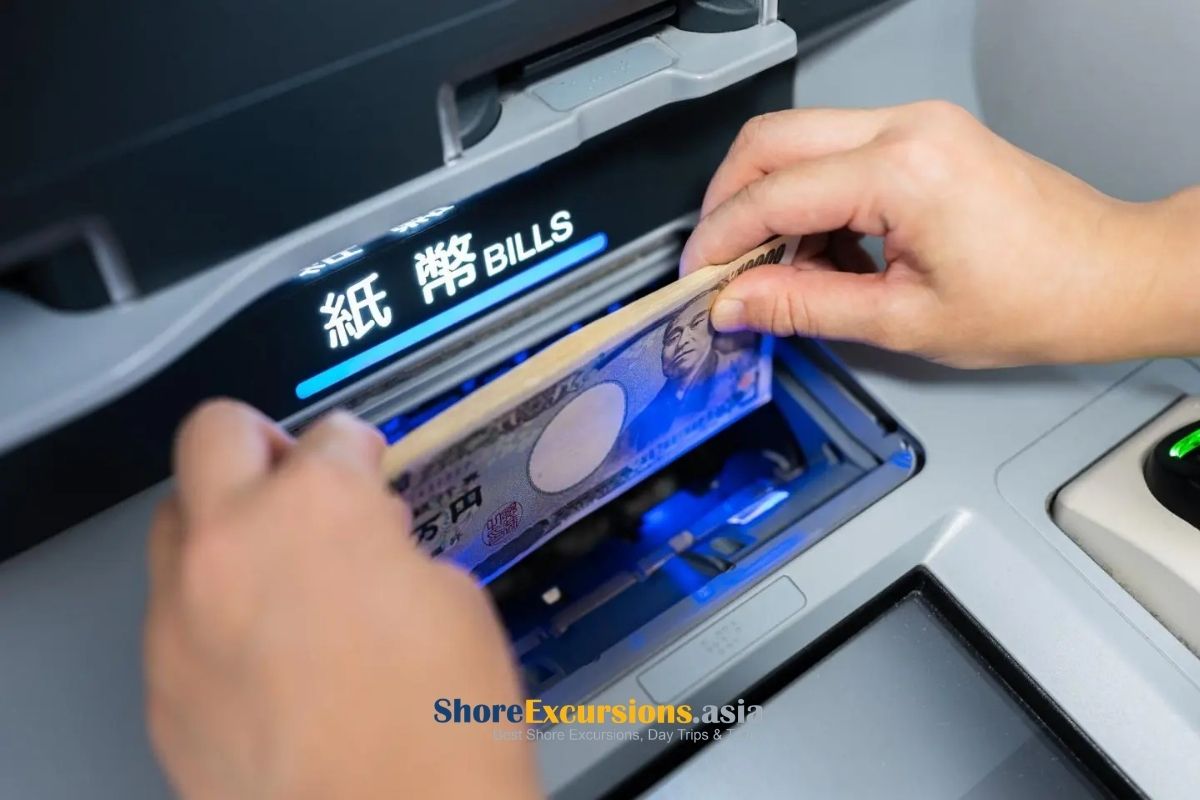
Having access to local cash is still an important part of managing money in Japan. Travelers going to Japan have several convenient ways to obtain yen after arriving. Whether you plan to withdraw cash from an ATM or exchange foreign currency, understanding the available options can help you save money and avoid unnecessary fees.
Using ATMs to Withdraw Japanese Yen
Japan's ATM network is reliable, secure, and widely available throughout the country. Most international debit and credit cards can be used at selected ATMs in Japan. Machines connected to major global networks such as Visa, Mastercard, Cirrus, Plus, UnionPay, and Maestro generally support foreign cards.
Many ATMs offer multilingual menus, including English, Chinese, Korean, and several other languages, making the withdrawal process straightforward for visitors. Before traveling, it is a good idea to:
- Confirm international access with your bank
- Check daily withdrawal limits
- Verify foreign transaction fees
- Memorize your card PIN
Based on personal travel experience and feedback from frequent visitors, the following options are generally the most reliable ATMs for tnternational travelers:
- 7-Eleven ATMs - best choice for international travelers: These machines can be found throughout Japan. Most support foreign-issued cards and provide user-friendly English interfaces.
- Japan Post Bank ATMs - largest ATM networks in Japan: Its machines are commonly located inside post offices throughout Japan and often support international cards.
- FamilyMart Convenience Store ATMs: These machines are generally compatible with major international card networks.
Using an ATM in Japan may involve fees from both the local ATM operator and your home bank. Common charges include:
- International transaction fees
- Foreign currency conversion fees
- ATM service charges
- Cash withdrawal fees
To reduce costs, consider withdrawing larger amounts less frequently rather than making multiple small transactions. Before your trip, check with your financial institution to understand any restrictions that could affect your access to cash abroad.
Exchanging Foreign Currency in Japan
Although ATM withdrawals are often the most convenient option, many visitors still prefer exchanging physical currency after arrival. If you're wondering how to exchange currency in Japan, the process is generally simple, especially in major tourist destinations.
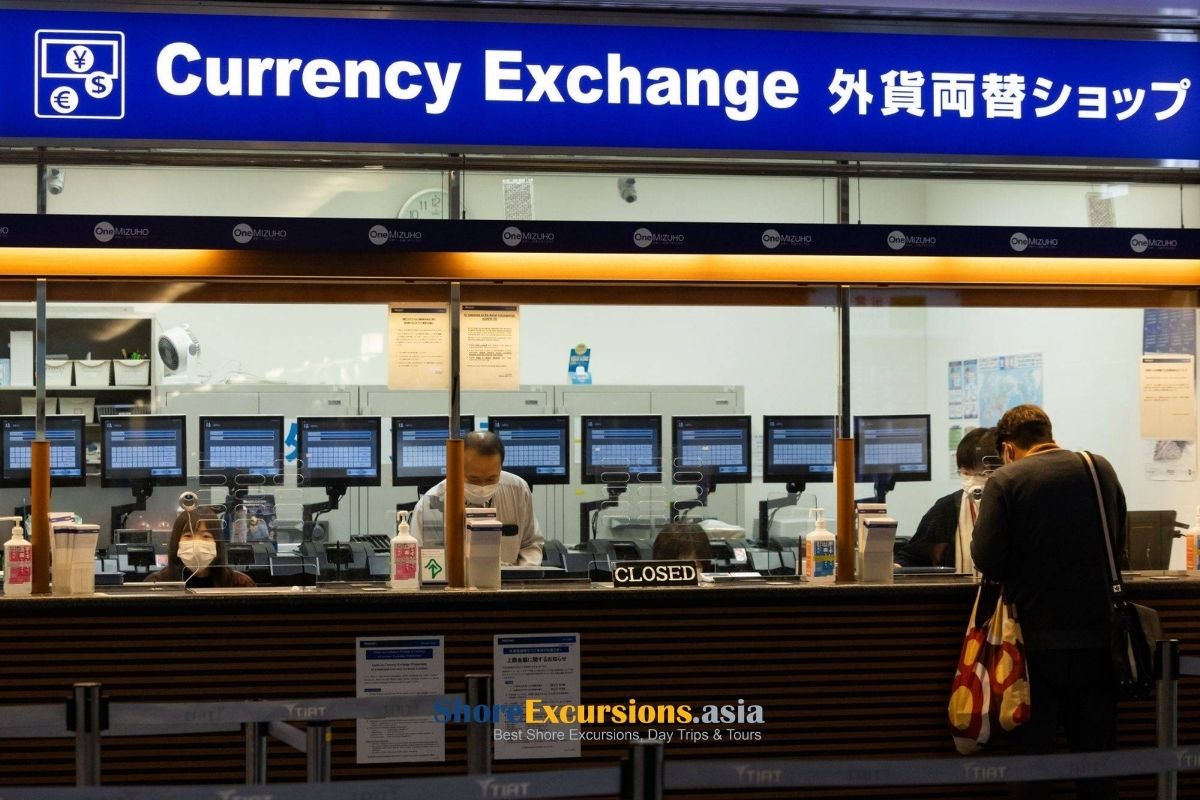
Many experienced visitors exchange a small amount before departure to cover immediate expenses such as transportation, food, or airport purchases. The remainder can then be exchanged after arriving in Japan.
Visitors always ask where to exchange money in Japan in order to receive the best rates. Fortunately, exchange services are widely available in major cities and transportation hubs:
- Airports: International airports such as Narita, Haneda, Kansai International Airport, and Chubu Centrair Airport offer numerous exchange counters. Although rates are generally reasonable, they may not always be the most competitive available.
- Banks: Banks often offer competitive rates and reliable service. Travelers visiting during weekends or public holidays should check operating schedules in advance.
- Hotels: While convenient, hotel exchange rates are often less favorable than those available through banks or dedicated exchange providers.
- Dedicated Currency Exchange Counters: These businesses often compete aggressively on rates and may provide better value than airport counters.
Tips for Getting Better Exchange Rates:
- Rates vary between providers, even within the same city. Taking a few minutes to compare options can lead to noticeable savings.
- Always review the final amount you will receive before completing the transaction.
- Exchanging a larger amount at a favorable rate may help reduce costs over the course of your trip.
- When paying with a card, merchants may offer to charge your purchase in your home currency instead of yen. In most cases, selecting Japanese yen provides a better exchange rate and avoids unnecessary conversion fees.
Are Traveler's Checks Still Useful in Japan?
Traveler's checks were once a popular tool for international travel. Today, however, they have largely disappeared from everyday use. Only a limited number of banks and exchange providers still accept traveler's checks in Japan. As a result, most modern travelers choose alternative payment methods.
The Best Way to Access Money in Japan
There is no single solution that works for every traveler. The most effective approach combines several payment methods. A practical strategy includes:
- Carrying some cash upon arrival
- Using ATMs for larger withdrawals
- Keeping a credit card as backup
- Loading an IC card for transportation and small purchases
By combining these options, travelers can confidently manage money in Japan while avoiding unnecessary fees and payment difficulties throughout their journey.
Japan Money Etiquette and Things Every Traveler Should Know
While managing money in Japan is generally straightforward, certain cultural practices may feel unfamiliar to first-time visitors. Learning a few basic customs will help you feel more comfortable and demonstrate respect for local culture.
Paying Politely: How Money Is Handled in Japan
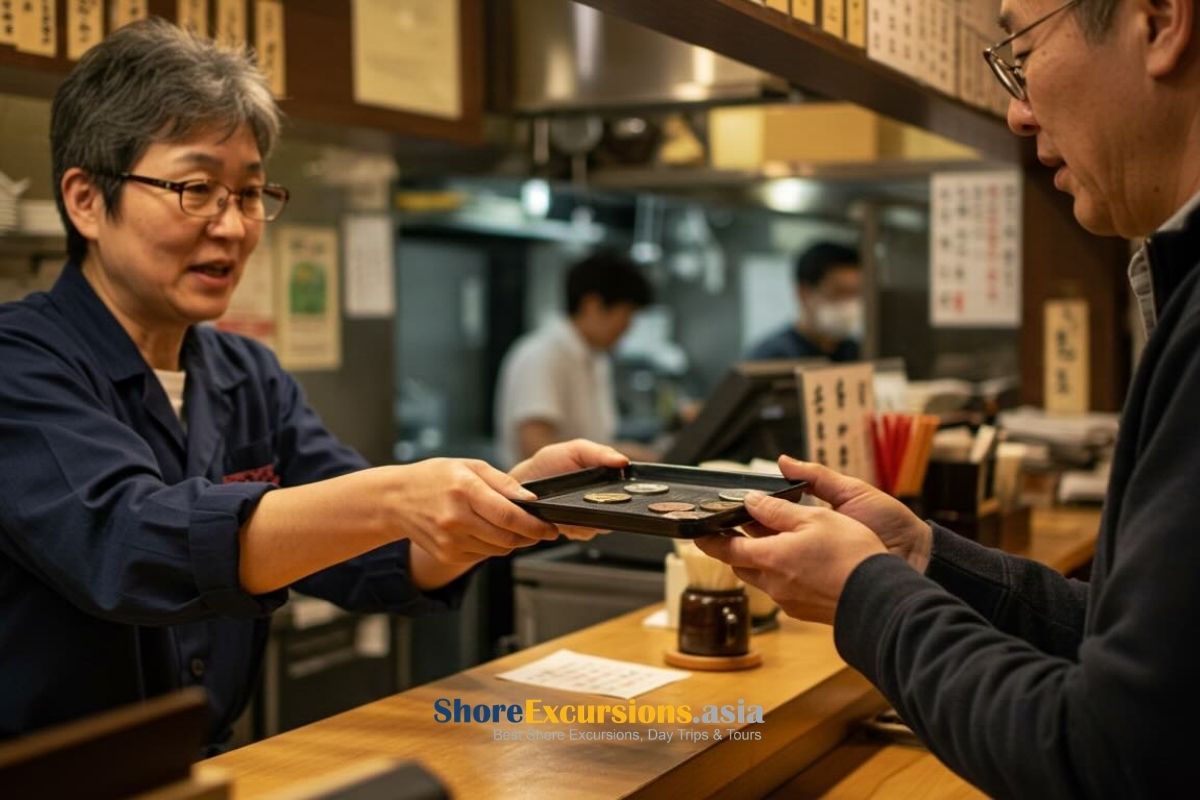
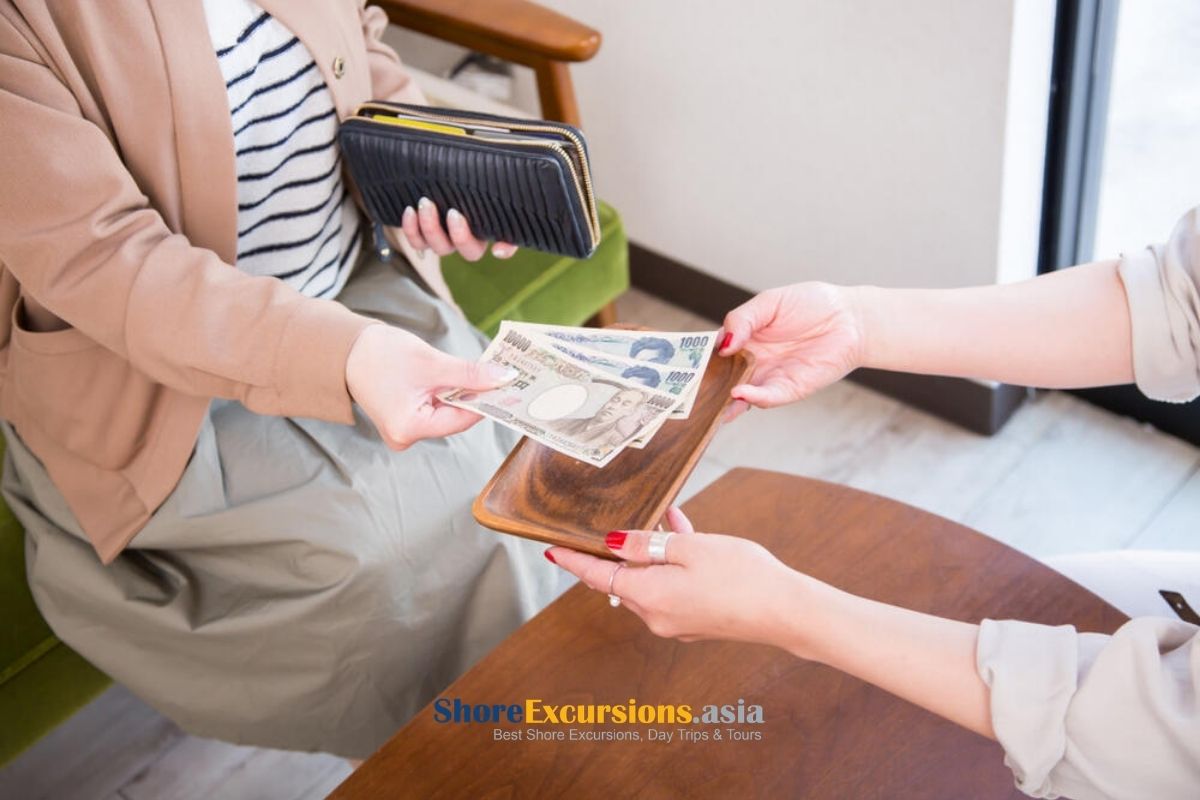
One of the first things visitors notice when using Japanese currency is that transactions are often handled differently than in many Western countries. In restaurants, convenience stores, supermarkets, and department stores, customers are typically expected to place cash into a small tray located near the register rather than handing it directly to the cashier.
The cashier will then place your change and receipt back into the tray after the transaction is completed. This system helps maintain cleanliness, efficiency, and professionalism during the payment process. For travelers unfamiliar with the custom, it may feel unusual at first. After a few transactions, however, it quickly becomes second nature.
Managing Coins Efficiently
Visitors are often surprised by how frequently coins are used throughout Japan. Because cash remains widely accepted, it is common to accumulate a substantial number of coins during even a short trip. Coins are regularly used for:
- Vending machines
- Train station lockers
- Bus fares
- Convenience store purchases
- Temple donations
Keeping coins organized in a separate pouch or wallet compartment can make transactions quicker and more convenient.
Understanding Tipping Culture in Japan
Unlike many countries, tipping is generally not part of Japanese culture. Excellent service is viewed as a standard expectation rather than something that requires additional compensation. In most situations, attempting to leave a tip may create confusion.
Visitors who receive exceptional service can demonstrate appreciation in other ways. Examples include:
- Saying "Arigatou gozaimasu" (thank you very much)
- Writing a positive online review
- Treating staff with courtesy and respect
- Following local customs and rules
Tax-Free Shopping in Japan
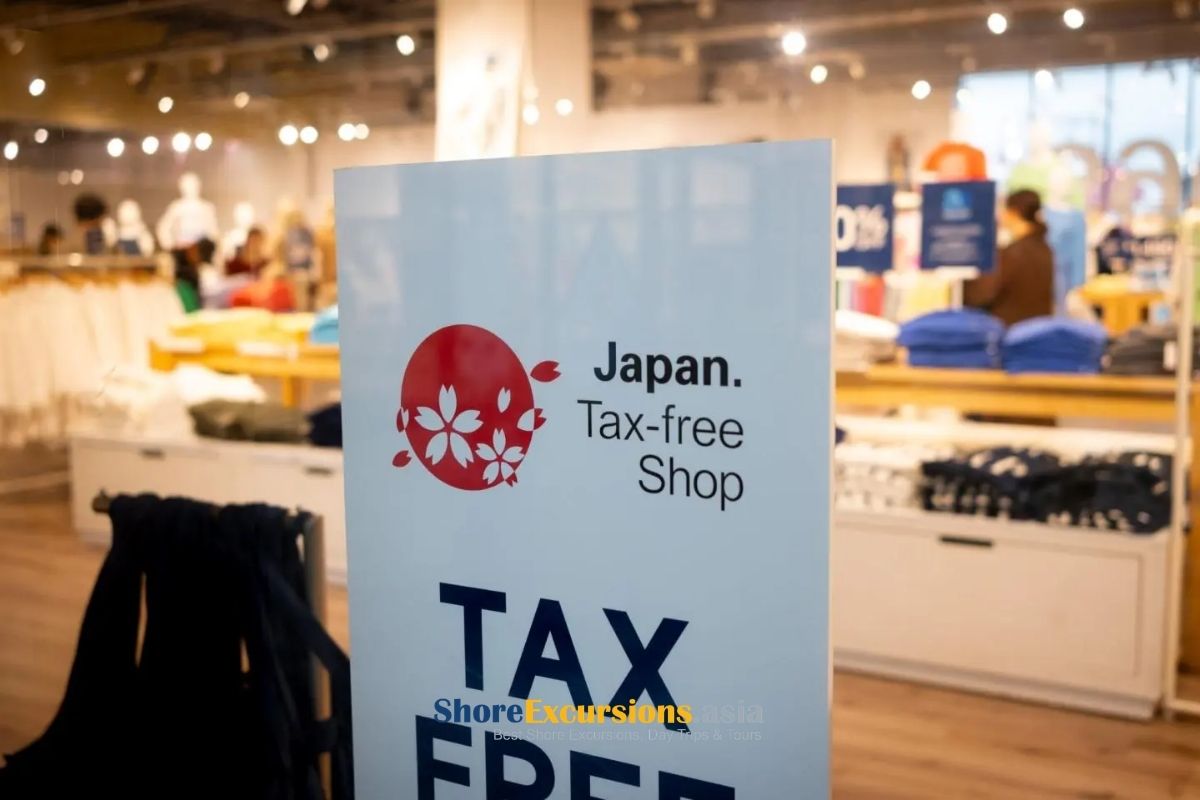
Shopping is a major part of many travel itineraries, and visitors may be eligible for significant savings through Japan's tax-free shopping program. Most short-term international visitors can take advantage of tax-free purchases.
Eligibility generally applies to travelers who hold a temporary visitor status, and intend to take purchased items out of Japan. To receive tax-free benefits, visitors are normally asked to present a valid passport and proof of temporary visitor status.
Is It Safe to Carry Cash in Japan?
About this consideration, Japan consistently ranks among the safest countries in the world. Violent crime rates are relatively low, and incidents involving theft are uncommon compared with many major international destinations. As a result, both residents and visitors often feel comfortable carrying cash.
Despite Japan's excellent safety record, common-sense precautions remain important, travelers should:
- Keep wallets secure in crowded areas
- Avoid displaying large amounts of cash unnecessarily
- Use hotel safes when available
- Separate emergency funds from daily spending money
Common Money Mistakes Travelers Make in Japan
Even experienced travelers occasionally encounter payment-related problems. Understanding the most common mistakes can help you avoid unnecessary inconvenience.
- Arriving Without Cash => Arriving without any yen can create challenges immediately after landing.
- Relying Entirely on Credit Cards => Small restaurants, local attractions, and rural businesses may still prefer cash payments.
- Ignoring ATM Fees => Understanding your bank's fee structure before departure can prevent unpleasant surprises later.
- Not Carrying Coins => Many visitors underestimate how frequently they will use small denominations and end up struggling with bulky pockets full of change.
- Misunderstanding Tax-Free Shopping Rules => Eligibility requirements vary by store and product category. Reviewing the rules before shopping can help avoid confusion at checkout.
How Much Money Do You Need for a Trip to Japan?
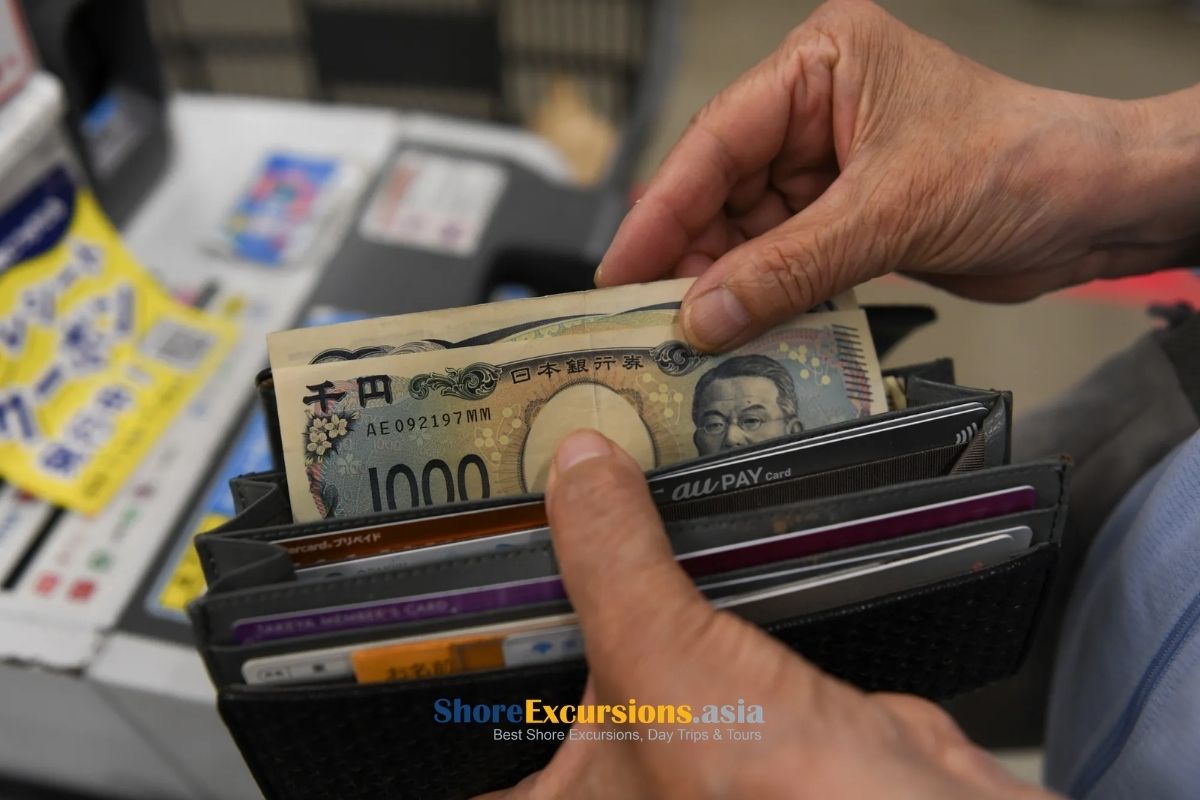
Japan has a reputation for being expensive, but the reality is more nuanced. While luxury hotels and fine dining can quickly increase expenses, budget-conscious travelers can comfortably explore the country without overspending. Understanding typical travel costs will help you manage money in Japan more effectively and avoid unexpected financial surprises during your journey.
Daily Budget for Budget Travelers
A budget traveler can typically expect to spend between ¥8,000 and ¥15,000 per day, excluding international flights. Below is breakdown cost:
- Accommodation: Typical nightly costs range from ¥3,000 to ¥8,000 depending on the city and season.
- Food: Many budget travelers comfortably spend between ¥2,000 and ¥4,000 per day on food.
- Transportation: Daily transportation costs vary based on your itinerary (Local subway rides: ¥180 - ¥350 / City bus fares: ¥200 - ¥300 / Regional train journeys: ¥500 - ¥3,000)
- Attractions: Many cultural attractions are surprisingly affordable (Temples and shrines: ¥300 - ¥1,000 / Museums: ¥500 - ¥2,000 / Observation decks: ¥1,000 - ¥3,000)
Typical Budget for Mid-Range Travelers
A mid-range travel style offers a balance between comfort and affordability. Most travelers fall into this category and typically spend between ¥15,000 and ¥35,000 per day. This budget usually includes:
- Mid-range hotels generally cost between ¥8,000 and ¥20,000 per night.
- Daily food expenses often range from ¥4,000 - ¥8,000 per person
- Transportation and activities expense may include: Shinkansen journeys, guided tours, theme park admissions, cultural experiences
Luxury Travel Budget in Japan
Luxury travelers typically spend ¥40,000 or more per day, with some itineraries exceeding ¥100,000 daily.
- Premium accommodations: Night rates often start around ¥30,000 and can exceed ¥150,000 for premium properties.
- Fine dining experiences: Individual meals can range from ¥10,000 to more than ¥50,000 per person.
- Additional luxury expenses may include: First-class Shinkansen tickets, private guides, chauffeur services, helicopter tours, exclusive cultural experiences.
Understanding money in Japan before your trip can make traveling significantly easier and more enjoyable. With the right preparation, managing money in Japan is straightforward, safe, and convenient. Plan ahead, keep a small amount of cash on hand, and enjoy everything Japan has to offer with confidence.

 Contact Us via Messenger
 Send Inquiry