
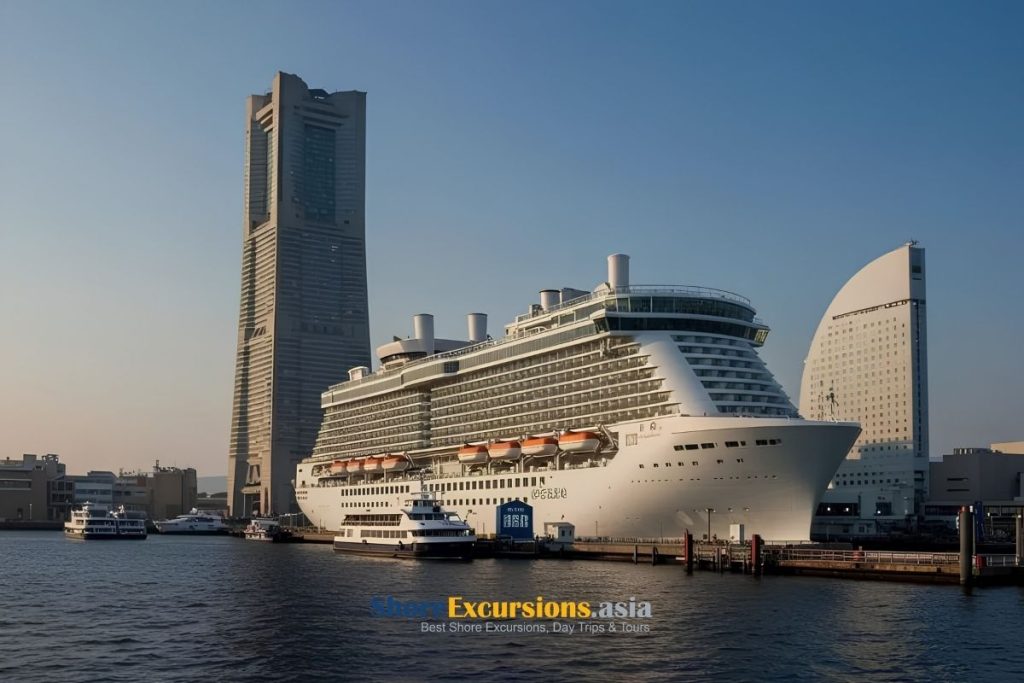
Embarking on a multi-week cruise that traverses the maritime borders of East and Southeast Asia is an extraordinary journey. Few travel experiences match the grandeur of watching the neon towers of Yokohama fade into the open horizon, only to awaken days later to the limestone spires of Ha Long Bay or the verdant delta of the Saigon River.
However, crossing multiple sovereign maritime boundaries introduces a level of regulatory complexity that standard single-destination travelers rarely encounter. Unlike arriving via international commercial airports, entering a sovereign state via sea involves distinct maritime immigration protocols, port-specific customs clearings, ship-agent passenger manifests, and stringent local security checkpoint regulations.
A single procedural oversight-such as misdeclaring a seaport entry code or mistiming an overland harbor transfer-can result in denied shore leave, heavy immigration fines, or the ultimate cruiser nightmare: watching your ship sail away from the pier without you.
Maritime Bureaucracy: Understanding Seaport Entry vs. Airport Protocols
The most common administrative pitfall for cruise passengers sailing between Japan and Vietnam involves visa documentation.
While Japan operates an automated and highly standardized maritime entry framework for major international cruise carriers, Vietnam enforces strict border control protocols where standard airport tourist e-Visas do not automatically grant harbor clearance unless the exact maritime checkpoint is formally designated.
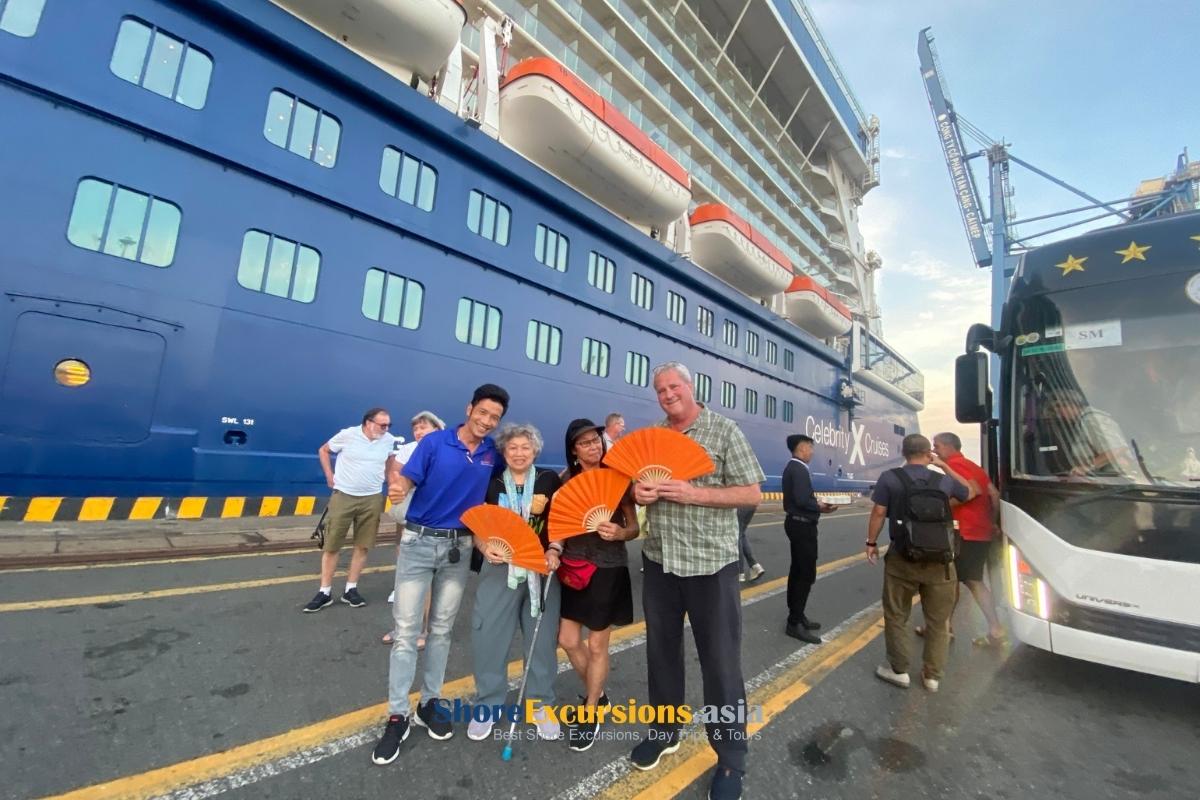
Crucial Port Documentation Realities:
- Japan Ports: Group landing permits (Shore Excursion Passes) processed collectively via shipboard manifest.
- Vietnam Ports: Dedicated seaport entry checkpoints requiring verified arrival harbor declarations.
- Harbor Security Gates: Commercial piers (Phu My, Chan May) require dedicated vehicle gate passes for private guides.
Navigating these regulatory nuances requires more than a casual web search. For travelers who want to bypass bureaucratic headaches, partnering with a fully licensed inbound operator is essential. Established enterprises like Du Lịch Tầm Nhìn Việt (Viet Vision Travel) possess official international tour operator credentials, allowing them to coordinate directly with local port authorities. Their logistical teams secure mandatory harbor gate security permits, verify passenger seaport entry documents ahead of arrival, and arrange private dockside pick-ups right at the gangway. Having professional local backing ensures your ashore paperwork complies fully with Vietnamese maritime law, leaving you free to enjoy your shore leave without border anxiety.
Once your official entry and transit clearance are arranged, the remaining operational logistics become straightforward.
Regulatory Comparison: Maritime Customs & Border Clearance
To prevent procedural surprises on board, review how immigration, customs, and port transit operate across Japanese and Vietnamese maritime terminals:
| Regulatory Parameter | Japan Port Protocol (e.g., Yokohama, Kobe, Nagasaki) | Vietnam Port Protocol (e.g., Ha Long, Chan May, Phu My) |
| Visa / Landing Authorization | Cruise Ship Landing Permit issued on board; or visa-waiver for eligible nationalities. | Official e-Visa specifying exact seaport (Duong bien) or cruise-line landing slip. |
| Face-to-Face Inspection | Mandatory face-to-face biometric check (fingerprints/photo) at your first Japanese port. | Ship-processed landing pass, checked at gangway security and harbor gates. |
| Harbor Access for Guides | Open public terminal access; private guides meet guests freely inside the terminal hall. | Restricted industrial zones; local tour vehicles require advance Port Authority security passes. |
| Currency Customs Limits | Unrestricted declaration-free limit up to 1,000,000 JPY (~$6,500 USD). | Cash exceeding 5,000 USD (or equivalent in foreign currencies) must be declared to customs. |
| Medication Regulations | Strict bans on certain over-the-counter decongestants (pseudoephedrine) and stimulants. | Standard personal prescription rules; keep medications in original pharmacy-labeled bottles. |
| Transit Reliability | Integrated bullet-train and metro networks immune to highway congestion. | Highway expressways subject to commercial cargo truck traffic; requires 90-min safety buffer. |
Phase 1: Navigating Japan’s Maritime Entry and Departure
Japan’s Ministry of Justice enforces some of the world's most disciplined border entry mechanisms, yet the process for ocean liners is remarkably refined.
1. The First Port of Call (Immigration Day)
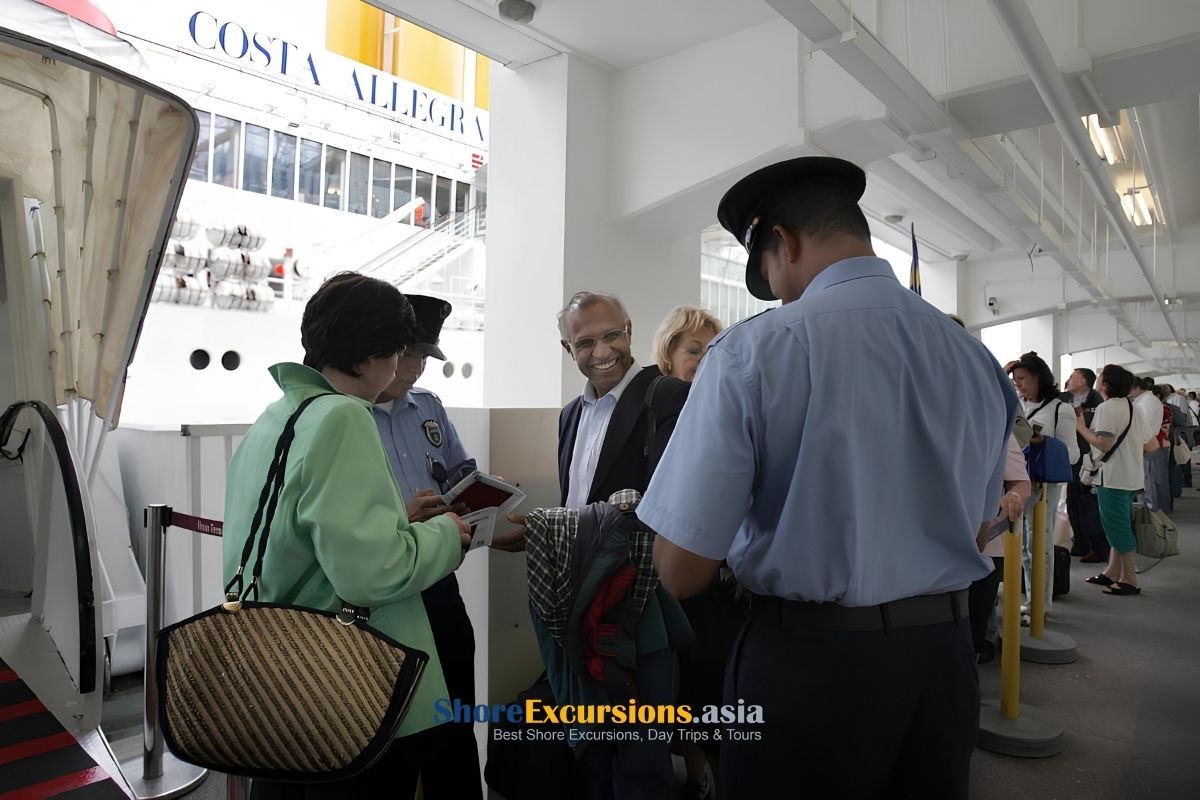
If your cruise begins outside Japan (e.g., originating in Vancouver, Honolulu, or Taipei) and calls at a Japanese port for the first time, all passengers must clear an in-person biometric inspection. Japanese immigration officers board the vessel or set up dedicated counters inside the terminal. You will present your physical passport, have your facial photo captured, and submit dual-index fingerprints. Once completed, a small adhesive QR-coded "Landing Permission for Cruise Ship Tourists" slip is affixed to your passport or landing card.
2. Medication Compliance
Cruisers are often caught off guard by Japan’s strict narcotics control laws. Common Western over-the-counter cold medicines containing pseudoephedrine (such as Sudafed) and certain ADHD medications (like Adderall) are strictly illegal in Japan. Carrying them off the ship onto Japanese soil can result in detention. Always check Japan's Ministry of Health, Labour and Welfare guidelines before bringing medications off the vessel.
Phase 2: Mastering Vietnam’s Seaport Immigration & Logistics
Transitioning into Vietnamese waters requires a shift from passenger-terminal strolling to calculated port-logistics management.
1. The Seaport e-Visa Requirement
Vietnam’s electronic visa (e-Visa) system allows visitors to apply online prior to departure. However, the application requires you to select your specific Port of Entry and Port of Exit.
- If your ship docks at Ha Long, you must select Hon Gai Seaport or Ha Long Seaport.
- If your ship docks in Central Vietnam, specify Chan May Seaport or Da Nang Seaport.
- For Ho Chi Minh City calls, specify Vung Tau / Phu My Seaport.
- Warning: Selecting an international airport (like Noi Bai or Tan Son Nhat) as your port of entry when your ship arrives via sea can lead to entry refusal by border officials.
2. Commercial Harbor Security Permits
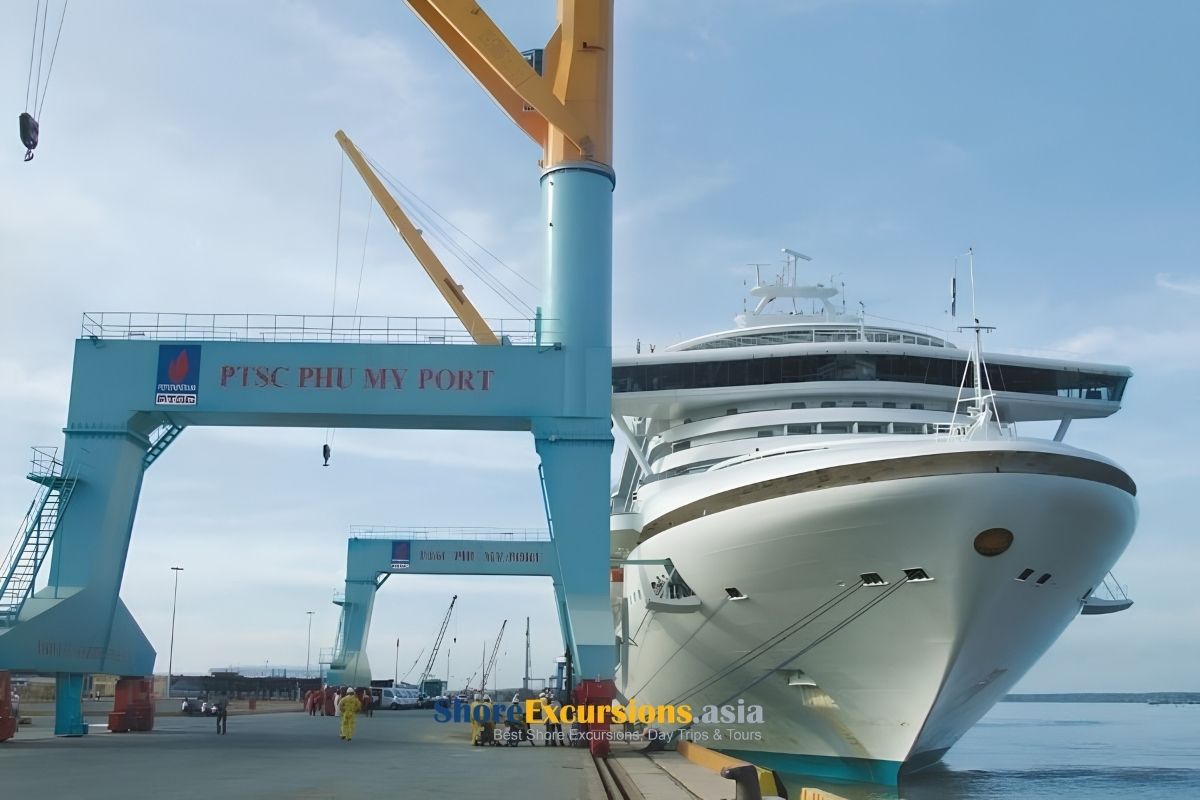
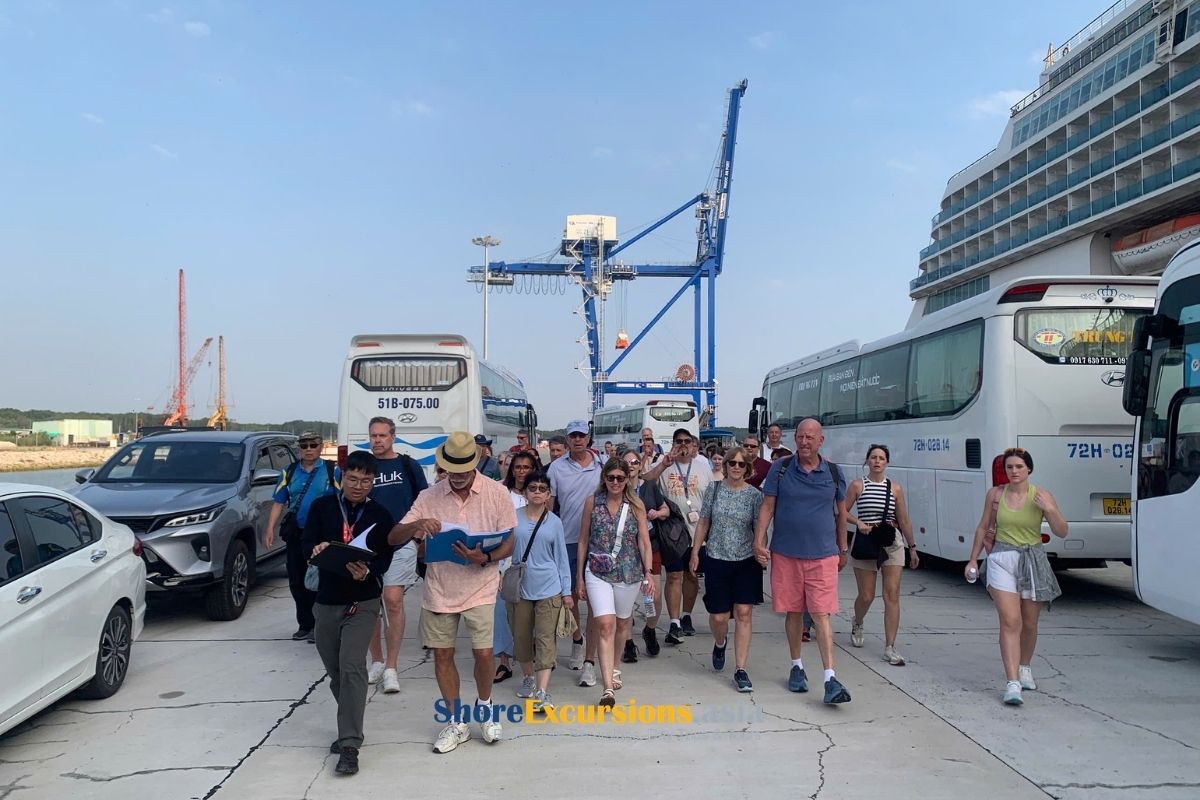
Unlike passenger terminals in Kobe or Tokyo, harbors like Phu My and Chan May are high-volume commercial container ports. The distance from the ship's gangway to the harbor gate can be anywhere from 1 to 3 kilometers through active industrial machinery zones.
- To have a private guide and vehicle pick you up directly at the ship's gangway, the tour company must submit your passport details to the Port Authority at least 48 to 72 hours prior to pay the harbor access fee and secure an official vehicle ramp pass.
- If you do not arrange this dockside permit in advance, you will be forced to walk long distances through heavy container traffic or take an overpriced harbor shuttle bus to the outer gate.
Critical Checklists for Multi-Port Asian Cruisers
To safeguard your voyage from unexpected administrative and logistical pitfalls, follow these four operational rules:
- Maintain Physical Document Duplicates: In many Asian ports, your physical passport is retained in the ship’s purser safe during the sailing to allow the ship’s clearance agent to process block immigration. Carry multiple high-resolution color photocopies of your passport photo page, your approved e-Visa printouts, and your ship identification card whenever you step ashore.
- Build Non-Negotiable Highway Buffers: When docking at Phu My Port to visit Ho Chi Minh City, the one-way transit spans roughly 70 kilometers across the Long Thanh - Dau Giay Expressway. During evening rush hours, container traffic heading into regional ports can cause significant delays. Never plan an itinerary that delivers you back to the harbor gate less than 90 to 120 minutes before the gangway closes.
- Carry Clean Banknotes for Shore Cash: In Vietnam, money changers, markets, and artisanal shops will reject foreign currency bills that are torn, stamped, heavily creased, or printed before 2013. Carry crisp, unblemished US dollar bills or withdraw Vietnamese Dong (VND) directly from authorized bank ATMs at the cruise terminal.
- Synchronize Time Zones with Ship Time: Moving between Japan (UTC+9) and Vietnam (UTC+7) involves a two-hour backward time shift. Never rely on an unsynchronized smartphone clock for your port return. Always verify whether the vessel operates on Local Port Time or maintains Ship Board Time, and keep an analog or manually set digital wristwatch calibrated to the vessel’s master clock.
Final Thoughts
A multi-country cruise connecting the historic ports of Japan to the exotic harbors of Vietnam is a bucket-list voyage of unmatched cultural contrast. By understanding the maritime legal frameworks, securing the proper seaport documentation, and respecting the overland logistics of commercial ports, you eliminate operational anxiety entirely—ensuring your entire holiday is defined by wonder, discovery, and effortless shore leave.

 Contact Us via Messenger
 Send Inquiry