
For travelers embarking on maritime voyages across the Western Pacific, the coastline serves as far more than a geographic boundary. For millennia, port cities have functioned as living culinary laboratories. In these bustling harbors, foreign spice merchants, coastal fishermen, and regional traders crossed paths, leaving behind distinct gastronomic traditions shaped by maritime trade winds, local seawater salinity, and native preservation methods.
When cruising from the cold-current coastal waters of the Japanese archipelago down to the warm, tropical bays of the South China Sea, the transformation in food culture is profound. In Japan’s port enclaves, gastronomy is an exercise in reverence for the pristine ingredient-defined by strict knife discipline, subtle umami broths, and temperature-controlled fish markets. In contrast, descending into the maritime ports of Vietnam reveals an explosion of aromatic freshness: vibrant mounds of wild herbs, pungent fermented fish sauces, char-grilled coastal skewers, and open-air street stalls that blur the line between kitchen and sidewalk.
For food-centric cruisers who measure the success of a port day not by the monuments visited, but by the authenticity of the dishes tasted, understanding these coastal culinary traditions unlocks an entirely new dimension of shore leave.
Navigating the Maritime Larder: From Tsukiji to the Gulf of Tonkin
Stepping off a ship in an Asian port can present a steep learning curve for international travelers. While Japanese harbor markets like Toyosu in Tokyo or the Hakodate Morning Market in Hokkaido operate with clinical order, digital ticketing, and clear queuing systems, the coastal seafood markets of Vietnam-from Ha Long and Da Nang to Nha Trang-operate on raw vitality, rapid sensory bartering, and fluid vendor layouts.
Experiencing authentic coastal gastronomy requires getting past sanitized tourist plazas without compromising on food safety or tight ship schedules. To bridge the gap between dockside curiosity and genuine culinary depth, many seasoned travelers rely on locally vetted resources before arriving in port. To explore regional seafood specialties, curated street-food trails, and guided culinary shore tours led by native epicurean guides across Vietnam’s coastal stops, voyagers frequently turn to the regional resources documented at https://www.dulichvtv.com/. Connecting with authentic local food pathways ensures you skip commercial cruise-buffet partnerships and sit down directly where local fishermen and neighborhood families dine.
With your culinary itinerary anchored by native knowledge, exploring the contrasting food traditions of East and Southeast Asia becomes a deeply rewarding journey.
Coastal Culinary Profiles: Japan’s Harbors vs. Vietnam’s Coastal Ports
To appreciate how maritime geography dictates the plate, examine the structural differences between the port gastronomy of both nations:
| Culinary Attribute | Japanese Port Cities (e.g., Yokohama, Otaru, Nagasaki) | Vietnamese Coastal Ports (e.g., Ha Long, Da Nang, Hoi An) |
| Core Philosophy | Minimalist intervention; elevating pure, natural ingredient flavor (shun). | Harmonious contrast; balancing sweet, sour, salty, spicy, and bitter. |
| Seafood Preparation | Raw (sashimi), vinegared (sushi), flash-simmered (nimono), or tempura fried. | Live-tank charcoal grilling, steaming with lemongrass, clay-pot braising (kho). |
| Primary Seasoning Base | Fermented soy sauce (shoyu), dashi broth (kombu/bonito), mirin, wasabi. | Fermented anchovy fish sauce (nuoc mam), shrimp paste, lime juice, bird's-eye chili. |
| Market Atmosphere | Structured, silent, hyper-hygienic auction floors and indoor wholesale lanes. | Energetic, open-air, dynamic wet markets buzzing with early-morning motorbike traffic. |
| Herbal Profile | Subtle, sparing use of shiso leaf, grated ginger, and scallions. | Generous baskets of sawtooth coriander, Thai basil, mint, perilla, and banana blossom. |
| Signature Port Dish | Kaisen-don (raw seafood rice bowl) / Nagasaki Champon noodle soup. | Cha Ca (turmeric fish with dill) / Mi Quang (turmeric coastal noodles). |
Part 1: The Japanese Port Tradition - The Art of Pure Preservation
In Japanese maritime culture, the fisherman’s primary objective is the preservation of cellular integrity. The famed Ikejime method-a humane fish-spiking technique developed centuries ago-prevents the buildup of lactic acid and preserves the translucent texture and clean flavor of high-grade fish.
Key Port Food Encounters in Japan:
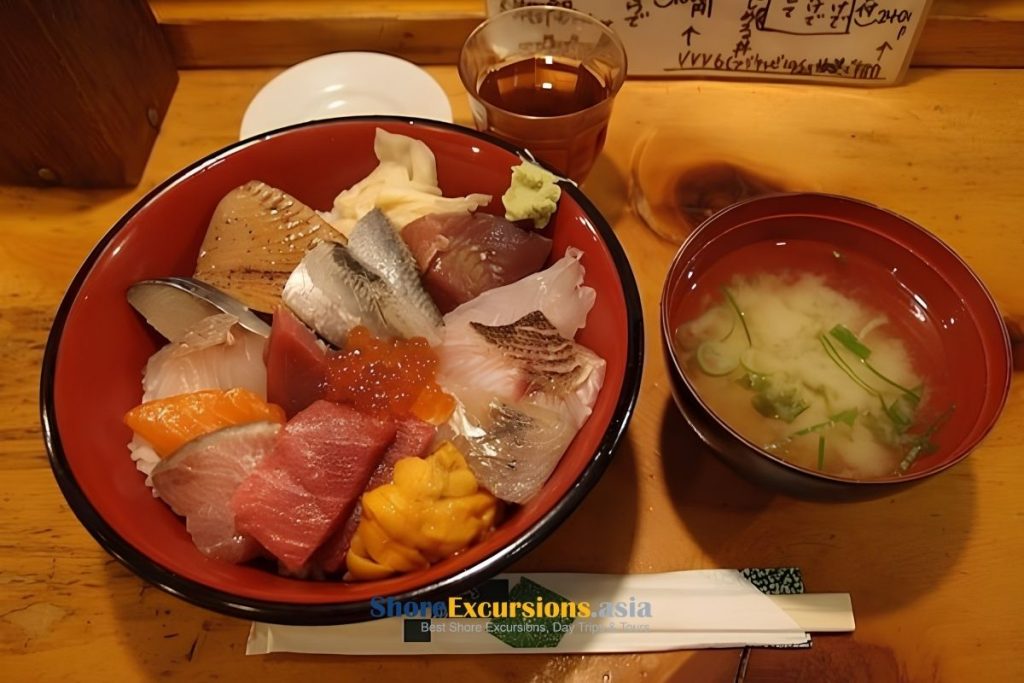
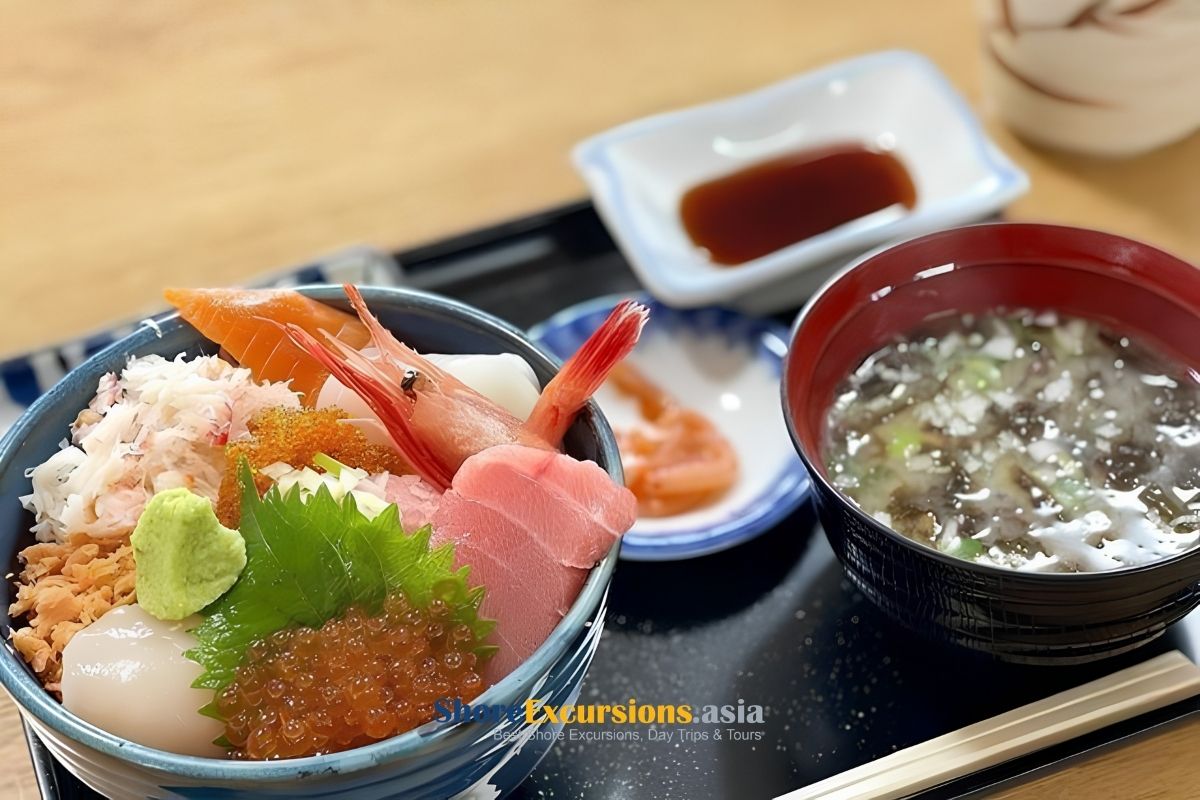
- The Morning Port Bowls (Kaisen-don): In northern ports like Hakodate or Niigata, the quintessential breakfast is a steaming bowl of vinegared short-grain rice piled high with sweet Hokkaido scallops (hotate), sea urchin (uni), and glistening salmon roe (ikura). The dish reflects the frigid, nutrient-rich currents of the Sea of Japan.
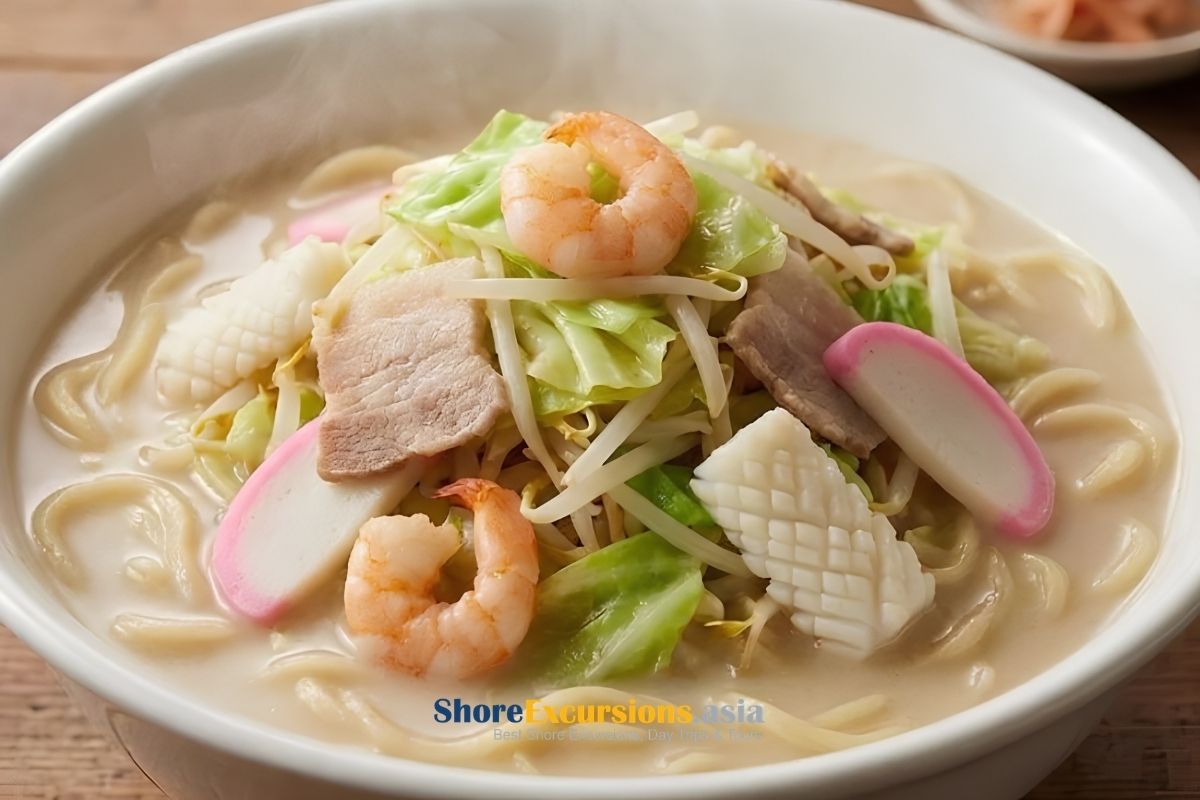
- The Fusion of Foreign Maritime Trade (Nagasaki Champon): Nagasaki served as Japan’s sole open maritime window during two centuries of national isolation (sakoku). Here, Chinese dockworkers and local cooks created Champon - thick ramen-style noodles cooked directly in a rich pork-and-seafood bone broth loaded with local squid, oysters, and seasonal cabbage.
- The Street-Level Harbor Snacks: Even casual dockside dining in Osaka or Kobe showcases technical skill, from creamy, molten-centered octopus balls (takoyaki) brushed with savory glaze to skewers of flash-grilled squid (ikayaki) seasoned only with sea salt.
Part 2: The Vietnamese Coastal Heritage - Fragrance, Fire, and the Sea
As ships cruise south into the Gulf of Tonkin and along the long, serpentine coastline of Central Vietnam, the culinary philosophy pivots from cool restraint to aromatic fire and freshness.
Vietnam’s coastal waters are tropical and shallow, yielding sweet white squid, mantis shrimp, mud crabs, and ocean grouper. Because tropical climates historically challenged long-term ice storage, coastal communities perfected the use of fresh aromatic herbs and fermented preservation.
Key Port Food Encounters in Vietnam:
- The Alchemy of Fish Sauce (Nuoc Mam): The backbone of Vietnamese cuisine is born along the coast. In harbors like Phan Thiet or the island ports of Phu Quoc, black anchovies are layered with sea salt in giant wooden barrels and aged for up to a year. The resulting amber nectar delivers an intense, savory depth that accents every soup, marinade, and dipping bowl in the country.
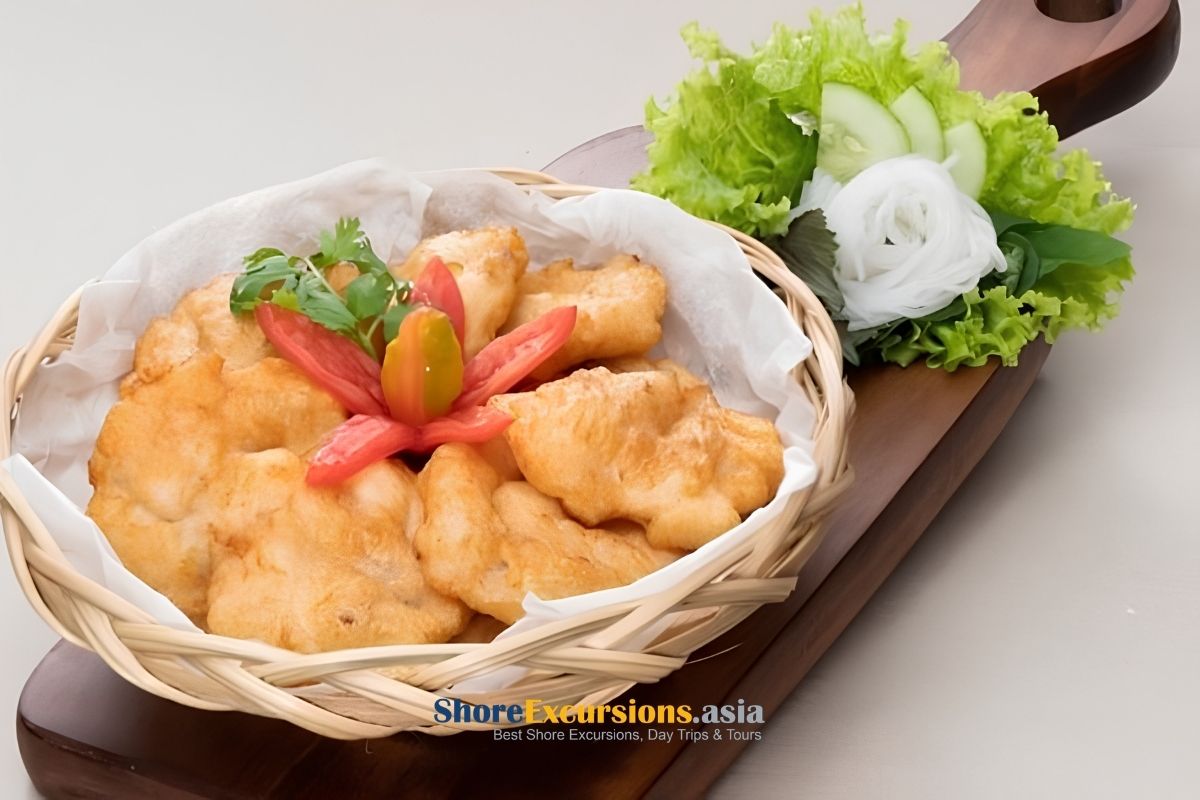
- Ha Long’s Squid Patties (Cha Muc): When calling at the Ha Long International Cruise Port, the essential shore delicacy is Cha Muc. Freshly caught local squid is hand-pounded in heavy stone mortars until it forms a sticky paste, lightly seasoned with crushed black peppercorns and fried into golden, bouncy patties served alongside steamed rice rolls (banh cuon).
- Central Vietnam’s Coastal Noodle Heritage: Docking near Da Nang or Chan May offers access to Mi Quang. Unlike soup-heavy northern noodles, this regional coastal bowl uses wide turmeric-tinted rice noodles dressed in just a ladle of concentrated pork, shrimp, and crab broth, topped with roasted peanuts, sesame rice crackers, and a mountain of crisp river mint and banana flower shreds.
Practical Gastronomic Guidelines for Cruisers
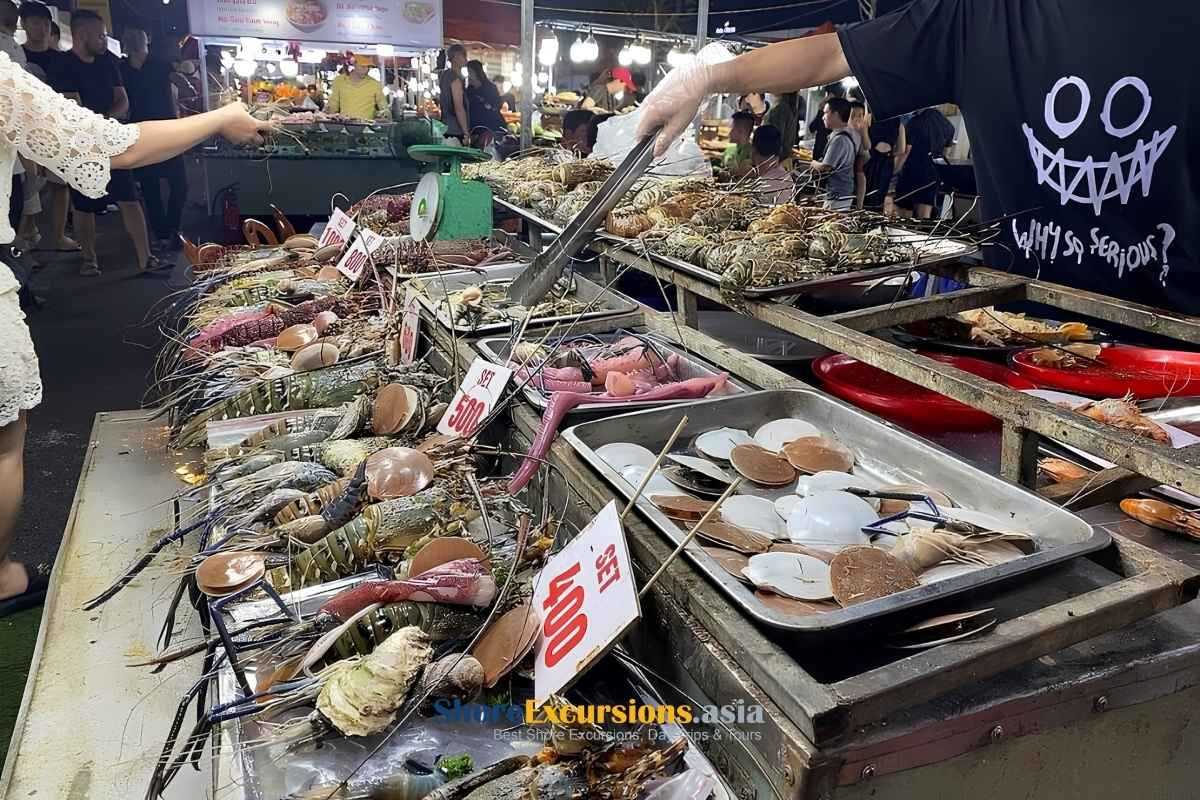
To sample coastal food on shore leave safely and respectfully, keep these operational rules in mind:
- Follow the Local Queue: The simplest rule of street-food safety across Asian ports is foot traffic. Stalls packed with local dock workers, taxi drivers, and families guarantee rapid ingredient turnover, meaning the seafood hasn’t been sitting under ambient heat.
- Watch the Water Source: When dining casually in tropical coastal ports, opt for freshly boiled noodle soups, hot wok fries, or grilled dishes cooked to order before your eyes. Avoid iced drinks from open street barrels; stick to sealed bottled water or fresh coconuts cracked open on the spot.
- Respect Market Etiquette: In Japanese fish markets, touching raw fish or interfering with auction lanes is strictly forbidden. In Vietnamese markets, browsing and taking photos are widely welcomed, but avoid aggressive bargaining early in the morning, as shopkeepers consider their first sale of the day sacred (mo hang).
Final Thoughts
To cruise the coastlines of Japan and Vietnam without diving deep into their culinary traditions is to experience only half of the journey. While Japan teaches travelers to revere the subtle, pristine purity of ocean harvest, Vietnam immerses the palate in dynamic herbal complexity and coastal warmth. Savoring both within a single itinerary provides an unforgettable edible masterclass in Asian maritime heritage.

 Contact Us via Messenger
 Send Inquiry