
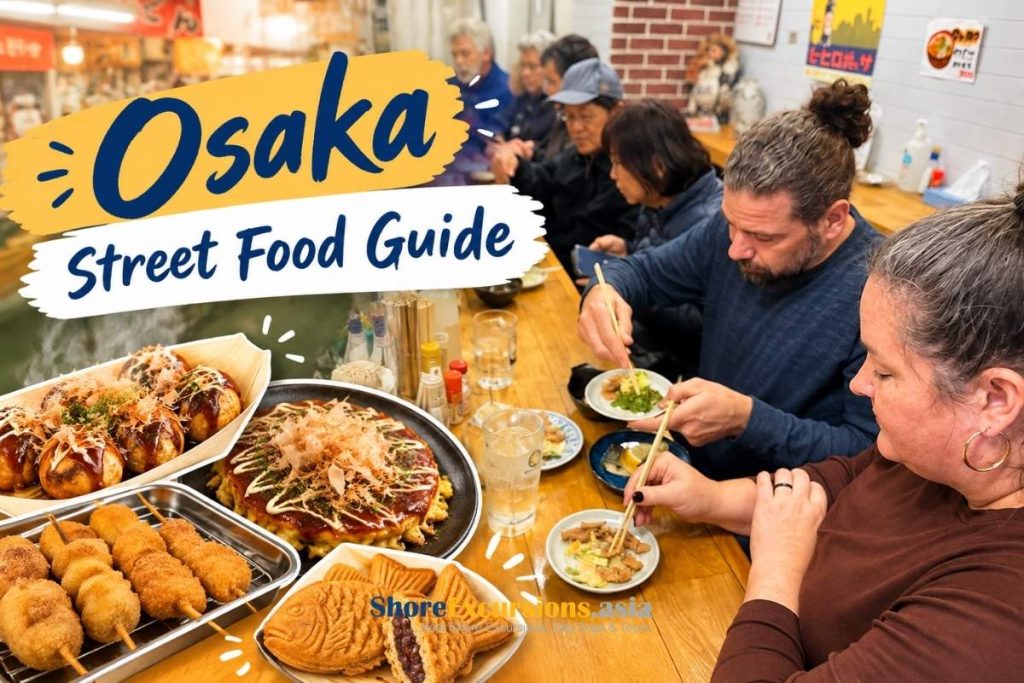
Osaka is one of Japan’s most rewarding cities for travelers who enjoy eating. Local food culture is closely tied to everyday life, busy shopping streets, traditional markets, and lively entertainment districts. For visitors on Japan shore excursions, trying street food is also an easy way to experience the character of the city without committing to a long restaurant meal.
The classics are familiar names: takoyaki, okonomiyaki, and kushikatsu. Yet Osaka’s food scene extends well beyond these three dishes. Markets offer fresh seafood and fruit, while neighborhood shopping streets reveal snacks and casual foods that are part of everyday life.
For travelers planning a short visit, this Osaka street food guide covers the essential dishes, the main food districts, practical etiquette, and ways to fit an Osaka food experience into a cruise-day itinerary.
Why Is Osaka Famous for Street Food?
Osaka has a long-standing reputation as a food-focused city. Its culinary identity is often associated with kuidaore, a word commonly used to describe the idea of eating so well that you spend yourself into indulgence. The city’s official tourism information also highlights Osaka’s connection with food culture and its traditional nickname as the “Kitchen of the Nation.”
Street food fits naturally into this environment. Many popular foods are prepared quickly and served in casual settings, making them convenient for people exploring the city on foot.
There is also a practical advantage for international visitors: several major food areas are concentrated around Namba, Dotonbori, Nipponbashi, and Shinsekai. This makes it possible to sample several foods during one sightseeing route rather than spending the entire day traveling between restaurants.
Top 8 Osaka Street Foods You Should Try on Any Shore Excursion
Osaka’s food culture is built around bold flavors, simple ingredients, and dishes made to be enjoyed casually. These eight specialties offer a practical introduction to the city’s culinary identity, with options ranging from iconic savory snacks to traditional Japanese sweets.
1. Takoyaki
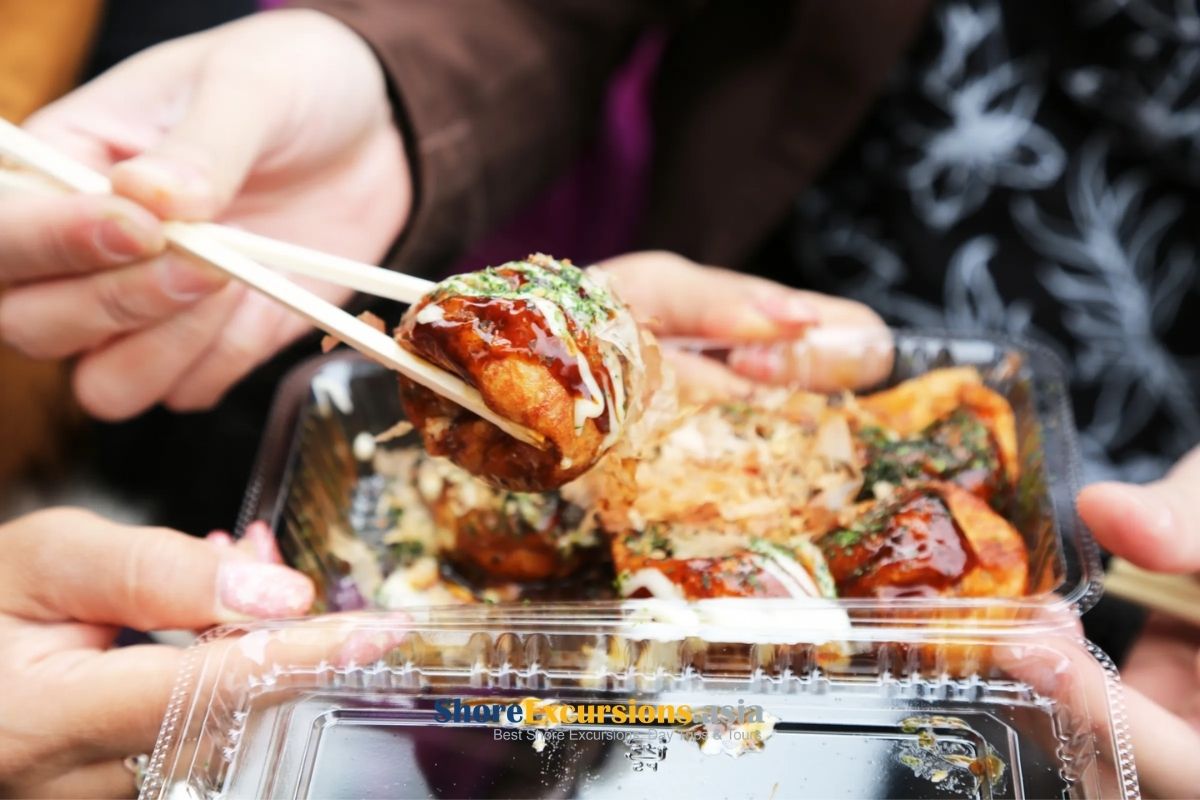
Takoyaki is arguably the food most closely associated with Osaka’s street-food culture. These round batter-based snacks contain pieces of octopus and are cooked in specially shaped molds until browned on the outside.
They are commonly finished with takoyaki sauce, mayonnaise, bonito flakes, and aonori. The texture is part of the appeal: the outside is lightly crisp while the center remains soft and extremely hot. 0If you are trying takoyaki for the first time, take a moment before eating it. The filling can retain considerable heat even when the outside looks ready.
2. Okonomiyaki
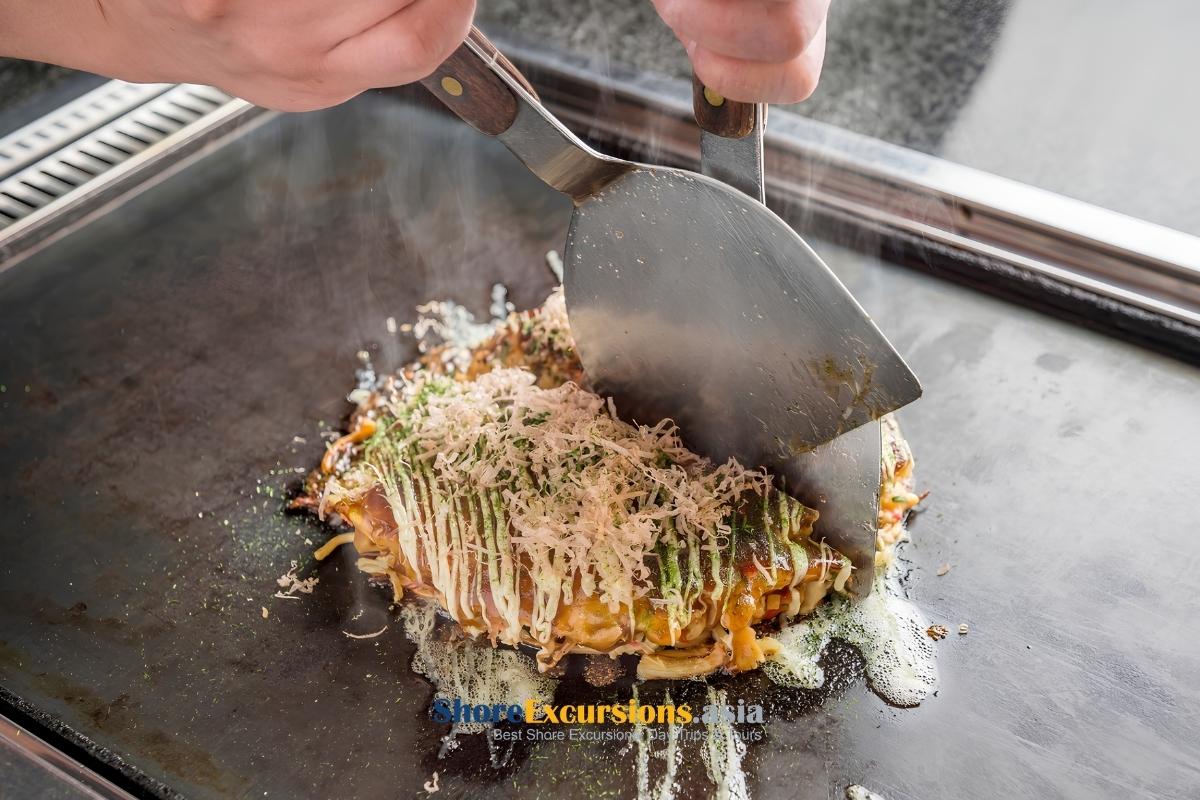
Okonomiyaki is another Osaka classic street food. It is often described to international visitors as a savory Japanese pancake, although that description does not fully capture its texture or preparation.
The Osaka-style version generally combines batter and shredded cabbage with ingredients such as pork or seafood. Sauces and toppings are added after cooking, creating a rich, savory flavor.
Unlike a quick snack, okonomiyaki is usually better suited to a casual restaurant meal. It makes a good choice when you want to sit down, eat at a relaxed pace, and experience a substantial Osaka specialty.
3. Kushikatsu
Kushikatsu consists of skewered ingredients coated in batter and breadcrumbs before being deep-fried. Meat, seafood, and vegetables can all appear on a menu.
The food is particularly associated with Shinsekai, an area known for its nostalgic atmosphere and Tsutenkaku Tower. Kushikatsu restaurants here provide a different experience from the bright, heavily photographed streets of Dotonbori.
One point of etiquette is especially important: if a restaurant provides shared dipping sauce, do not dip a partially eaten skewer back into the communal container.
4. Negiyaki - Signature Osaka Street Food
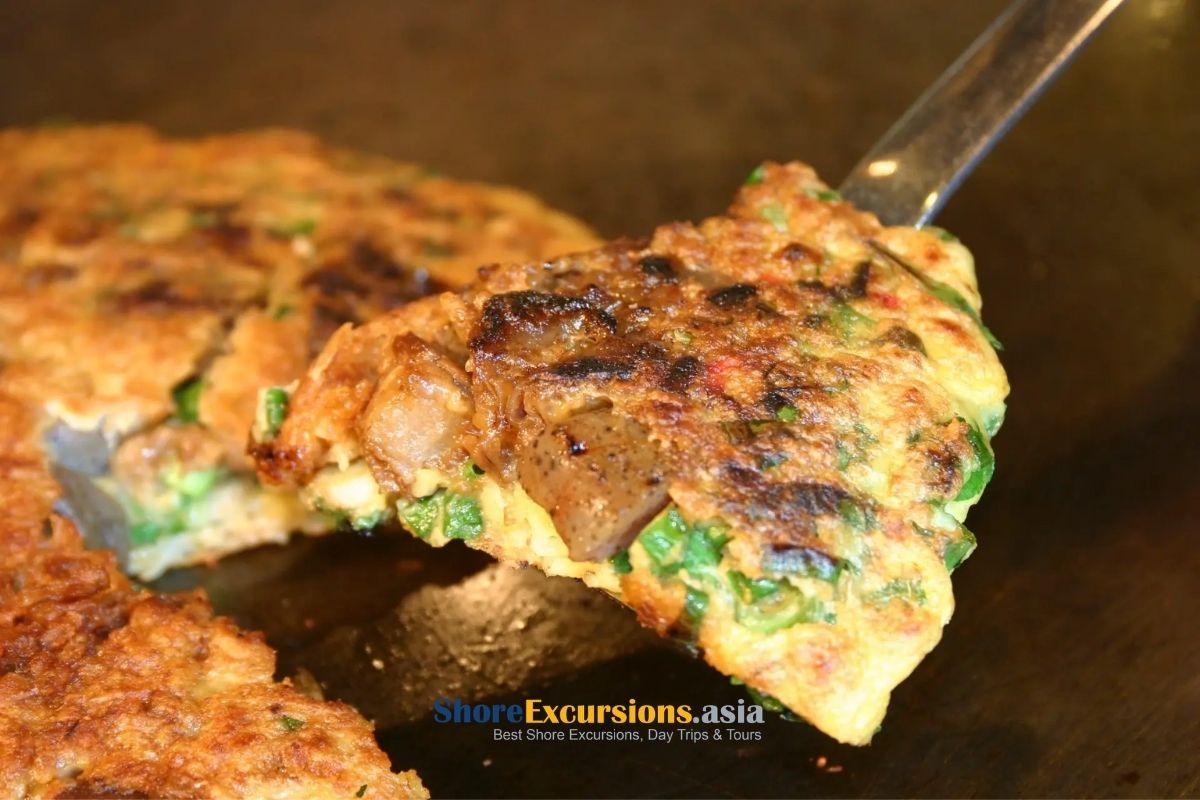
Negiyaki resembles okonomiyaki but places greater emphasis on green onions. The result is lighter in appearance while still delivering the savory flavors associated with Osaka’s casual food culture. It is a useful dish to look for if you have already tried okonomiyaki and want something similar but slightly different.
5. Grilled Seafood
Seafood is one of the highlights of Osaka’s major markets. At places such as Kuromon Market, visitors can find seafood bowls, sushi, grilled items, and other prepared foods alongside fresh ingredients. Grilled scallops, shrimp, squid, and other seafood can make an appealing snack between sightseeing stops. Prices vary considerably, so check the portion size and price before ordering.
6. Korokke
Korokke are Japanese croquettes, commonly made with mashed potato and other fillings before being coated and fried. They are inexpensive, portable, and particularly convenient when exploring a shopping street or market. Because they are filling without being a full meal, they work well as part of a food crawl.
7. Taiyaki
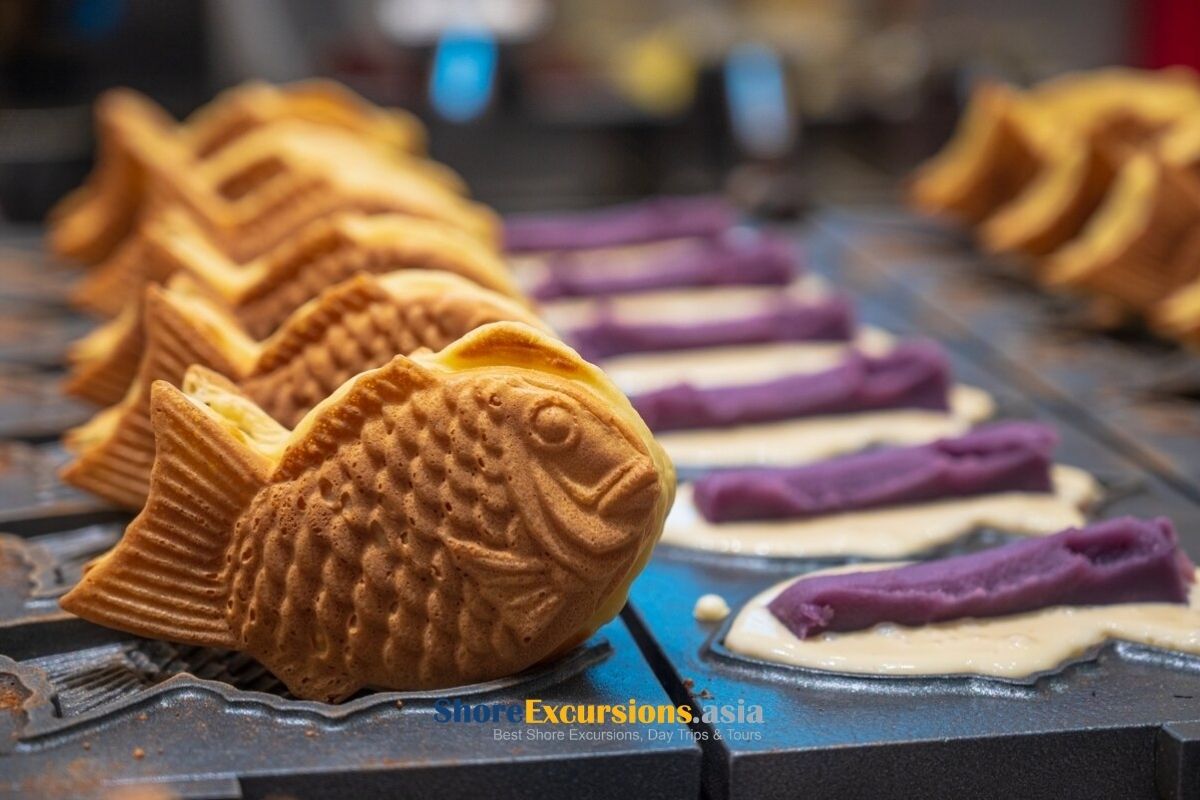
Taiyaki is a fish-shaped Japanese cake traditionally filled with sweet red bean paste. Modern versions can also contain custard, chocolate, or other fillings. It is an easy dessert choice after savory dishes. Freshly prepared taiyaki is best eaten while warm, especially during cooler months.
8. Dango and Other Japanese Sweets
Dango, a type of rice-flour dumpling served on skewers, is another snack worth looking for. Mitarashi dango is typically covered with a glossy sweet-savory sauce. Availability varies by shop and season, so travelers should treat these sweets as additional discoveries rather than foods that every street-food district will necessarily offer.
Best Places to Eat Street Food in Osaka
Osaka’s street food is closely connected to its neighborhoods, and each area offers a slightly different atmosphere.
Dotonbori - Famous Street in Osaka

Dotonbori is the obvious starting point for many first-time visitors. The area is famous for its enormous illuminated signs, busy pedestrian streets, restaurants, food stalls, and nightlife. Osaka’s official tourism guide describes it as a major hub in the Minami district and notes its strong connection with gourmet food and entertainment.
It is particularly convenient for trying takoyaki and other Osaka specialties while also seeing some of the city’s most recognizable landmarks. The main advantage is convenience. Dotonbori sits close to Namba and several major railway and subway stations, so it is easy to incorporate into a sightseeing route.
=> Related Information: Dotonbori Travel Guide | Tourist Attractions & Experiences
Kuromon Market
Kuromon Market offers a different type of Osaka street food experience. The covered market stretches for roughly 580 meters and contains around 150 shops selling seafood, produce, meat, prepared foods, and snacks.
Seafood is a major attraction, but it is not the only reason to visit. Travelers can also find sushi, fruit, croquettes, tempura, and other ready-to-eat foods.
Allowing around one to two hours gives most visitors enough time to browse and stop for several foods. Store opening hours vary, so checking individual vendors is sensible when planning a tight itinerary.
Shinsekai
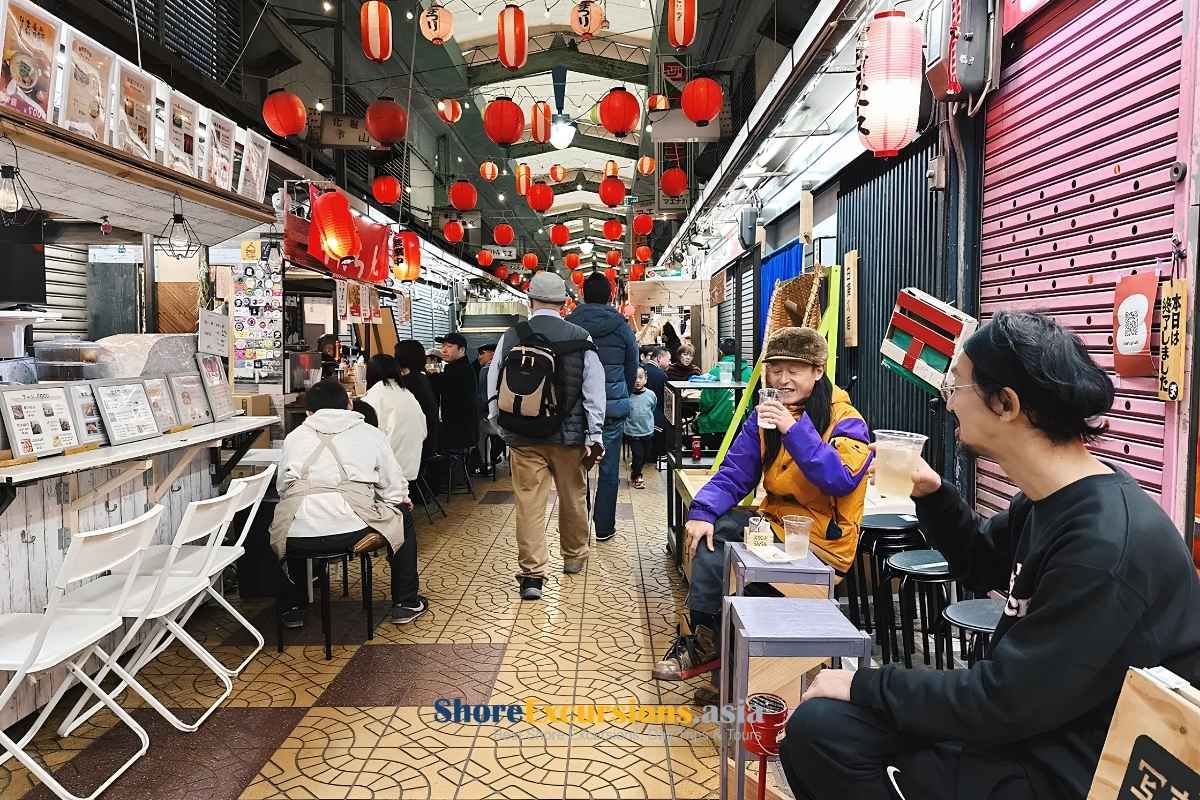
Shinsekai is particularly useful for travelers interested in kushikatsu. Its retro atmosphere provides a contrast with the commercial energy of Dotonbori. A visit can easily combine food with sightseeing around Tsutenkaku and the surrounding streets. This makes Shinsekai a practical stop for visitors who want their meal to form part of a broader neighborhood experience.
Namba Street
Namba is less a single street-food attraction than a convenient base for eating and exploring. It connects several important parts of Osaka’s Minami district and provides access to Dotonbori and nearby Nipponbashi. For travelers with limited time, staying within this general area can reduce unnecessary transportation.
Tenjinbashisuji
Tenjinbashisuji Shopping Street offers a different atmosphere again. Instead of concentrating exclusively on major tourist landmarks, the long shopping street provides opportunities to browse everyday shops, restaurants, and casual food stops. It is a useful choice for travelers who have more time and want to see another side of Osaka’s urban food culture.
Osaka Street Food Etiquette: What Visitors Should Know
Eating in Osaka is generally relaxed, but visitors should still pay attention to local customs:
- Do not assume that eating while walking is appropriate everywhere. Some markets and food streets are designed for visitors to purchase food and eat nearby, while crowded pedestrian areas may not be suitable for stopping in the middle of the flow.
- Follow the vendor’s instructions. If a shop provides a designated eating area, use it. This is particularly important in busy markets.
- Be careful with hot food. Takoyaki and freshly fried foods can be much hotter inside than they appear.
- Carry a small bag for rubbish. Public trash bins can be limited in Japan, so keeping your own waste with you until you find an appropriate disposal point is useful.
- Check ingredients if you have dietary restrictions. Japanese sauces, broths, and seasonings can contain ingredients that are not immediately obvious, including fish-based stock, soy, wheat, eggs, or alcohol-derived ingredients.
How Much Does Osaka Street Food Cost?
A typical Osaka food stop can be quite affordable, especially if you focus on small portions and casual stalls. As a practical Osaka street food guide, budget around ¥500 - ¥1,000 for a small snack, ¥1,000 - ¥2,000 for a light meal, and ¥2,000 or more for premium seafood or larger portions.
| Food | Typical Budget | Good For |
|---|---|---|
| Takoyaki | ¥500 - ¥800 | Quick snack |
| Taiyaki | ¥200 - ¥400 | Dessert or snack |
| Korokke | ¥150 - ¥400 | Cheap market snack |
| Kushikatsu | ¥100 - ¥300 per skewer | Food crawl |
| Okonomiyaki | ¥1,000 - ¥1,800 | Full meal |
| Seafood at Kuromon Market | ¥1,000 - ¥3,000+ | Seafood meal or tasting |
| Dango | ¥200 - ¥500 | Light sweet snack |
For a 2–3 hour food crawl, around ¥2,000 - ¥4,000 per person is a reasonable starting budget if you mix inexpensive snacks with one more substantial dish. If you plan to eat premium seafood or visit sit-down restaurants, allow more.
Prices can vary by vendor and portion size, especially at Kuromon Market. Check the displayed price and serving size before ordering, as some seafood is priced by weight or portion rather than as a fixed menu item.
Osaka Street Foods Guide for Cruise Passengers
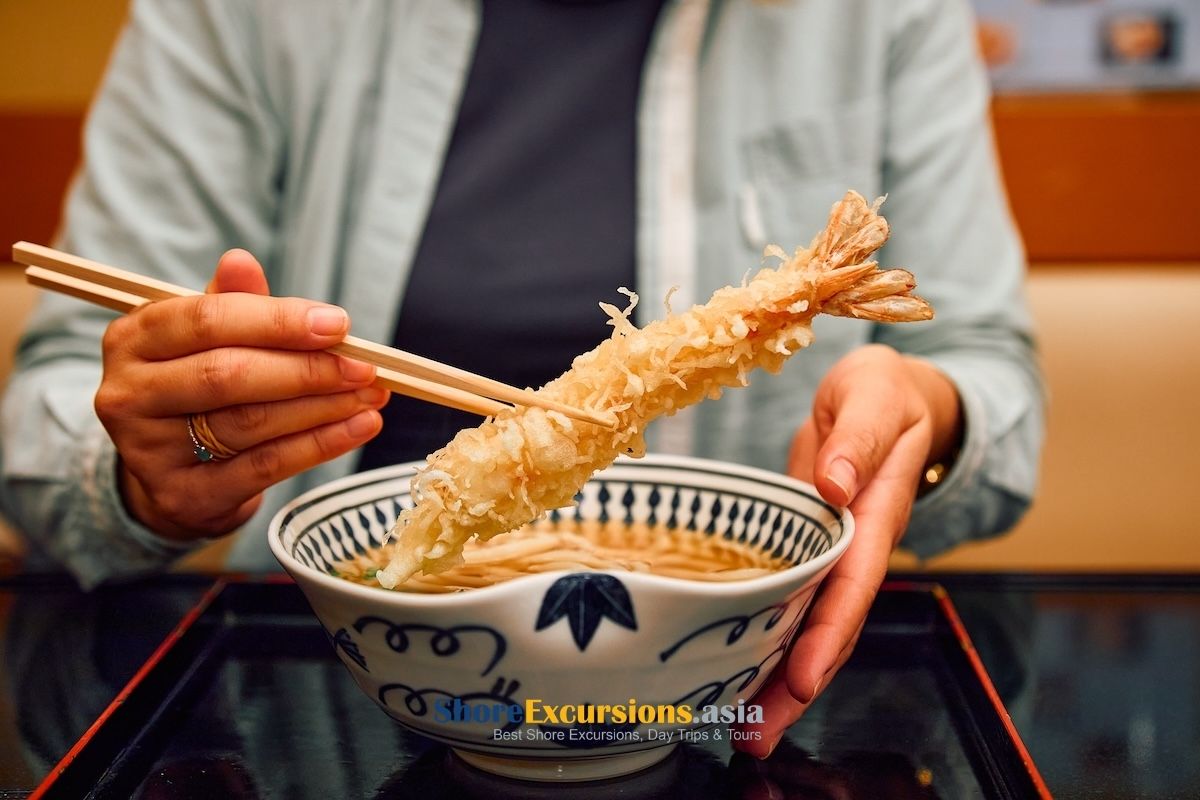
If you are joining Osaka shore excursions, keep your food itinerary simple. Choose a few nearby stops instead of trying to cover the whole city, and leave enough time to return to the port.
Best Areas for a Short Visit
| Area | What to Eat | Suggested Time | Best For |
|---|---|---|---|
| Kuromon Market | Seafood, sushi, grilled seafood, korokke | 60 - 90 min | Food-focused visits |
| Namba | Takoyaki, sweets, casual Japanese food | 45 - 60 min | Quick food stops |
| Dotonbori | Takoyaki, okonomiyaki, street snacks | 60 - 90 min | Food + sightseeing |
| Shinsekai | Kushikatsu, local snacks | 60 - 90 min | Food + retro atmosphere |
How Much Time Should You Keep for the Return?
Do not plan your final food stop right before the ship’s departure. Allow extra time for transportation, unexpected delays, and the walk back to the terminal.
Use the cruise line’s instructions as the final reference, since the required return time can vary by ship and itinerary. For a short Osaka shore excursions visit, a smaller itinerary with two or three food areas is usually easier to manage than trying to see every famous attraction.
Tips for Planning an Osaka Food Crawl
A little planning can help you try more Osaka street foods without wasting time in transit or waiting too long at busy shops. Keep your route simple and leave some flexibility for queues and opening hours.
- Choose 2 - 3 nearby food areas. Kuromon Market, Namba, and Dotonbori work well together for a first visit. Add Shinsekai if you have extra time and want to try kushikatsu.
- Pick 3 - 4 foods to try. A simple combination is takoyaki, grilled seafood, okonomiyaki, and a Japanese sweet such as taiyaki or dango.
- Share larger dishes. Sharing okonomiyaki or other substantial foods lets you sample more specialties without getting full too early.
- Allow extra time for queues. Popular food stalls and restaurants can get busy around lunch and dinner. Avoid scheduling several must-visit shops back-to-back.
- Check opening hours before you go. Individual shops, especially small restaurants and market vendors, may have different schedules or closing days.
- Keep your route flexible. If a shop has a long queue, move on to another nearby option instead of spending too much of your limited sightseeing time waiting.
- Carry some cash. Many food businesses accept cards and mobile payments, but smaller vendors may still have limited payment options.
- For cruise passengers, protect your return time. Avoid making your final food stop far from your transport route back to the port, and leave a generous buffer before the ship’s required return time.
Frequently Asked Questions abour Osaka Street Foods
What street food is Osaka famous for?
Osaka is best known for takoyaki, okonomiyaki, and kushikatsu. These are the three specialties most visitors associate with the city. You can also find grilled seafood, korokke, taiyaki, dango, and other casual snacks at markets and shopping streets.
Where is the best place to try street food in Osaka?
Dotonbori is convenient for first-time visitors because it combines famous food, shopping, and sightseeing in one area. Kuromon Market is a good choice for seafood and market snacks, while Shinsekai is particularly known for kushikatsu.
Can I eat Osaka street foods while walking?
It depends on the location and vendor. Some food stalls provide a designated area for eating, while crowded pedestrian streets may not be suitable for stopping and eating. Follow the vendor's instructions and avoid blocking busy walkways.
How long do I need for an Osaka street food tour?
Allow around 2 - 3 hours if you want to visit one or two food areas and try several dishes. With 4 - 5 hours, you can combine food stops with sightseeing in areas such as Kuromon Market, Namba, and Dotonbori.
Is Osaka street food suitable for vegetarians?
Some vegetarian-friendly options are available, but ingredients should be checked carefully. Dashi made with fish or seafood can appear in sauces, soups, and batters that may otherwise seem vegetarian.
Can Muslim travelers find suitable street food in Osaka?
Yes, but travelers following halal requirements should check ingredients and preparation methods carefully. Meat products, alcohol-based ingredients, and non-halal sauces may be used in some dishes. Looking for halal-certified or clearly labeled options is the safest approach.
What should I try if I only have time for three foods?
Start with takoyaki for a classic Osaka snack, try okonomiyaki as a more substantial dish, and finish with taiyaki or dango for something sweet. If you are particularly interested in fried foods, replace one of these with kushikatsu.
A good Osaka street foods guide should do more than list famous dishes. The most rewarding food experiences often come from understanding where each dish fits into the city: takoyaki on a lively Minami street, seafood in a traditional market, kushikatsu in Shinsekai, or a simple Japanese sweet during a shopping-street walk.

 Contact Us via Messenger
 Send Inquiry