
Cruising across East and Southeast Asia represents one of the most rewarding ways to experience the vast geographical, historical, and cultural tapestries of the continent. Over recent seasons, travel behavior has shifted dramatically: seasoned global travelers no longer limit themselves to single-region sailings or static resort stays.
Instead, multi-destination itineraries-often structured as comprehensive "Fly-Cruise" adventures-have emerged as the gold standard for exploratory travel. These combination journeys pair the temperate, hyper-modern, and historical coastlines of Honshu with the lush tropical archipelagos and rich heritage of Indochina.
The Challenges of Combining Cruise Travel with Regional Flights
Imagine spending several days navigating the mist-covered volcanic bays of Japan, boarding an efficient regional flight, and continuing your journey alongside the limestone karsts of Vietnam's Halong Bay or through the lantern-lit alleys of Hoi An. However, bridging ocean voyages with commercial air networks across international borders is an intricate logistical puzzle.
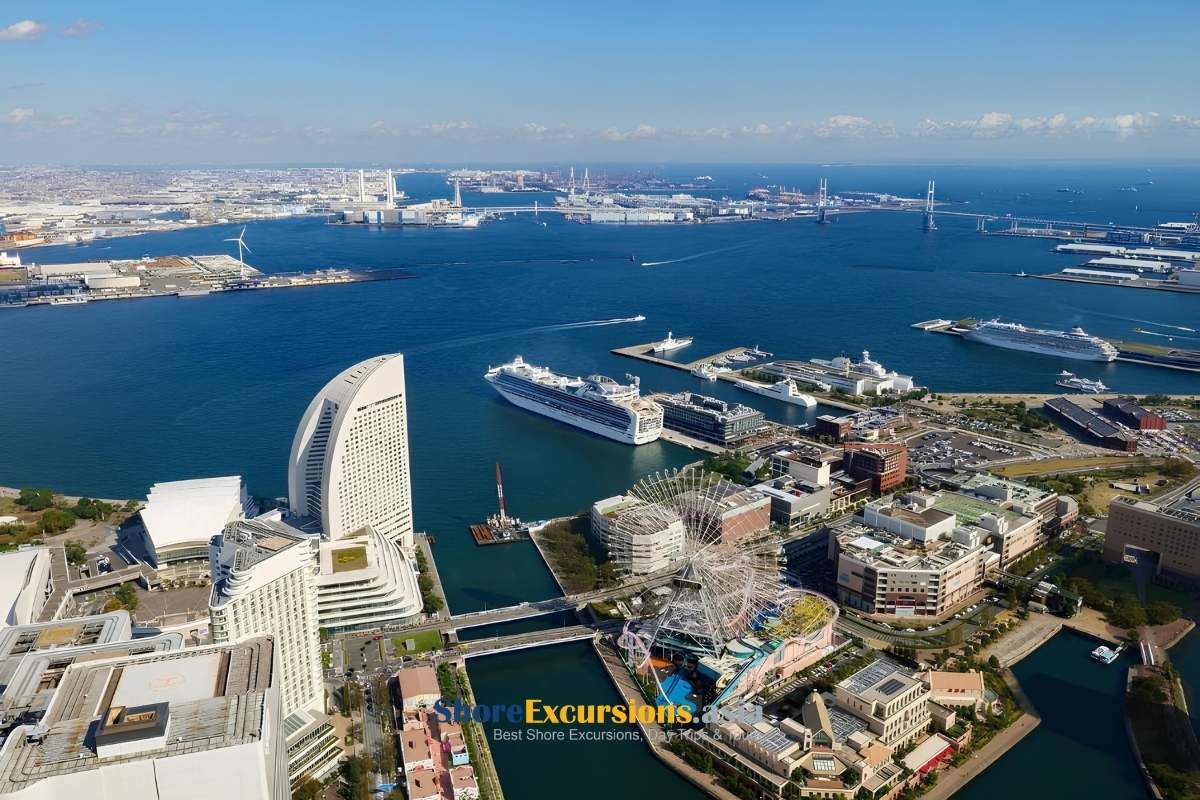
A cruise ship operates on its own self-contained maritime timeline, while commercial aviation adheres to rigid boarding windows, strict security checkpoints, and non-negotiable luggage weight restrictions. Executing an inter-regional journey without falling victim to missed connections, exorbitant excess luggage fees, or exhausting transit bottlenecks requires meticulous operational planning.
The Operational Reality of Multi-Modal Asian Itineraries
A primary appeal of cruise travel is the sensation of an effortless, unpack-once holiday. Once you settle into your stateroom at a port like Yokohama or Kobe, your accommodation travels with you. You wake up each morning at a new coastal hub, disembark for sightseeing, and return to the comfort of your ship without re-packing suitcases or navigating railway stations with heavy luggage.
However, once you introduce cross-border flights into the equation-such as flying between Tokyo or Kansai and major Southeast Asian gateways like Hanoi, Da Nang, or Ho Chi Minh City-the dynamic transforms immediately. Travelers shift from the relaxed maritime cadence of the gangway to the time-sensitive protocols of international aviation.
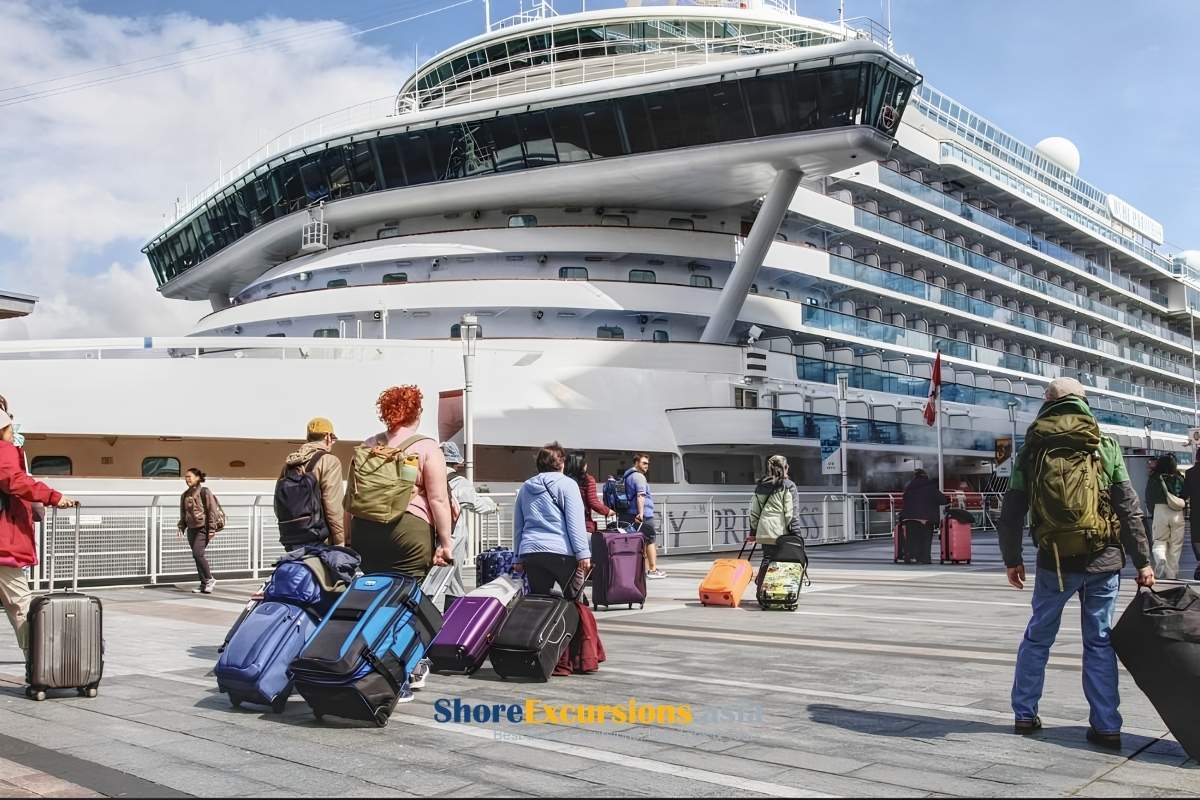
The distance between major ocean terminals and commercial airports is rarely trivial. In major metropolitan areas, cruise ports and airport terminals are located in completely different jurisdictions, separated by dense regional road networks where rush-hour congestion can disrupt even the best-laid itineraries.
Furthermore, ocean liners and commercial airlines handle passenger property under vastly different philosophies. Cruisers frequently pack multiple suitcases containing heavy formal evening attire, casual port wear, specialized walking gear, and an expanding collection of souvenirs gathered at every coastal stop. While ocean liners typically impose virtually no upper limit on stateroom luggage volume, international airlines operating intra-Asia routes strictly enforce weight limits, piece counts, and oversized dimensional fees.
Luggage Strategies and Cross-Border Ground Handling
When transitioning between major cruise hubs like Yokohama or Kobe and regional flight connections across Southeast Asia, managing flight bookings, heavy luggage transfers, and ground handling can quickly become overwhelming.
For travelers extending their voyage into Vietnam, consulting a dedicated ground and aviation concierge such as https://www.aviationplus.vn/ (Aviation Plus) provides a reliable framework for organizing domestic flight connections, private airport transfers, and bespoke travel support before heading out on subsequent regional tours. Securing a reliable local partner on the ground ensures that excess cruise luggage, terminal transfers, and tight flight connections are handled professionally without compromising your holiday itinerary.
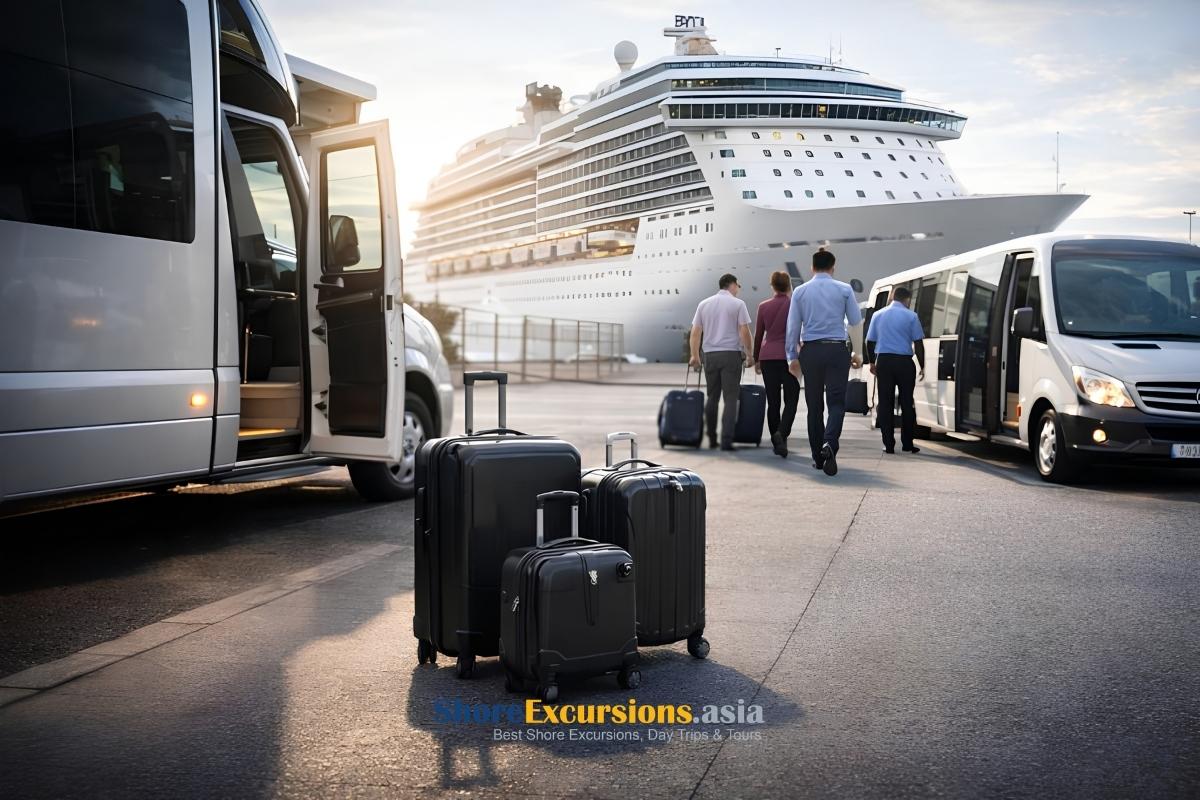
When preparing your packing strategy for a dual-mode cruise and flight itinerary, it is essential to categorize your belongings long before you reach the disembarkation terminal:
- The Two-Bag Segregation Rule: Designate one primary suitcase for items needed exclusively aboard your cruise (e.g., formal dining wear, evening footwear, and heavy maritime outerwear) and a lighter, secondary suitcase or duffel bag for flexible intra-Asia flights.
- Pre-Purchased Airline Baggage: Never wait until the check-in desk at the airport to address excess luggage. Regional Asian carriers charge steep premiums for bags checked at the gate or counter compared to baggage allowances purchased 48 hours in advance online.
- Luggage Forwarding and Storage Services: In multi-leg itineraries, consider utilizing specialized luggage forwarding (takuhaibin services within Japan) or private airport concierge storage to hold bulky cruise bags while you complete lighter overland or flight-based excursions.
Comparative Logistics: Cruise vs. Flight Transit Realities
Understanding the fundamental operational differences between port terminals and airport terminals is key to building adequate contingency windows into your itinerary. The following comparison highlights the major considerations travelers face during each leg of a Fly-Cruise voyage:
| Logistical Factor | Cruise Port Transit (e.g., Yokohama, Kobe) | Regional Air Transit (e.g., Tokyo, Hanoi, HCMC) |
| Baggage Restrictions | Virtually unlimited weight per stateroom; standard safety limits per bag (~23kg–32kg per piece). | Strictly enforced; standard economy allowances range from 20kg–23kg, with severe overweight fees. |
| Immigration & Customs | Often cleared onboard via facial recognition or mobile immigration setups before disembarkation. | Centralized immigration halls; lines can vary from 20 minutes to over 75 minutes at peak arrival banks. |
| Buffer Times Required | Gangway closes 60–90 minutes prior to vessel departure; strict nautical schedule. | Airport bag drop closes 60 minutes prior; boarding gates shut 15–20 minutes prior to takeoff. |
| Distance to City Centers | Often situated in industrial harbor districts (30–60 minutes from downtown attractions). | Airports may be 30km–70km away from central downtown districts and cruise berths. |
| Pacing & Flexibility | Shore excursions must adhere rigidly to all-aboard call times to prevent ship abandonment. | Flights run multiple daily frequencies; missed connections can be rebooked, though at personal cost. |
Mastering Timelines: Buffer Times and Border Crossings
A fundamental rule of fly-cruise logistics is never to schedule a same-day departure that cuts your connection too close. While modern cruise ships pride themselves on punctual arrivals, maritime operations remain subject to tidal currents, harbor master clearances, dense sea fog, and medical emergencies at sea. Even when a vessel docks exactly on schedule at 07:00 AM, the local authorities must officially clear the ship before the gangway lowers for passenger disembarkation.
Disembarkation Scheduling
Cruise lines routinely prioritize passengers who have booked ship-sponsored excursions or ship-sponsored airport transfers for early disembarkation slots. Independent travelers who carry their own luggage off the ship (self-assist or express walk-off) can often exit earlier, but those who check their luggage outside their cabin door the night prior must wait for their designated luggage tag color to be called. Always factor in a minimum of 90 minutes between the ship’s scheduled docking time and the moment you step into your private transfer vehicle.
Ground Transit and Traffic Volatility
The highway networks connecting major cruise terminals to regional airports are vulnerable to severe traffic fluctuations. For example, traveling from the Osanbashi or Daikoku cruise terminals in Yokohama to Narita International Airport covers more than 80 kilometers across the Tokyo metropolitan expressway system; during weekday mornings, this journey can easily stretch beyond two hours. Similarly, navigating from port areas to central airports in Southeast Asian capitals requires generous buffer times to absorb unpredictable local road conditions.
Immigration and Visa Preparation
Cross-border transitions require proactive digital administration. Travelers should complete all necessary electronic entry declarations well in advance:
- Japan: Complete the official Visit Japan Web procedures for customs and immigration clearance prior to arriving at your Japanese embarkation or disembarkation port.
- Southeast Asian Destinations: Secure your approved electronic visas (e-Visas) and complete mandatory digital health or arrival declaration forms at least 72 hours before your flight departure. Never rely on spotty maritime Wi-Fi while at sea to handle document downloads or visa approvals.
Crafting the Shore Excursion Component of Your Voyage
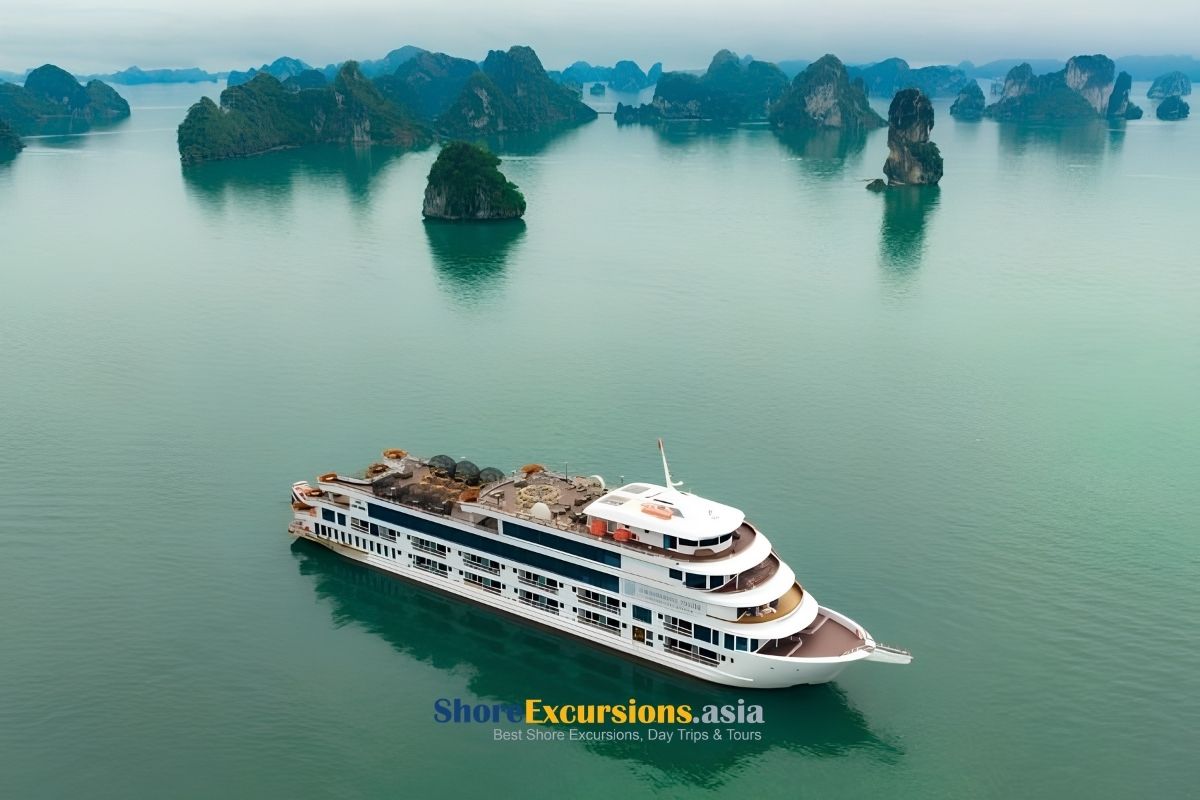
The land-based days of your cruise should never feel like an obstacle race against the clock. The true joy of sailing East Asia lies in the immersive shore excursions that allow you to encounter centuries-old heritage, Michelin-starred culinary arts, and stunning maritime scenery.
To prevent travel fatigue when balancing a busy cruise and flight schedule, opt for private, customized shore tours rather than large 50-passenger cruise line motorcoaches. Private excursions offer flexible start times, bypass slow group headcounts, and adjust on the fly based on your physical comfort.
Before continuing your extended journey toward Southeast Asia, make sure you make the most of your port days in Japan's most vibrant coastal gateways. By pairing well-paced, expertly guided shore excursions during your port calls with dedicated aviation logistics and ground services for your onward international flights, you transform a complex multi-country journey into an effortless, luxurious exploration across the high seas and skies of Asia.

 Send Inquiry