
Maritime navigation along the rim of East and Southeast Asia has fascinated explorers and traders for centuries. Today, that legacy is celebrated through grand multi-week ocean voyages that trace historic maritime trade routes. Leading cruise lines-including Princess Cruises, Celebrity, Holland America, and Regent Seven Seas-frequently stage extended seasonal sailings that embark in the neon-lit shadow of Tokyo Bay, navigate the southern islands of the Japanese archipelago, and sail south across the East China Sea into the emerald karst waters of Vietnam's Gulf of Tonkin.
These grand voyages offer an extraordinary contrast of landscapes and civilizations. Within a single fortnight, travelers can marvel at snow-capped volcanic ridges and tranquil Shinto shrines in Japan, and soon after drift past limestone pillars and emerald waters in Halong Bay or step into the French colonial elegance of Hanoi and Da Nang.
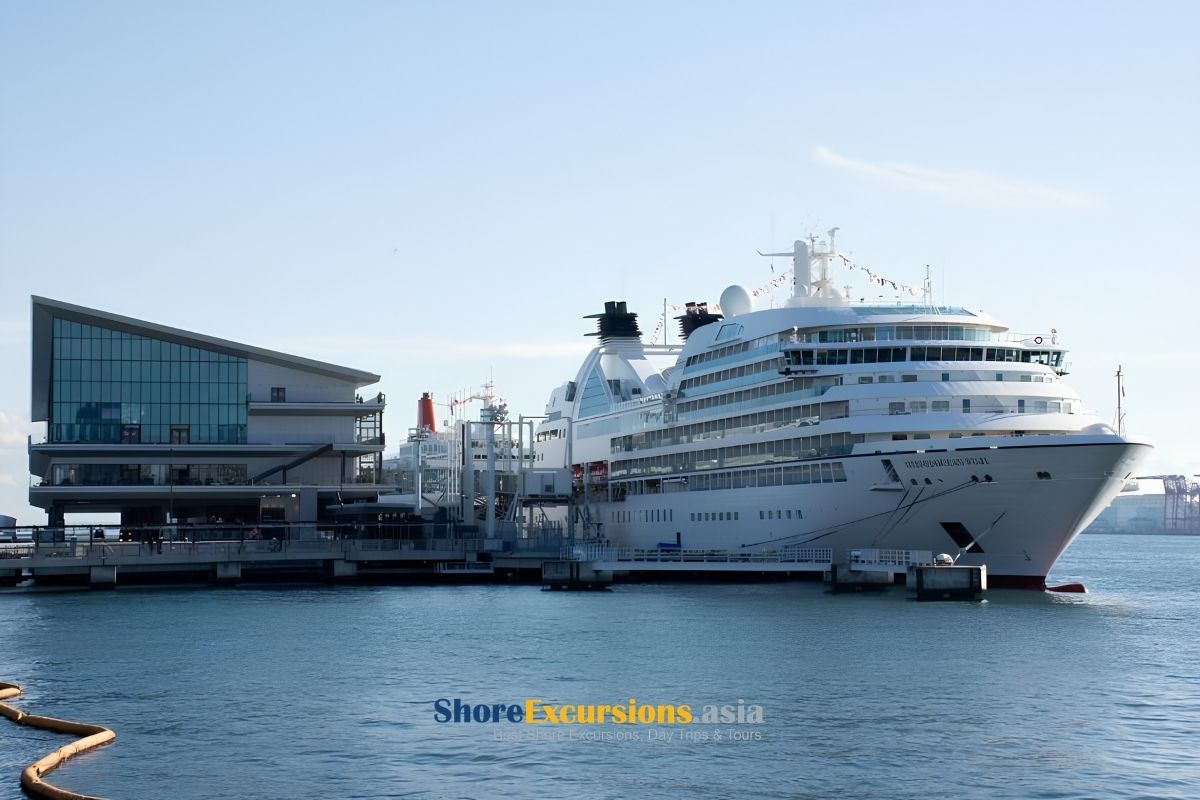
However, because these voyages span vast geographical distances, cross multiple open-water corridors, and culminate in a port distinct from where they began, they demand a sophisticated tier of advance planning. Managing the transition between deep-sea sailing and international aviation at the journey’s end is critical to preserving the magic of your holiday.
Navigating the Arc of an East Asia Grand Voyage
The geographic routing of a trans-regional voyage down the Asian coastline follows a distinct oceanographic path. Beginning in major metropolitan embarkation hubs such as Yokohama or Tokyo Port, vessels typically sail westward along Honshu, clearing the dramatic bays of Shizuoka and the inland passages of Kansai before dipping into the subtropical waters of Kyushu. From there, ships make extended open-ocean crossings past the Ryukyu Islands and Taiwan before navigating the coastline of Indochina.
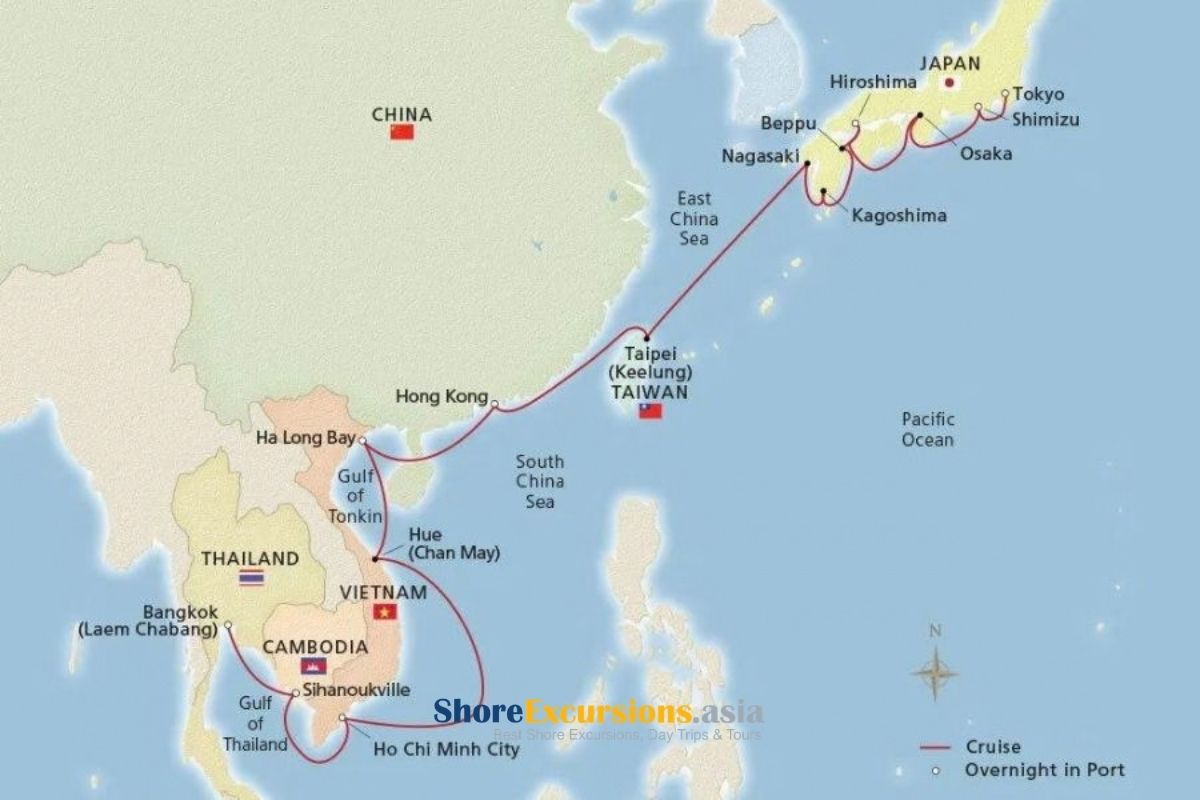
Unlike closed-loop domestic cruises that return you conveniently to your initial departure pier, these itineraries are fundamentally open-jaw routes. Passengers do not end where they began; they disembark thousands of nautical miles away at specialized deep-water terminals such as Cai Lan (serving Halong Bay/Hanoi), Chan May (serving Hue and Da Nang), or Phu My (the primary oceanic gateway for Ho Chi Minh City).
This structural reality introduces unique operational considerations. Travelers must coordinate one-way long-haul flights into Tokyo, arrange multi-leg land transit at intermediate Japanese coastal ports, and secure one-way international departure flights originating out of Vietnam's primary gateways-Nội Bài (HAN) in the north or Tân Sơn Nhất (SGN) in the south.
Crucial Regional Logistics and Aviation Coordination
Because grand cruise itineraries often finish at a different port than where they began, booking one-way international departure flights and securing private port-to-airport transfers in advance is vital. For complete local flight ticketing assistance, private charter options, and comprehensive traveler concierge services in Vietnam, travelers frequently rely on https://www.aviationplus.vn/ as their primary regional point of contact.
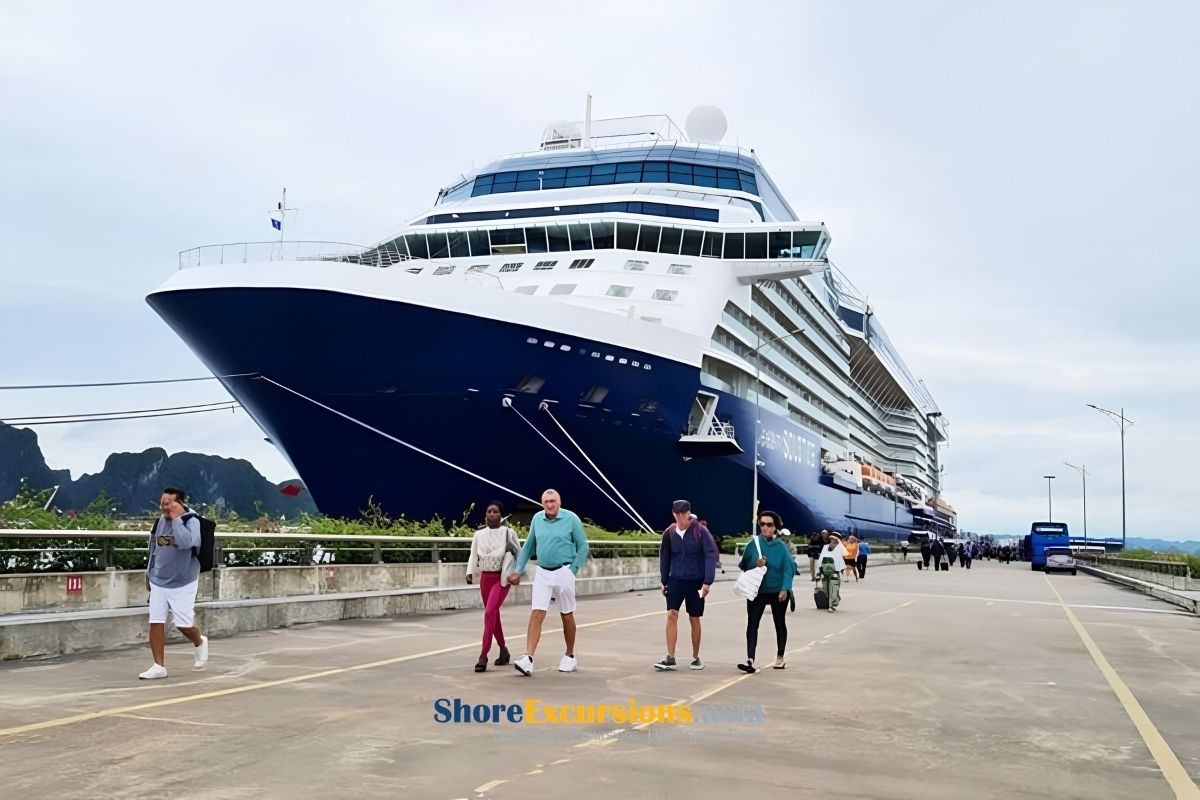
Coordinating your departure through a specialized local aviation and ground handling partner ensures that long highway drives from remote coastal piers to bustling airport terminals are managed flawlessly, with dedicated porters ready to handle your maritime luggage and smooth out domestic or long-haul flight connections.
When orchestrating the complex arrival and departure elements of an open-jaw East Asia cruise, savvy navigators adhere to three core logistics rules:
- Account for Rural Port Distances: Vietnamese cruise piers are built for massive draft ships and are situated far from city centers. Cai Lan Port is approximately 2.5 to 3 hours from Hanoi's airport via the expressway, while Chan May Port lies 1.5 hours from Da Nang Airport. Factoring in private, pre-arranged executive transfers prevents costly delays.
- Match Air Ticket Flexibility to Ship Disembarkation: Never purchase rigid, non-refundable regional or international flight tickets for the immediate morning of your ship’s scheduled arrival. Clearing national immigration and customs in a final disembarkation port can face routine port authority delays.
- Synchronize Domestic Sightseeing Extensions: Many voyagers choose to turn their disembarkation into an extended land holiday, flying between Hanoi, central Vietnam, and Saigon before returning home. Organizing private domestic air charters or priority commercial ticketing avoids public booking friction.
Infrastructure Comparison: Key Japanese vs. Vietnamese Cruise Gateways
Navigating this grand route requires an understanding of how shore facilities, customs clearance, and terminal connections differ between Japanese ports of call and Vietnamese disembarkation harbors:
| Operational Variable | Japanese Ports of Call (e.g., Tokyo, Kagoshima) | Vietnamese Cruise Gateways (e.g., Cai Lan, Chan May) |
| Terminal Functionality | Fully modernized cruise terminals with escalators, luggage scanners, and tourist info desks. | Primarily industrial deep-water commercial ports equipped with dedicated passenger piers. |
| Distance to International Airports | Typically 30–90 minutes via high-speed expressways or urban transit links (Haneda/Narita). | Often 1.5 to 3 hours from major international airport hubs (Noi Bai, Da Nang, Tan Son Nhat). |
| Immigration Procedures | Digital processing via pre-registered QR systems (Visit Japan Web) or face-to-face kiosk desks. | Shipboard collective customs clearance or on-arrival paper visa verification at port checkpoints. |
| Shore Transport Options | Clean taxi ranks, chartered excursion coaches, and efficient local rail networks nearby. | Private pre-booked chauffeured cars, arranged tour coaches, or harbor tender transfers. |
| Primary Terminal Perils | Dense metropolitan highway traffic during morning and evening rush hours. | Long expressway transits, dynamic local road traffic, and limited on-site public transport. |
Practical Maritime Planning: Documentation, Weather, and Packing
A grand voyage crossing multiple maritime regions exposes travelers to varying microclimates and administrative jurisdictions. A smooth transition across this oceanic arc requires disciplined preparation:
Seasonal Meteorology and Sea States
Cruises operating between Japan and Vietnam cross through the East China Sea and the Luzon Strait-waters that can experience seasonal swell variations. During early spring (March–April), cherry blossoms welcome you to Japan with crisp, dry breezes, while northern Vietnam experiences mild, pleasant temperatures. In autumn (October–November), the foliage in Honshu is spectacular, but travelers should keep an eye on late-season tropical systems that can occasionally alter port arrival sequences or prompt route diversions. Packing sea-sickness bands or medication and maintaining travel insurance with robust maritime interruption coverage is essential.
Cross-Border Visas and Port Protocols
Do not assume standard visa-waiver agreements apply uniformly across sea and air borders. While visiting Japanese ports on a recognized commercial cruise liner allows for smooth temporary landing permits, entering Vietnam via sea may require specialized landing documentation arranged by the cruise line, whereas flying out from a Vietnamese airport demands a valid, pre-approved electronic visa (e-Visa). Ensure your passport carries at least six months of validity from the date of final flight departure, with multiple blank pages for terminal immigration stamps.
Enriching the Journey: Unlocking Southern Japanese Heritage
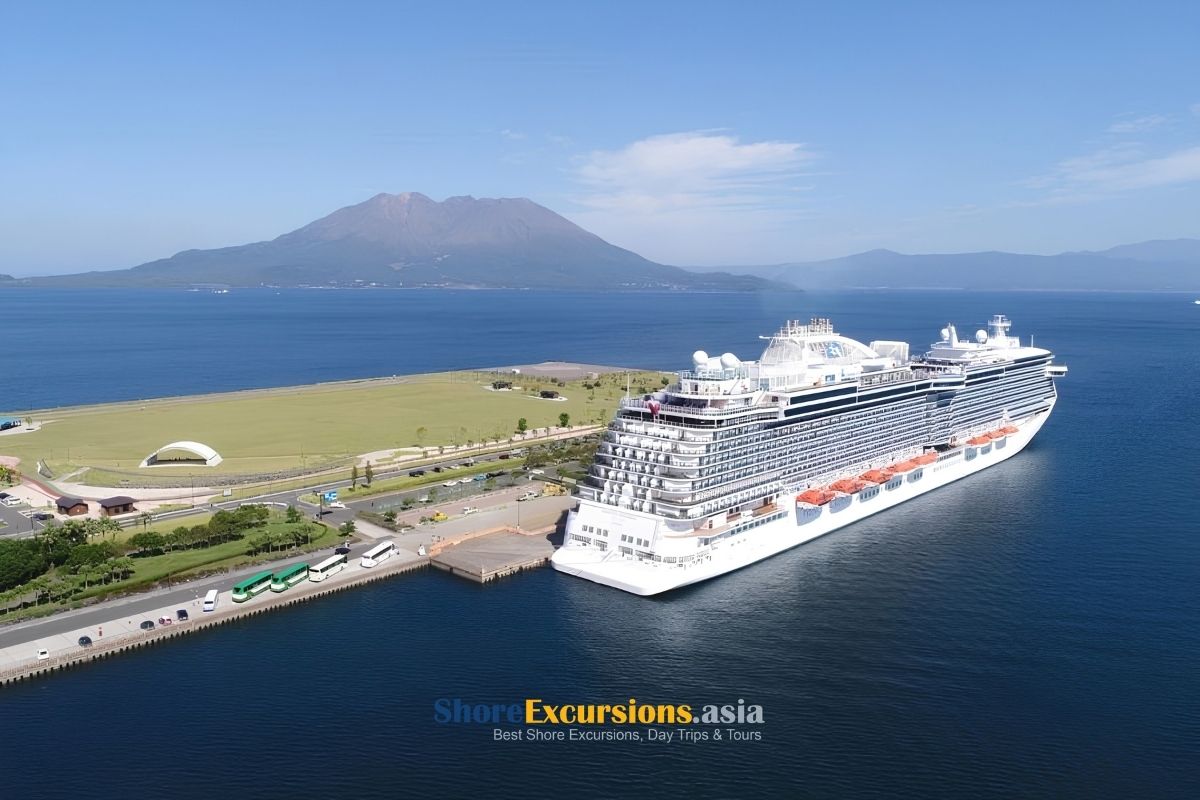
The days leading up to your ship’s departure from Japanese waters offer an unforgettable showcase of natural drama, volcanic geology, and deep oceanic history. Southern Honshu and Kyushu were the historical gateways through which Japan first interacted with foreign seafaring traders, and their coastal ports remain among the most atmospheric stops on any trans-Asian itinerary. Maximizing your limited hours in these ports requires choosing small-group, private excursions that eliminate the waiting times and rigid pacing of massive ship-organized bus caravans.
As your ship charts its course southward from central Honshu toward the shores of Vietnam, southern Japanese ports offer fascinating maritime heritage and volcanic landscapes. Don't miss the chance to witness active Sakurajima with specialized Kagoshima Shore Excursions, where you can explore the picturesque Sengan-en garden against the backdrop of smoking peaks and sample local Satsuma culinary traditions, or delve into profound cultural crossroads on guided Nagasaki Shore Excursions visiting the historic Glover Garden and the Peace Memorial Park before embarking on your South China Sea crossings.
By combining curated, culturally rich shore excursions across Japan's southern ports with dedicated aviation and ground logistics for your arrival and departure in Vietnam, your East Asia grand voyage will be celebrated as the trip of a lifetime-flawlessly navigated across oceans, highways, and skies.

 Send Inquiry