
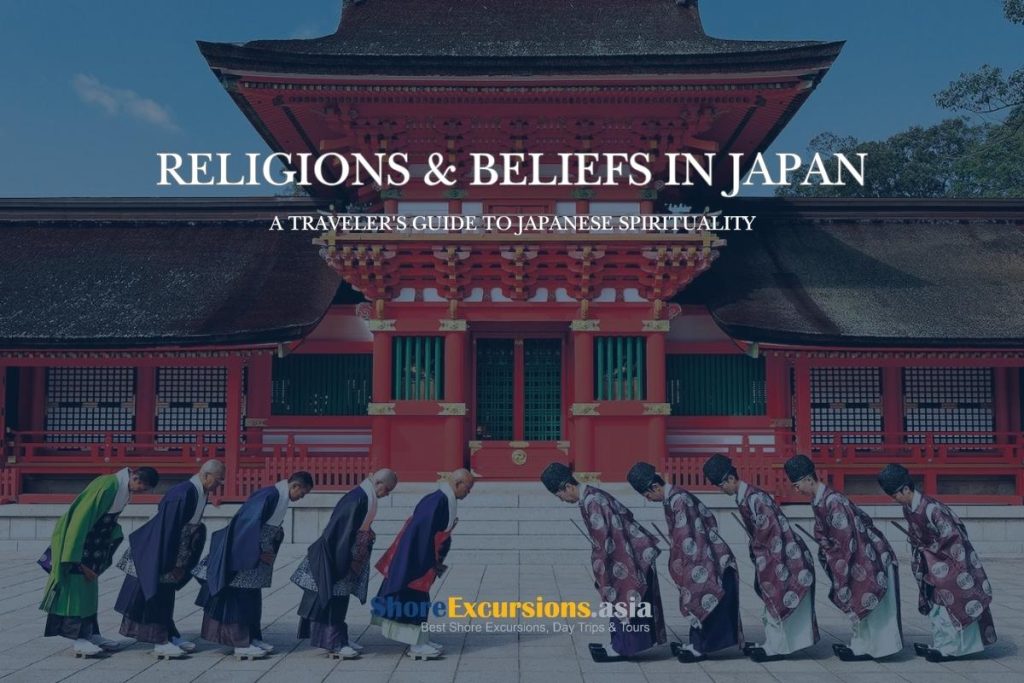
Japan religion and culture has been practiced for centuries with a distinct belief system. Two main religions have dominated Japan are Shinto and Buddhism, which accounts for 51.8% and 34.9% respectively according to a survey conducted in 2006. Acknowledge about Japanese belief in specific and Japanese culture, in general, will help visitors fit in the Japanese community better when traveling to Japan. Here are some main points due to introduce religion in Japan conducted by our Japan Shore Excursions’ experts.
Understanding Religion in Japan
The religious beliefs in Japan are closely connected with everyday customs rather than being expressed only through formal religious membership. A person may visit a Shinto shrine at New Year, attend a Buddhist funeral, participate in a local festival, and still describe themselves as having little or no religious affiliation.
This apparent contradiction becomes easier to understand when religion is viewed as part of Japanese culture and social life. Rituals often mark important moments, seasons, family events, and relationships with local communities. For travelers, this means that a shrine or temple can be both a sacred place and an important part of the community's cultural heritage.
Shinto and Buddhism at a Glance
| Tradition | Main place of worship | Key ideas or practices |
|---|---|---|
| Shinto | Shrine (jinja) | Kami, purification, nature, rituals |
| Buddhism | Temple (tera/ji) | Buddhist teachings, meditation, memorial practices |
| Folk traditions | Local sacred places | Nature, ancestors, protective customs |
| Christianity and other faiths | Churches, mosques, synagogues, etc. | Smaller but established communities |
The distinction between a Shinto shrine and a Buddhist temple is particularly useful for travelers. Shrines are generally associated with Shinto and commonly have a torii gate, while Buddhist temples may have a sanmon gate and Buddhist images or statues.
Main Religions in Japan: Shinto & Buddhism
Shinto - The Oldest Religion In Japan
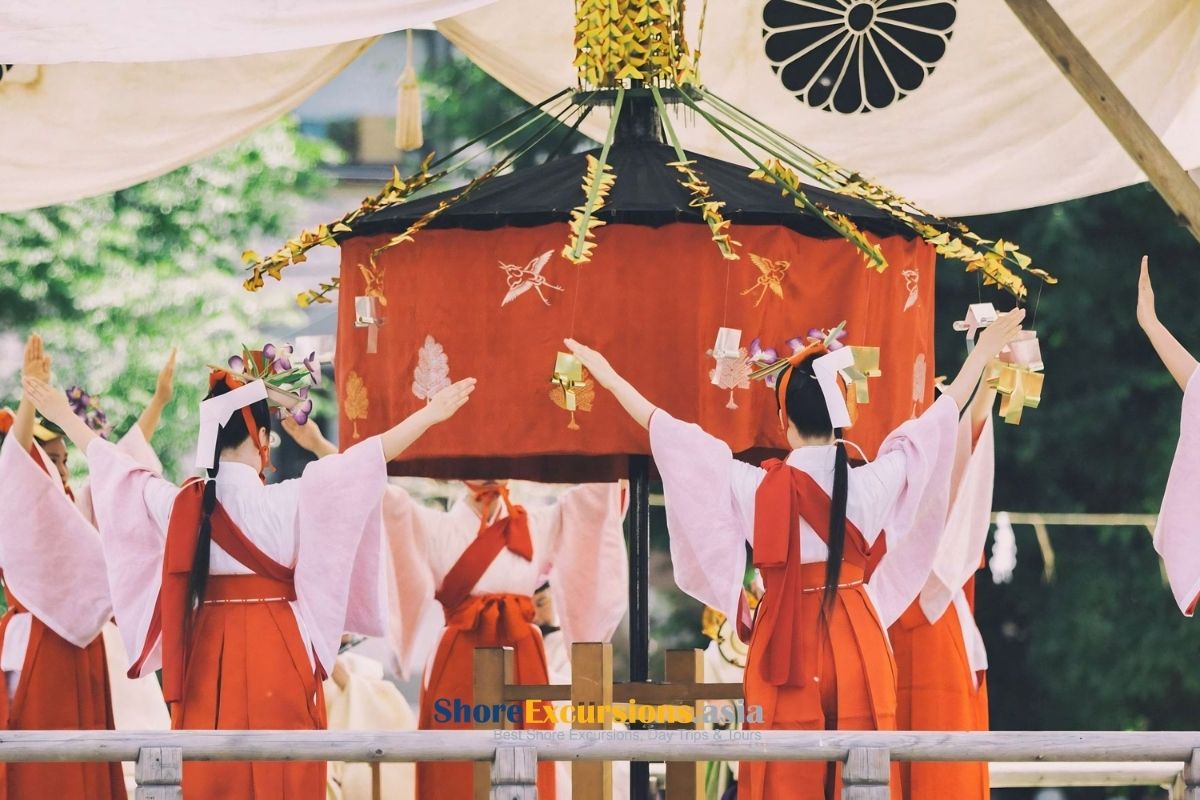
Shinto is the main native religion alongside with Buddhism in Japan. Shinto, which mainly focuses on ritual practices and observance rather than the afterlife, has a great influence on Japanese people and culture. Shinto indicates the indigenous faith of the Japanese people and involves the worship of kami (Shinto gods). The word Shinto literally means “The way of the Gods”.
The Sun Goddess Amaterasu is regarded as Shinto’s most vital kami. Religion does not have a founder nor a defined set of prayers. Instead, Shinto includes rituals and methods with a view to connecting modern and ancient times, living people and spirits.
The main them of Shinto is known as love and honor for nature. That explains why a waterfall or a special rock is often regarded as a spirit of that place for growth and abundance.
History of Shinto
The history of Shinto is as old as Japan itself as its roots date back to the latter part of the Stone Age. At first, the introduction of Buddhism in the 6th century caused conflicts. But later the two religions were able to co-exist and even complement each other until today. In the Meiji Period, Shinto became the state religion of Japan.
Shinto priests were made into state officials while important shrines were invested by governmental funding. Because the beginning story of Japan was used to foster a national identity, efforts need to be made to separate Shinto from Buddhism. After World War II, Shinto and the state were eventually separated.
Shinto Shrine
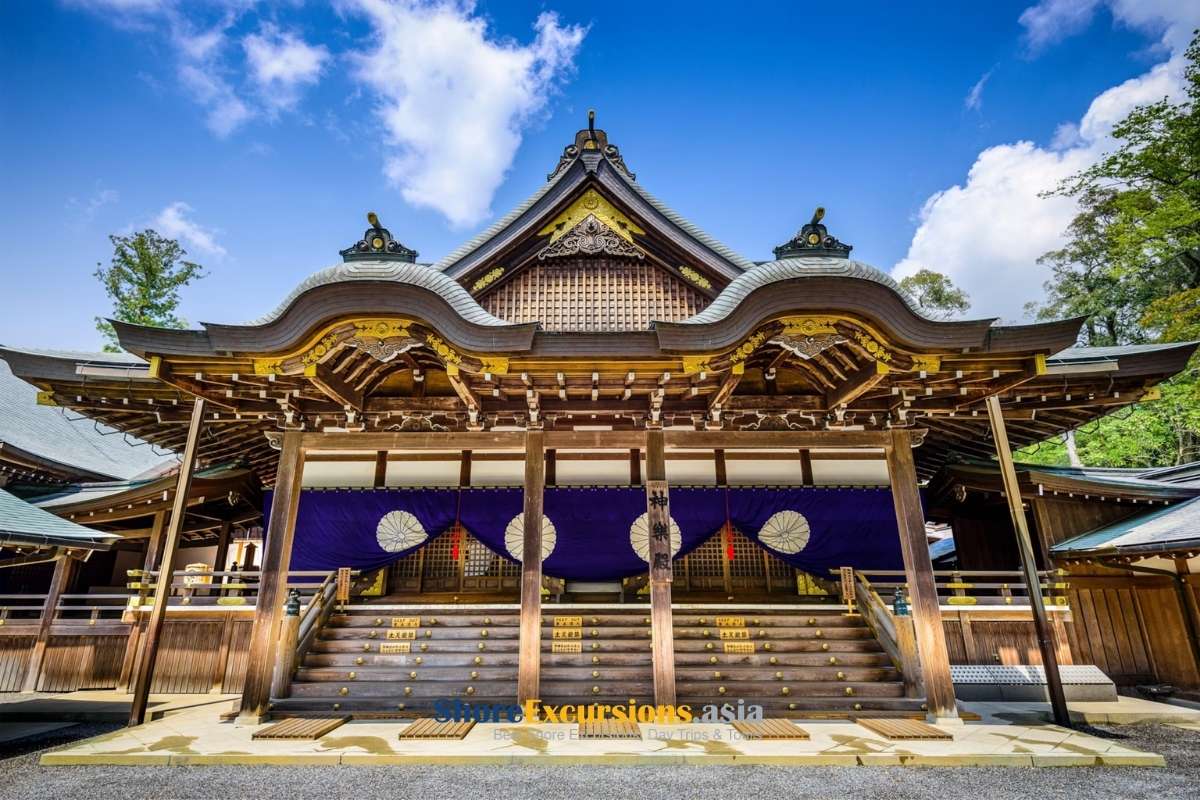
Shinto public shrine is a building used as a place to honor kami. Its structure resembles characteristic Japanese architecture, each shrine has its own distinct style of different periods. There are 20 styles of gates, all of which are made of two uprights and two crossbars, there are 20 styles People visit the shrine to give thanks for the Kami’s protection and to pray for prosperity.
Weddings are usually organized in Shinto style and Japanese couples will pronounce their wedding vows to the Kami. There are several festivals held in shrines throughout the year, which involve purification rites, prayer, ritual music, and dance as well as feasts.
The most prominent Shinto shrine in Japan is the Grand Shrine of Ise. It is one of the popular shrines in Japan which worships the sun goddess Amaterasu. One of the largest culture cities which is home to several hundred shrines in Kyoto, which is most famous for Iwashimizu Hachimangu Shrine & Sake Brewery. Visitors can take a look at Kyoto Shore Excursions.
When visiting Japan on a cruise, exploring local shrines and temples offers a deep look into the country’s spiritual heritage. Travelers stopping at Mt. Fuji’s gateway port can join Shimizu shore excursions to visit historic sites like Fujisan Sengen Shrine and Kunozan Toshogu Shrine.
How to Visit a Shinto Shrine
Shrines are best known for their huge red entrance gate or tori. Coming through the red gates, visitors will find a water fountain where you can purify your spirit before entering by rinsing your hands and mouth using a bamboo ladle.
Next, in front of an altar, you are likely to find a long thick rope hanging from a bell. First, ring the bell then throw a coin before the altar as on offering (five yen coins are considered lucky), clap your hands three times to summon the kami, then clasp your hands together to pray.
Shinto Rituals You May See
Visitors may encounter several traditional practices at shrines:
- Purifying the hands and mouth before prayer
- Making offerings
- Bowing at the entrance
- Drawing an omikuji, or fortune
- Writing wishes on ema
- Buying omamori for protection or good fortune
- Taking part in seasonal festivals known as matsuri
Shinto rituals vary between shrines, so visitors should follow local signs and observe what worshippers are doing rather than assuming that every shrine follows exactly the same procedure.
Buddhism - One Of The Most Popular Religions in Japan
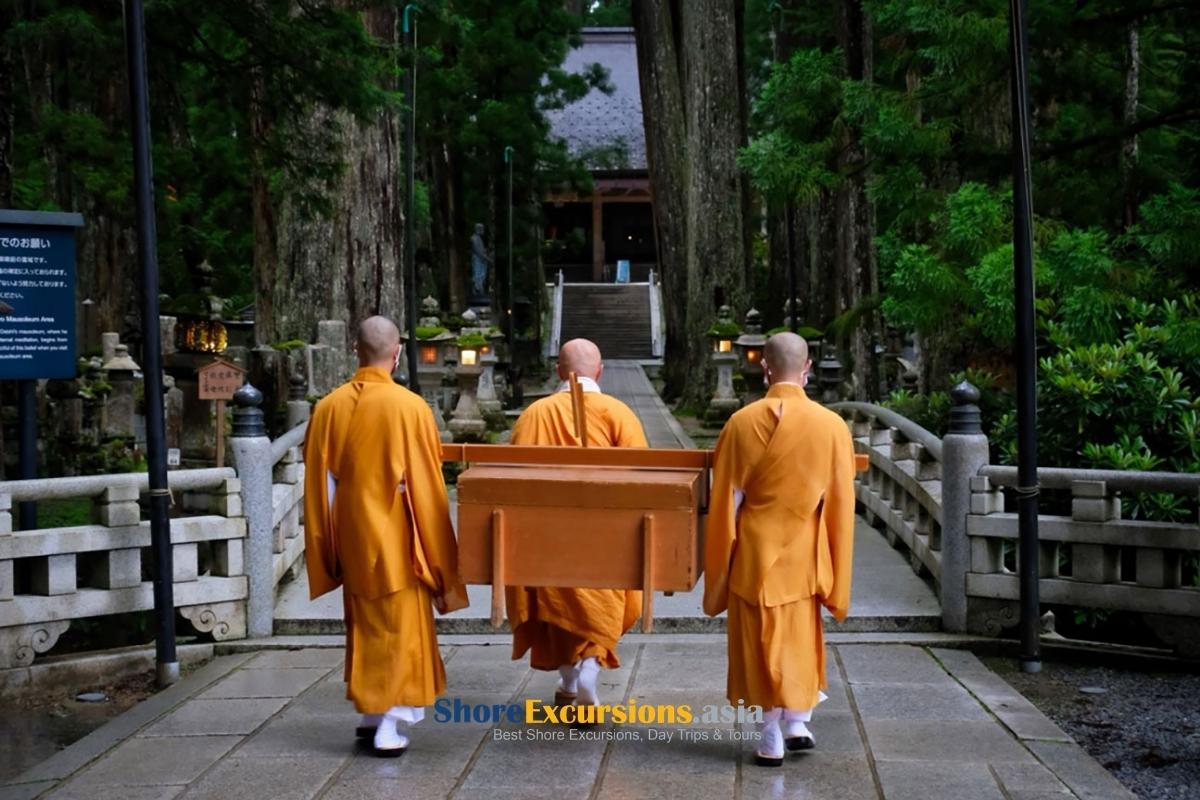
Buddhism came from India in the 6th century BC. It involves the teachings of the Buddha, Gautama Siddhartha. The Mahayana or "Greater Vehicle" Buddhism was established in Japan through China. Although Buddhism was welcomed by the Japanese nobles, it did not initially become common because of its complex theories.
The most popular form of Buddhism is known as Zen or Chan in China and Seon in Korea. Another significant form of Buddhism during the Kamakura period is “Pure Land” Buddhism (Jodo-Kyo) which accentuates the role of Amida Buddha. According to this, once the phrase “Namo Amida Butsu” is recited, upon death Amida will take a person to the “Western Paradise” or “Pure Land” and from then on to Nirvana.
A more radical form of Buddhism was Nichiren Buddhism, created by the monk Nichiren, which honored the Lotus Sutra. Nichiren Buddhism is known as the second-largest form of Buddhism. It includes Soka Gakkai (Nichiren denomination) whose political wing forms the conservative Buddhist New Komeito Party (the third largest political party of Japan).
History of Buddhism in Japan
Buddhism was brought to Japan around the middle of the 6th Century BC. This was also the time that Japan was immigrated by Kore and influenced by Chinese culture. Within a few decades, the religion became so common in Japan that Buddhist temples were constructed at the capital of Nara by the Yamato state of Japan.
Later, more branches of Buddhism such as Shingon Buddhism and Tendai Buddhism were introduced into Japan. During the Kamakura period (1185-1333), Zen Buddhism arrived in the country and two schools of the religion were constructed and named as Rinzai and Sōtō.
Then came the establishment of the third school of Zen in 1661 making Zen Buddhism become one of the most popular forms of the religion. It was also during the Kamakura period that welcomed Pure Land Buddhism and Nichiren Buddhism to the country. Until 2014, it was estimated that there are about 377,000 Buddhist leaders, monks, and priests in the country.
Buddhist Temple
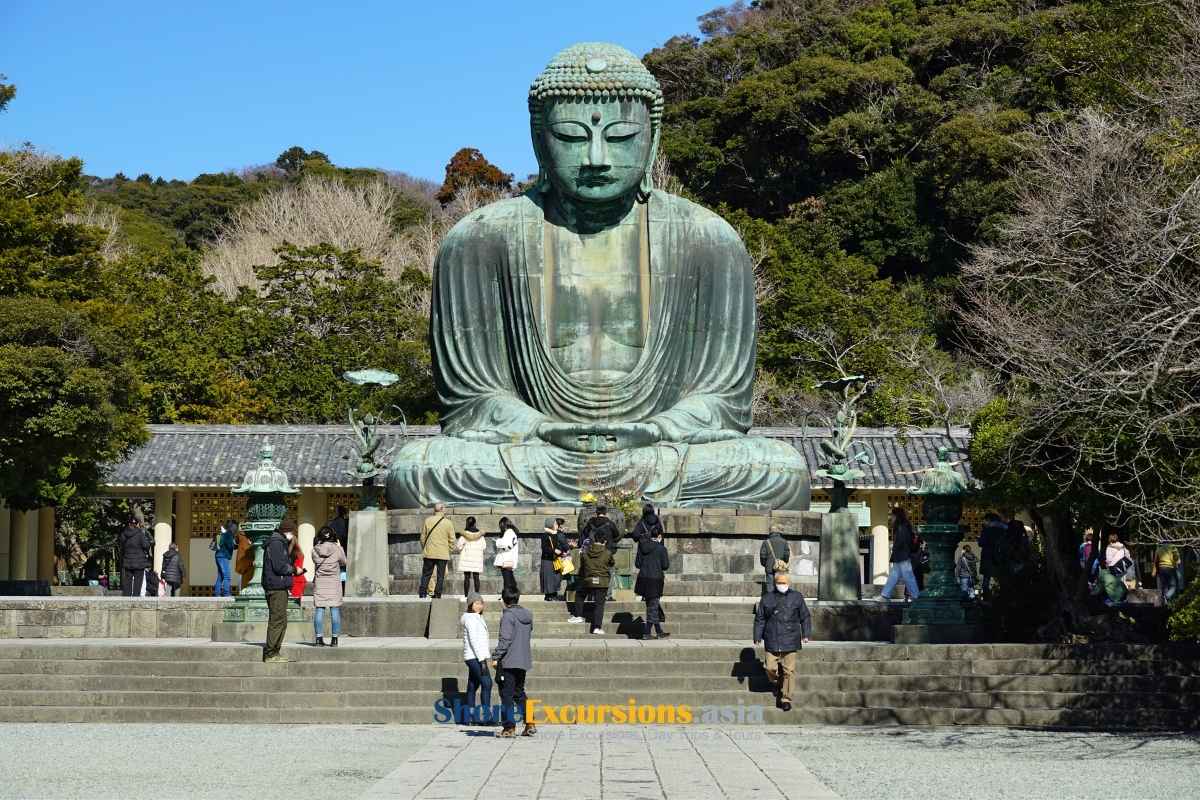
Buddhist temples are called tera or ji. Their grounds may contain a main hall, pagodas, Buddhist statues, cemetery areas, gardens, gates, and spaces for ceremonies.
Various temples can be found across Japan, especially in Kyoto, one of the largest cultural centers, consists of several hundred temples. Temple has a main duty which is to store and display sacred Buddhist objects. Some temples are also used to be monasteries.
The first temple in Japan, Asuka-Dera for Asuka, was established between 588 to 596. Compared to early Shinto shrines, Buddhist temples were more ornamental and symmetric. Japan Shore Excursions’ tours always include some best temples to visit in Japan for visitors.
The best cities to visit temples such as Kyoto, Nara, and Kamakura are some of the most popular places in Japan chosen by our visitors. Make sure not to miss these destinations as it is the best way to have a closer look at Japanese history and see the unique religious heritage of the country.
How To Visit A Temple
Before entering temple buildings, you should take your shoes off, remove your hats and kneel on the tatami-mat floor to pray. You can throw a coin into the offering box then show your respect by making a prayer. At some temples, incense (osenko) is burned in large incense burners.
Visitors can get a bundle, light them and let them burn for a few seconds. Then put the incense into the incense burner and fan some smoke towards yourself rather than blow them because the smoke is believed to have healing power. Known as the home to Buddhist temples and Shinto shrines, Nara is famous for its features of a large museum of Buddhist artifacts as well as the stunning enormous statue of Buddha.
Zen Buddhism and Japanese Culture
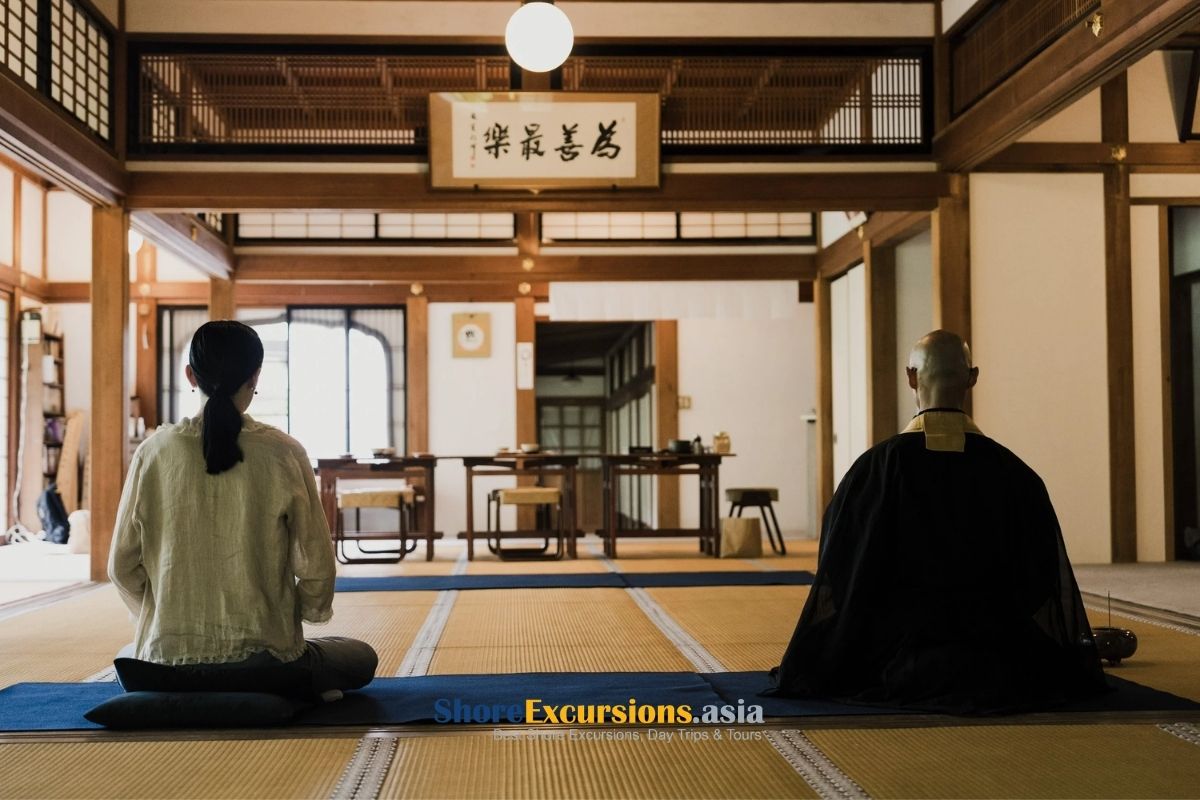
Zen Buddhism has had a particularly strong influence on Japanese cultural life. Its historical impact can be seen in meditation practices, temple gardens, architecture, tea culture, and approaches to art and aesthetics.
Some Japanese temples also offer meditation experiences for visitors. These provide travelers with an opportunity to encounter Buddhist practice directly rather than simply viewing a temple as a sightseeing attraction..
Other Religions in Japan
Besides Shinto and Buddhism, Japan also includes other forms of religion such as Christianity, Islam, Hinduism, and Sikhism. These religions account for about 5-10% of Japan's population. These religions, which offer wealth, health and fortune, are mainly concentrated in urban areas.
The majority of new religions are mostly focused on peace and happiness which receive a lot of suspicion from uninvolved Japanese. Some of the new religions such as PL Kyoden (Public Liberty Kyoden) and Soka Gakkai have certain roles in the establishment, politics, and business of Japan.
Japanese Festivals and Religious Traditions
Religious traditions in Japan become especially visible during major life events, seasonal observances, and local festivals. Some ceremonies are strongly religious, while others have developed into cultural traditions that are now widely practiced regardless of personal religious affiliation.
For travelers, these occasions offer a valuable way to understand how Shinto, Buddhism, ancestor traditions, and community customs continue to shape Japanese life.
New Year and Hatsumode
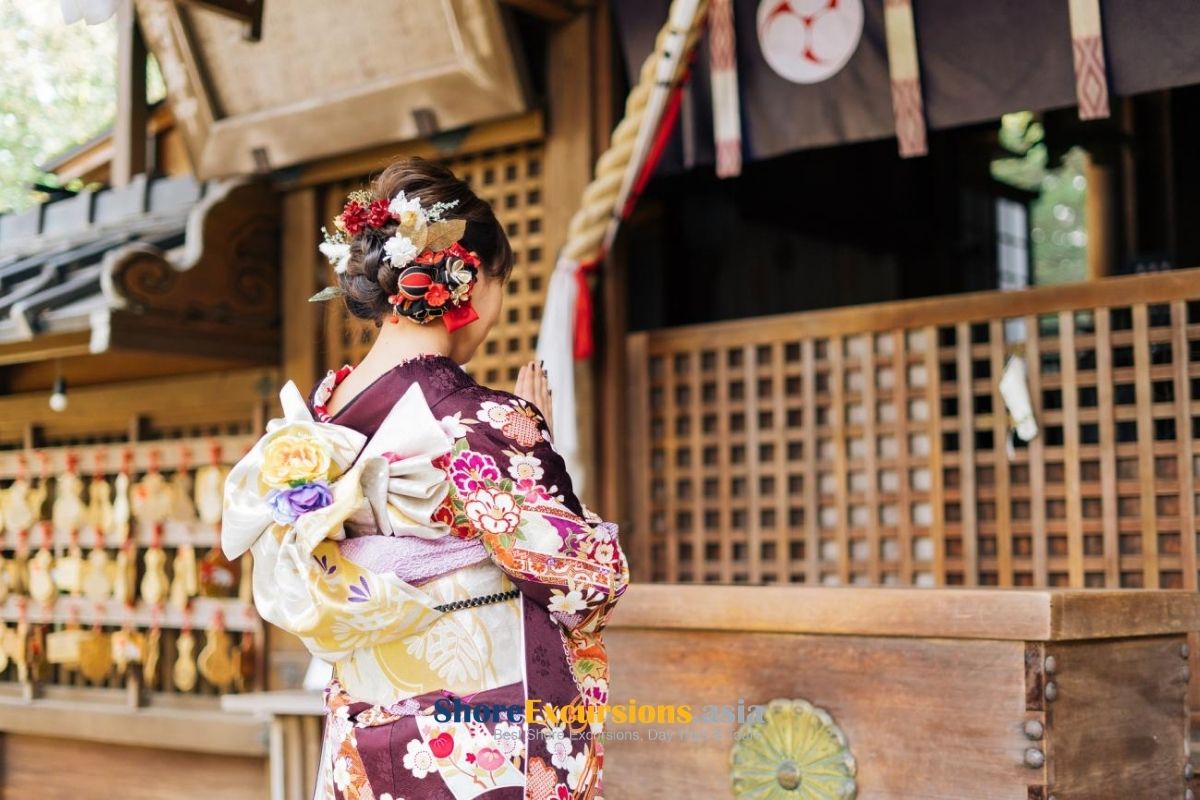
New Year is one of the most important annual occasions in Japan and is also one of the busiest periods at shrines and temples. During hatsumode, the first visit of the year to a religious site, people pray for health, happiness, safety, and good fortune in the coming year.
Major shrines can become extremely crowded during the first few days of January. Visitors may see long queues, food stalls, people purchasing omamori and omikuji, and families gathering for their first prayers of the year.
Shichi-Go-San: Celebrating Children
Shichi-Go-San is a traditional celebration for children, usually held in November. Families take three- and seven-year-old girls and three- and five-year-old boys to shrines to pray for their health and growth.
Children are often dressed in beautiful traditional clothing, including kimono, and families may take photographs during the visit. The custom has roots in older Japanese traditions surrounding childhood milestones and remains an important family occasion today.
Visitors visiting Japan in November may encounter families dressed formally at shrines during the Shichi-Go-San season.
Coming-of-Age Day
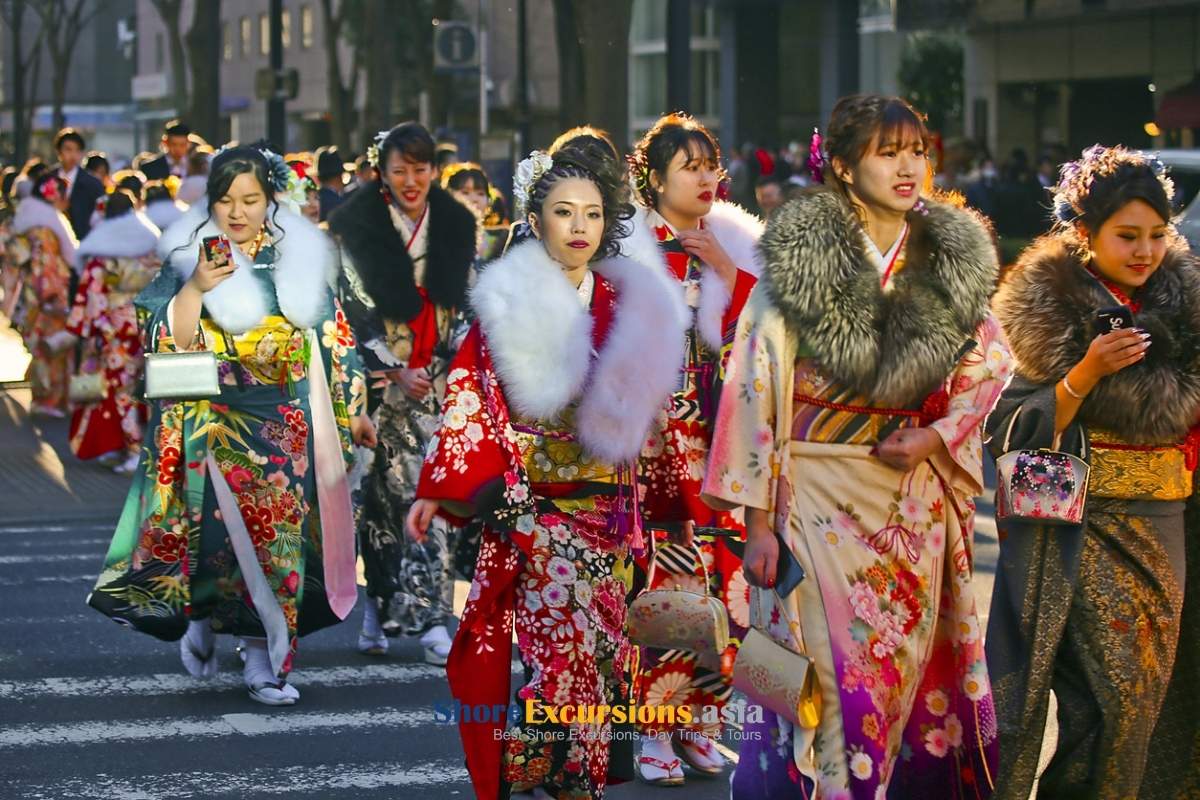
Coming-of-Age Day, known as Seijin no Hi, takes place in January and celebrates young people who have reached adulthood. Many women wear colorful furisode kimono, while men may wear suits or traditional clothing.
Young adults often visit shrines as part of the day's celebrations, although the event itself is a modern civic and cultural ceremony rather than a strictly religious ritual. Its connection with shrines reflects the broader way traditional customs and religious spaces can overlap in Japanese society.
Weddings in Japan
Japanese weddings can combine different cultural influences. A traditional Shinto wedding may take place at a shrine or another Shinto setting, with the couple wearing formal Japanese clothing and participating in rituals led by a Shinto priest.
Other couples choose Western-style ceremonies in hotels, chapels, or other venues. Some weddings also combine Japanese and Western elements. This variety reflects the flexible role that religious and cultural traditions can play in modern Japanese life.
Funerals and Buddhist Memorial Practices
Funerals in Japan are commonly associated with Buddhist traditions, and Buddhist priests may conduct funeral and memorial ceremonies. Cremation is also overwhelmingly common in Japan, after which the ashes are generally placed in a family grave or another designated memorial site.
The exact customs vary according to family, region, Buddhist school, and individual circumstances. Travelers are most likely to encounter these traditions indirectly when visiting temple grounds, cemeteries, or memorial sites.
Obon: Remembering Ancestors
Obon is a traditional period for honoring and remembering ancestors. It is generally observed in July or August depending on the region, with many communities observing it around mid-August.
According to traditional beliefs, ancestral spirits are welcomed back to visit their families during this period. Families may clean graves, make offerings, visit relatives, and take part in Bon Odori, a traditional dance associated with Obon.
Matsuri: Religious Festivals and Community Traditions
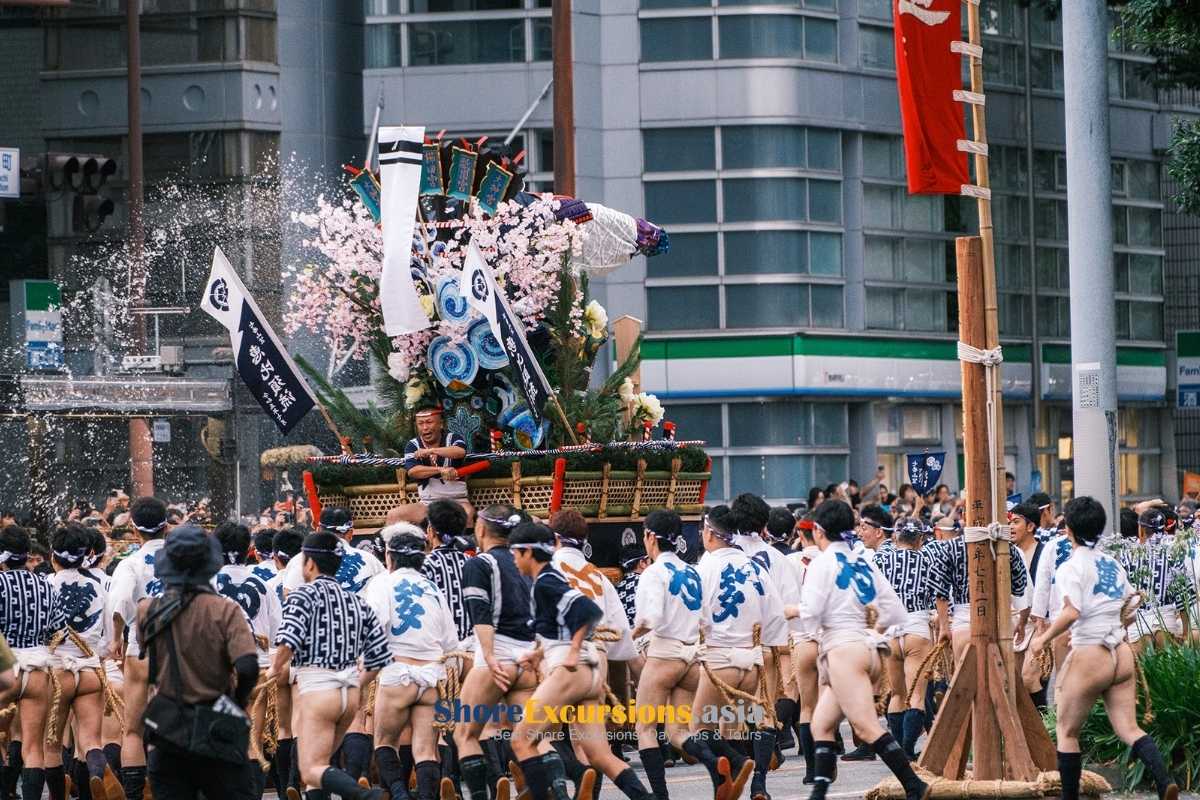
A matsuri is a Japanese festival, and many local festivals have roots in Shinto traditions. They may involve processions, portable shrines called mikoshi, traditional music, dances, food stalls, and ceremonies led by shrine priests.
Matsuri are also community events. Local residents may spend months preparing costumes, floats, performances, and processions. As a result, these festivals in Japan represent local identity as much as religious tradition.
Travelers may encounter major events such as Gion Matsuri in Kyoto, Kanda Matsuri in Tokyo, and Tenjin Matsuri in Osaka. Other well-known festivals include the Sapporo Snow Festival, Omizutori in Nara, Kanamara Matsuri in Kawasaki, and Kishiwada Danjiri Matsuri in Osaka. Their origins, purposes, and religious connections differ, so it is useful to research each event before attending.
Suggested Religious Places to Visit in Japan
Japan has an enormous variety of sacred destinations. Some are famous for architecture, some for their natural surroundings, and others for their continuing religious importance.
Famous Shinto Shrines:
- Ise Jingu, Mie - one of Japan's most significant Shinto sites.
- Fushimi Inari Taisha, Kyoto - famous for its extensive pathways lined with torii gates.
- Meiji Jingu, Tokyo - a major shrine surrounded by forest in central Tokyo.
- Kasuga Taisha, Nara - known for its sacred atmosphere and lanterns.
Famous Buddhist Temples:
- Todai-ji, Nara - renowned for its enormous Buddha statue and historic importance.
- Kiyomizu-dera, Kyoto - one of Kyoto's best-known Buddhist temples.
- Senso-ji, Tokyo - a major temple in the historic Asakusa district.
- Kinkaku-ji, Kyoto - famous for its Golden Pavilion and surrounding garden.
Sacred Mountains and Pilgrimage Routes:
Travelers interested in spirituality can also explore destinations such as Mount Koya and the Kumano region. These places demonstrate how Japanese religious traditions have long been connected with mountains, forests, pilgrimage, and walking.
Kumano Kodo is particularly notable because pilgrimage routes connect several sacred sites through the Kii Peninsula. Such destinations can provide a different perspective on Japanese spirituality, away from the busiest urban attractions.
Religious Etiquette Travelers Should Know when Visiting Japan
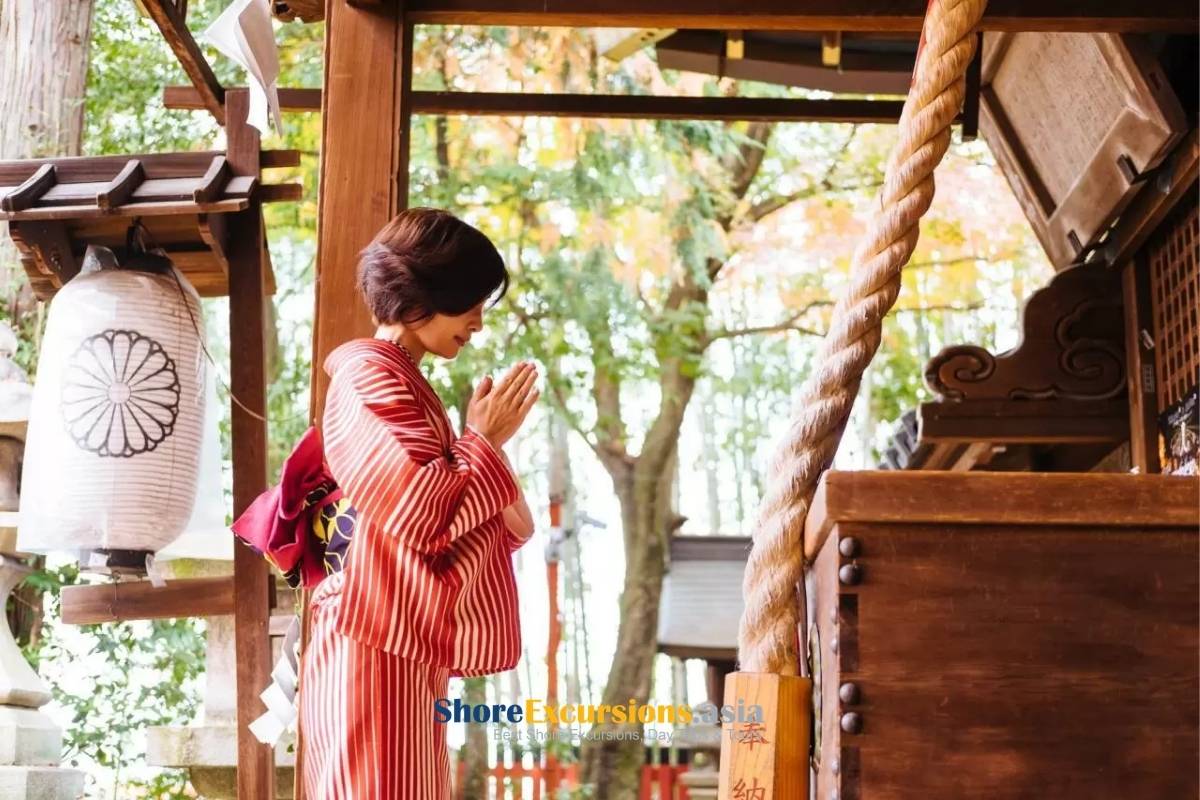
Understanding Japanese shrine etiquette is important because even a short visit involves entering a space considered sacred.
At a Shinto shrine, visitors commonly bow once before passing through the torii. At the purification fountain, visitors can follow the customary process of rinsing their hands and mouth before approaching the worship hall. At many shrines, the traditional prayer sequence involves two bows, two claps, a silent prayer, and another bow.
Temple etiquette is similar in its emphasis on quiet and respect, but the prayer ritual is different. At a Buddhist temple, visitors generally make an offering and pray with their hands together rather than clapping. Some temples also provide incense for visitors.
A few simple rules make visits easier:
- Keep your voice low.
- Follow signs concerning photography.
- Do not enter restricted areas.
- Avoid touching religious objects without permission.
- Dress respectfully.
- Remove your shoes when requested.
- Do not interrupt ceremonies or worshippers.
- Observe local instructions rather than assuming every site follows identical customs.
Religious Symbols in Japan
Knowing a few common symbols can make sightseeing considerably more meaningful.
| Symbol or Object | What It Represents |
|---|---|
| Torii | Entrance or boundary of a Shinto sacred space |
| Omamori | Protective or auspicious amulet |
| Omikuji | Fortune or written divination |
| Ema | Wooden plaques used for written wishes |
| Shimenawa | Sacred rope marking or indicating a sacred presence |
| Buddhist statues | Represent different Buddhas, bodhisattvas, or teachings |
| Incense | Used in Buddhist religious practice at many temples |
These objects are not merely decorative souvenirs. Their meanings vary according to context, shrine, temple, and tradition.
Frequently Asked Questions About Religions and Beliefs in Japan
What is the main religion in Japan?
Shinto and Buddhism are the two traditions most closely associated with Japan's religious and cultural history. Their influence can be seen in shrines, temples, festivals, family rituals, and seasonal customs.
Are Japanese people Buddhist or Shinto?
Many people participate in traditions associated with both Shinto and Buddhism at different points in their lives. Religious identity in Japan is not always exclusive.
What is the difference between a Shinto shrine and a Buddhist temple?
A Shinto shrine is associated with kami and usually has a torii gate. A Buddhist temple is associated with Buddhist teachings and commonly contains Buddhist images or statues.
Can tourists visit Japanese shrines and temples?
Yes. Shrines and temples are generally open to visitors, although certain buildings, ceremonies, or areas may have restrictions. Visitors should follow posted rules and behave respectfully.
Is Zen Buddhism still practiced in Japan?
Yes. Zen remains an important Buddhist tradition, and some temples offer meditation experiences and retreats that are also accessible to visitors.
Experiencing Japan Through Its Beliefs
Learning about Japanese religious traditions adds another layer to a trip through Japan. A basic understanding, combined with curiosity and respectful behavior, is enough to make encounters with Japan's sacred places more meaningful. When visiting a shrine, temple, cemetery, or religious festival, take a moment to observe the surroundings and remember that these are living traditions, not simply historical attractions.

 Send Inquiry